
El Salvador Surpasses Costa Rica and More With Record Tourism Growth in Central America in 2026
El Salvador Surpasses Costa Rica and More With Record Tourism Growth in Central America in 2026

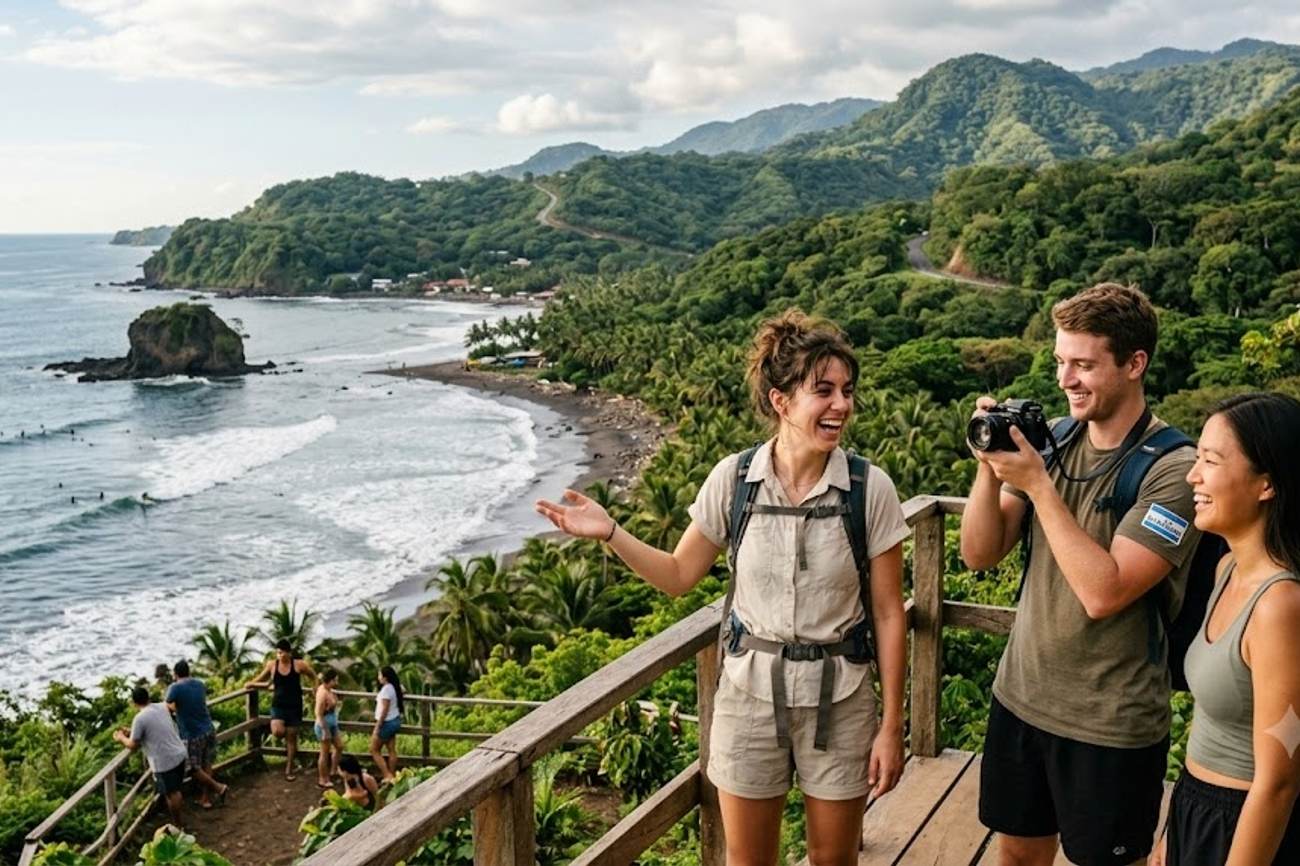
Image generated by AI
**title: "The Salvadoran Surge: Analyzing Central America's New Tourism Powerhouse" date: 2026-09-15 category: Regional Analysis
3.24 million international visitors entered El Salvador between January and August 2026, marking a 22 per cent surge in arrivals compared to the previous year. This rapid acceleration has propelled the nation past regional stalwarts Costa Rica and Panama in terms of growth momentum, fundamentally altering the distribution of travel demand across the Central American isthmus. The economic ripple effect of this influx is substantial, with tourism-related activity generating $2.88 billion in the first eight months of the year.
The Shift in Central American Market Share
For decades, the Central American travel corridor was defined by a predictable hierarchy. Costa Rica dominated the eco-tourism and sustainability niche, while Panama leveraged its role as a global logistics hub to attract business and transit travelers. However, the 2026 data indicates a structural shift. El Salvador is no longer merely a transit point or a niche destination; it has become a primary target for international arrivals.
This transition is not accidental. It is the result of a calculated pivot in destination branding. By leveraging its compact geography, El Salvador has reduced the "friction" of travel. Unlike larger neighbors where transit between volcanic highlands and coastal beaches can take entire days, El Salvador's layout allows for high-density itinerary planning. This efficiency appeals to the modern "short-break" traveler who seeks maximum variety—surfing, hiking, and cultural immersion—within a limited timeframe.
The scale of this expansion is best understood when viewed against the regional backdrop. While established markets often see growth in the single digits once they reach maturity, a 22 per cent year-on-year increase suggests that El Salvador is currently in a "hyper-growth" phase, capturing a segment of the market that is actively seeking alternatives to the more crowded, higher-priced hubs of the region.
Economic Metrics and Sectoral Distribution
The $2.88 billion in economic activity recorded through August 2026 represents a massive injection of foreign capital into the local economy. This revenue is not concentrated in a single enclave but is distributed across several critical infrastructure layers.
| Metric | El Salvador Performance (Jan–Aug 2026) |
|---|---|
| Total International Arrivals | 3.24 Million |
| Annual Growth Rate | 22% |
| Total Economic Contribution | $2.88 Billion |
| Regional Growth Status | Leading Market (Central America) |
The primary beneficiaries of this spending are the hospitality and transport sectors. The surge in arrivals has forced a rapid scaling of hotel capacity and the professionalization of local tour operators. Specifically, the "Surf City" initiatives along the Pacific coastline have transformed previously quiet fishing villages into high-revenue hubs. This has created a symbiotic relationship between international investment and local entrepreneurship, as restaurants and entertainment venues scale to meet the demands of a more affluent global traveler.
Furthermore, the reliance on the International Air Transport Association (IATA) standards for aviation safety and efficiency has likely played a role in increasing the confidence of long-haul carriers to add capacity to San Salvador. As the country improves its global visibility, the cost of acquiring new visitors decreases, while the lifetime value of the destination increases through repeat visits.
Expert Analysis: The Logistics of Destination Displacement
The most significant takeaway from El Salvador's 2026 performance is the concept of "destination displacement." When a country grows by 22 per cent in a saturated regional market, it is often taking market share away from its neighbors. For travelers booking routes in Central America, the direct consequence is a shift in pricing dynamics.
El Salvador's tourism industry has experienced a significant boost, with a record number of visitors in 2026, surpassing neighboring countries such as Costa Rica. According to the Ministry of Tourism of El Salvador, the country's strategic location and rich cultural heritage have made it an attractive destination for travelers. This growth is expected to continue, with the government investing in infrastructure development and tourism promotion.
As El Salvador attracts a larger slice of the tourism pie, we can expect a period of intense price competition. Costa Rica and Panama may be forced to innovate their offerings or adjust pricing strategies to prevent further leakage of visitors to the east. For the traveler, this means more competitive package deals and a wider array of flight options into San Salvador.
However, there is a hidden logistical risk: infrastructure lag. When visitor numbers grow at a rate of 22 per cent annually, the physical infrastructure—roads, sewage, electricity, and airport throughput—often struggles to keep pace. The pricing pressure this creates means that while entry-level tourism remains affordable, "premium" experiences may see price spikes as high-end travelers compete for a limited number of luxury accommodations that can meet international standards.
Moreover, the move toward "nature-based adventures" and "volcano exploration" puts immense pressure on the Ministry of Tourism (or equivalent regulatory bodies) to implement sustainable management. If the 3.24 million visitors are not managed through a strict carrying-capacity framework, the very assets driving the growth—the pristine Pacific coast and volcanic landscapes—could face degradation, leading to a sharp decline in the destination's long-term appeal.
Key Takeaways
- Growth Dominance: El Salvador has surpassed Costa Rica and Panama in growth momentum, welcoming 3.24 million visitors between January and August 2026.
- Financial Impact: Tourism generated $2.88 billion in economic activity in eight months, signaling a shift toward tourism as a primary economic pillar.
- Market Velocity: A 22 per cent year-on-year increase in arrivals indicates a rapid transition from a niche destination to a regional leader.
- Competitive Advantage: The country's compact geography allows for diverse experiences (volcanoes, beaches, culture) with minimal travel time between sites.
- Sectoral Gains: Economic benefits are widely distributed across accommodation, transport, and local food services, stimulating small business growth.
FAQ: El Salvador Travel 2026
Is El Salvador a viable alternative to Costa Rica for eco-tourism? Yes. With a 22 per cent growth rate and a focus on volcanic hiking and Pacific coast surfing, it offers a more compact and often more affordable alternative to Costa Rica's larger, more established eco-tourism circuits.
What are the primary attractions driving the 2026 visitor surge? The growth is primarily driven by surf tourism on the Pacific coast, volcano exploration, and cultural heritage sites, all of which are accessible within short distances due to the country's small size.
How has the economic impact affected local services? The $2.88 billion contribution has led to increased investment in hotels, restaurants, and transport services, creating more jobs for local communities and improving the overall quality of visitor infrastructure.
Are there specific flight or transport trends for El Salvador in 2026? While specific flight numbers aren't listed, the surge to 3.24 million visitors indicates a significant increase in international flight capacity and improved connectivity to the region's primary hubs.
The map of Central American travel is being redrawn in real-time, and San Salvador is now the center of gravity.
Related Travel Guides
- Panama Boosts Tourism Growth With Stopover Program Driving 17% Visitor Rise
- Tulum Overtakes Cancun and All Other Destinations in Witnessing Declining Interest in Mexican Beach Tourism From International Tourists in 2026
- Toronto Goes Hand in Hand With Vancouver and More as Canada Tourism Eyes 6% Spending Surge Despite Hotel Investment Crunch in 2026
Disclaimer
This article is for informational and educational purposes only. It does not constitute legal, financial, or professional advice. While we strive to provide accurate and up-to-date information, travel policies, regulations, and conditions change rapidly. Always verify information with official sources before making travel decisions. Nomad Lawyer makes no representations about the accuracy, reliability, completeness, or suitability of the information provided. Readers should consult qualified professionals for advice specific to their circumstances. The views expressed in this article are those of the author and do not necessarily reflect the views of Nomad Lawyer.
Raushan Kumar
Founder & Lead Developer
Full-stack developer with 11+ years of experience and a passionate traveller. Raushan built Nomad Lawyer from the ground up with a vision to create the best travel and law experience on the web.
Learn more about our team →