
Australia Secures Regional Tourism Routes as Holiday Travel and Harvest Demand Rise
Australia Secures Regional Tourism Routes as Holiday Travel and Harvest Demand Rise

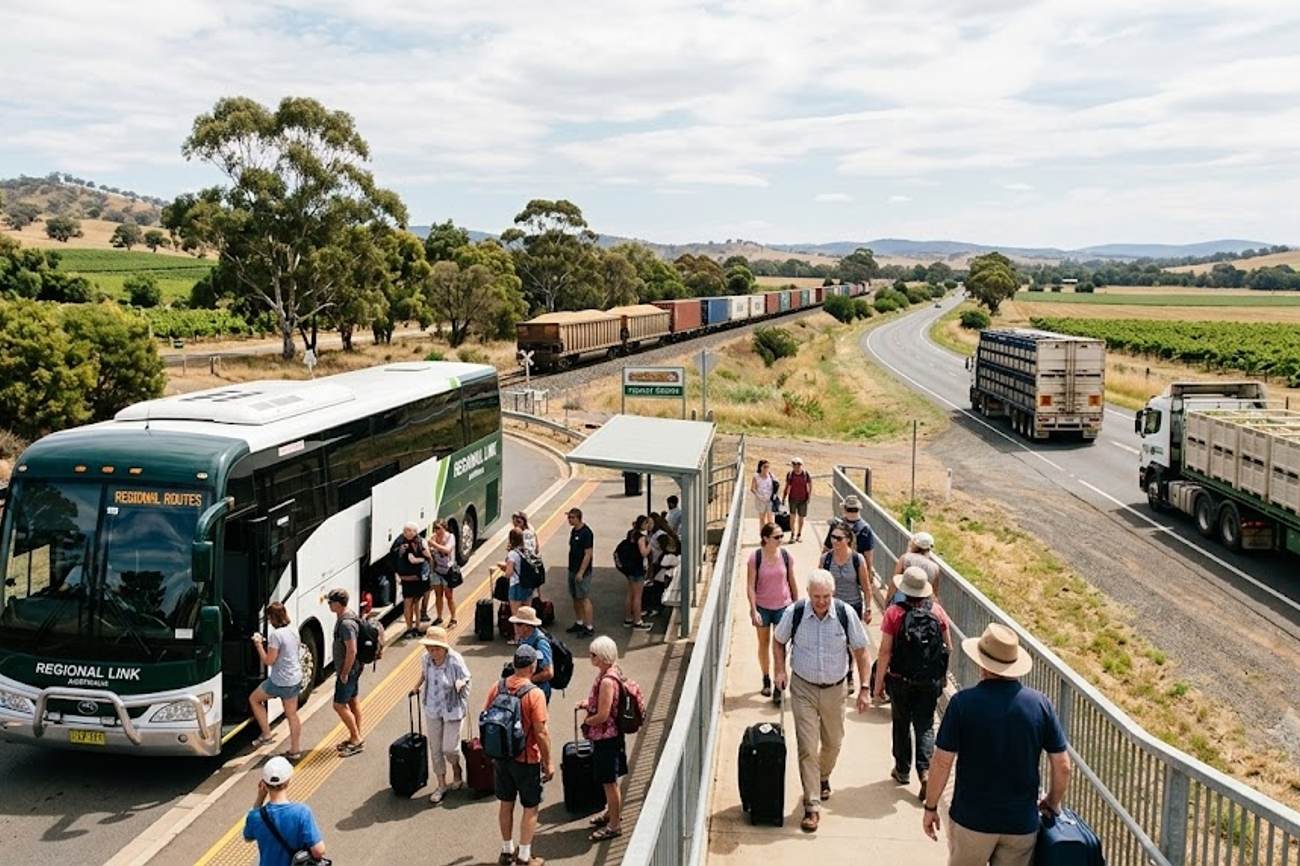
Image generated by AI
Domestic overnight visitor spending in Australia reached A$29.7 billion in the March quarter of 2026, with A$3.2 billion of that total allocated specifically to petrol. This data highlights a critical dependency: nearly 11% of all domestic overnight tourism expenditure is tied directly to fuel, making the stability of regional energy supply a primary driver of tourism viability. When fuel logistics falter, the ripple effect extends beyond the individual driver to the entire regional service economy.
The Logistics of Regional Access in Numbers
The Australian Government's decision on 19 September 2026 to extend temporary flexibility for petrol and diesel stockholding through January 2027 is a strategic hedge against seasonal demand spikes. This policy is not a response to a shortage, but a preventative measure to ensure that the "last mile" of fuel delivery reaches remote areas during a period of dual-pressure: the agricultural harvest and the peak holiday season.
Under this arrangement, which commences on 1 October after the previous instrument expires on 30 September, eligible suppliers are permitted to hold 20% less than their standard baseline reserve obligation. This technical adjustment is designed to liberate fuel from static storage and move it into active circulation, specifically targeting regional supply chains.
The scale of this dependency is underscored by the June-quarter 2026 data regarding the Minimum Stockholding Obligation framework. During this period, petrol stocks averaged 1,870 megalitres, representing approximately 44 days of normal consumption. By allowing a 20% reduction in these mandatory reserves, the government is effectively prioritizing the flow of fuel to regional pumps over the maintenance of stationary reserves.
Comparative Pressure: Harvest vs. Holiday Demand
The intersection of agricultural requirements and tourism surges creates a unique logistical bottleneck. While urban centers maintain high-density refueling infrastructure, regional hubs rely on a fragile chain of deliveries that must support both heavy machinery for grain harvesting and the influx of tourist vehicles.
The following table illustrates the distribution of transport spending within the domestic overnight visitor economy for the March 2026 quarter, demonstrating the heavy weighting toward fuel and air travel.
| Expenditure Category | Amount (AUD) | Percentage of Total Overnight Spending |
|---|---|---|
| Total Domestic Overnight Spending | A$29.7 Billion | 100% |
| Domestic Airfares | A$4.1 Billion | 13.8% |
| Petrol/Fuel | A$3.2 Billion | 10.8% |
| Combined Transport Cost | A$7.3 Billion | 24.6% |
This data indicates that nearly one-quarter of all domestic tourism spending is concentrated in the transport sector. According to benchmarks provided by the World Travel & Tourism Council (WTTC), transport reliability is the single most significant variable in regional tourism growth. In Australia, where distances are vast, a localized fuel delivery delay does not just affect a petrol station; it disrupts the entire value chain, including hotel generators, coach operators, and food supply logistics.
Practical Traveler Advisory and Strategic Insights
For the individual traveler, the government's "Level 2" Fuel Plan status means that while the national supply is stable, local volatility is possible. This is not a signal to cancel travel, but a data-driven prompt to shift from "just-in-time" refueling to a more conservative strategy.
If you are planning a regional road trip between October 2026 and January 2027, the following actionable steps are recommended based on current supply logistics:
- Implement a 50% Fuel Buffer: In remote regions, do not wait for the quarter-tank mark. Refuel when your tank hits 50% to account for potential local delivery delays at isolated stations.
- Verify Station Specifications: Ensure your vehicle's fuel requirements (Diesel, Premium Petrol, or Diesel Exhaust Fluid) are available at your planned stops. Regional stations have more limited inventory than urban hubs.
Australia's tourism industry is experiencing a significant boost with the securing of regional tourism routes, as holiday travel and harvest demand continue to rise. The Australian Government Department of Infrastructure, Transport, Regional Development and Communications has announced initiatives to support the growth of regional airports and improve passenger logistics. This move is expected to increase connectivity and accessibility to popular tourist destinations across the country. 3. Audit Route Timing: Confirm the operating hours of service stations in remote corridors. Unlike city stations, regional outlets often have restricted hours that can be impacted by staffing or supply issues. 4. Avoid Speculative Buying: The government has explicitly advised against panic buying. Artificial demand spikes caused by over-purchasing can trigger the very shortages the 20% stockholding flexibility is designed to prevent.
Regional Infrastructure Projections
The current trajectory suggests that Australia is moving toward a more flexible, demand-responsive fuel management system. By decoupling mandatory reserves from immediate regional needs during peak windows, the government is acknowledging that "healthy national reserves" (as cited in the September 19 announcement) are useless if the fuel is stored in a city terminal while a regional tourism hub runs dry.
Looking forward, the reliance on road transport for the "last mile" of tourism—transfers from regional airports to lodges and wineries—remains a vulnerability. As domestic spending continues to climb, the pressure on these corridors will increase. Industry data from IATA suggests that while aviation fuel (Jet A-1) operates on a separate logistics chain and remains unaffected by these specific petrol/diesel measures, the overall tourist experience is only as strong as the weakest link in the transport chain. If a traveler lands via a stable aviation network but cannot secure a rental car or transfer due to regional diesel shortages, the economic benefit to the region is neutralized.
The continued extension of these measures into 2027 indicates that the government views the harvest-holiday overlap as a recurring systemic risk rather than a one-time anomaly. We expect to see these "technical policy measures" become a standard part of the seasonal economic calendar.
FAQ: Australian Regional Fuel Trends 2026-2027
Is there a national fuel shortage in Australia? No. The government has confirmed that national reserves remain healthy and the Fuel Plan is at Level 2. The current policy is a preventative measure to ensure regional availability, not a response to an active crisis.
Will petrol prices increase due to the 20% reserve reduction? The policy allows suppliers to hold less in reserve to facilitate more deliveries. While it does not directly dictate pricing, the goal is to prevent localized shortages which typically cause price spikes at the pump.
Are flights affected by these fuel measures? No. The temporary flexibility applies specifically to petrol and diesel. Jet fuel operates under a different supply chain and is not included in this specific stockholding adjustment.
Should I book my regional hotels and tours now? Yes. With domestic spending reaching A$29.7 billion, demand is high. While fuel supply is being managed, the high volume of visitors during the harvest and holiday season means accommodation and tour availability will tighten.
The data confirms that in the Australian interior, fuel is not just a commodity—it is the primary infrastructure of the tourism economy.
Tags: Australia-Regional-Fuel-2026, Tourism-Research-Australia-Spending, Fuel-Stockholding-Obligation, Regional-Transport-Logistics-2027
Related Travel Guides
Disclaimer
This article is for informational and educational purposes only. It does not constitute legal, financial, or professional advice. While we strive to provide accurate and up-to-date information, travel policies, regulations, and conditions change rapidly. Always verify information with official sources before making travel decisions. Nomad Lawyer makes no representations about the accuracy, reliability, completeness, or suitability of the information provided. Readers should consult qualified professionals for advice specific to their circumstances. The views expressed in this article are those of the author and do not necessarily reflect the views of Nomad Lawyer.
Kunal K Choudhary
Co-Founder & Contributor
A passionate traveller and tech enthusiast. Kunal contributes to the vision and growth of Nomad Lawyer, bringing fresh perspectives and driving the community forward.
Learn more about our team →