
American Airlines to Install Seatback Screens on 800 Narrowbody Jets Starting 2028
American Airlines is reversing its personal-device streaming strategy by reinstating seatback entertainment screens across 800 narrowbody aircraft to compete with Delta and United.

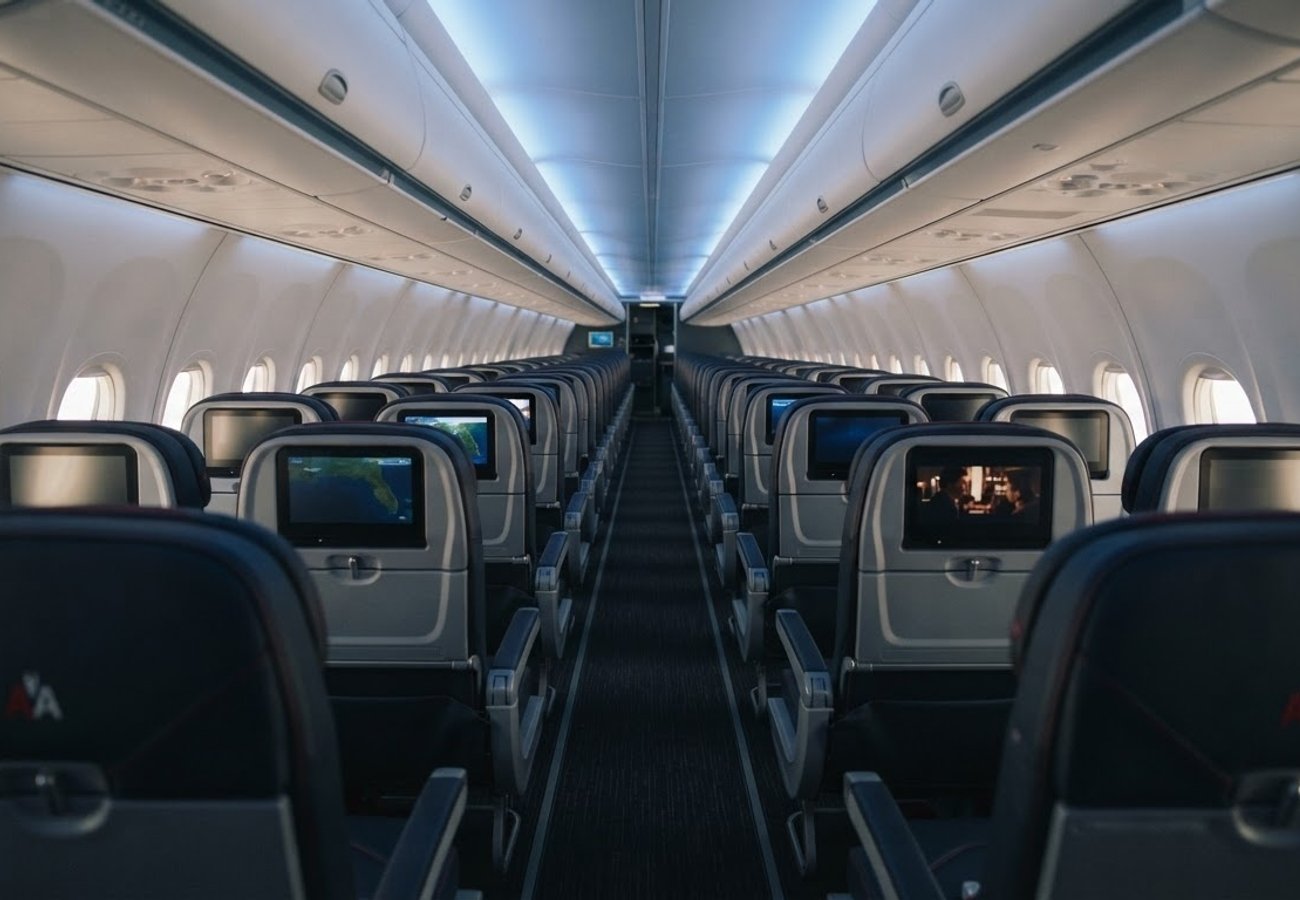
Image generated by AI
American Airlines is abandoning its long-term reliance on passenger-owned devices by reinstating seatback entertainment screens across the majority of its narrowbody fleet. This strategic reversal targets over 800 aircraft, aiming to eliminate a significant product gap between American and its primary domestic rivals, Delta Air Lines and United Airlines.
The decision ends a decade-long experiment where the carrier removed built-in screens in favor of high-speed Wi-Fi and seatback tablet holders. While American previously argued that personal devices rendered screens obsolete, current market data suggests that built-in entertainment remains a primary driver for premium passenger loyalty and corporate contract acquisitions.
The Fleet Modernization Roadmap
The rollout is scheduled to begin in 2028. The strategy employs a two-pronged approach: integrating hardware into new deliveries and retrofitting the existing legacy fleet.
- New Deliveries: Incoming Airbus A321neo and Boeing 737 MAX 10 aircraft will arrive with entertainment systems pre-installed at every seat.
- Retrofit Program: Existing Airbus A319, A320, and various Boeing 737 variants will undergo cabin upgrades.
- Timeline: The retrofit process is expected to extend into the early 2030s due to the sheer volume of the domestic fleet and the need to maintain operational schedules.
Hardware and Cabin Specifications
The upgrade is not limited to screens. American is leveraging this overhaul to refresh the overall cabin environment to attract higher-spending travelers.
| Feature | Specification / Detail |
|---|---|
| Screen Quality | 4K-capable high-resolution displays |
| Connectivity | Integrated Bluetooth audio and AC/USB power outlets |
| Target Fleet | 800+ Narrowbody aircraft |
| Implementation Start | 2028 |
| Completion Window | Early 2030s |
| Premium Enhancements | Increased first-class and extra-legroom seating on A321neo and 737 MAX 10 |
Why This Matters: An Industry Analysis
From a logistical perspective, this move is an admission that the "Bring Your Own Device" (BYOD) model failed to satisfy the premium segment. For travelers on domestic routes, the real impact is the removal of "experience lottery"—the current unpredictability of whether a flight will have screens or just a plastic holder.
Our analysis of the competitive landscape indicates that seatback screens serve as a visual proxy for a "premium" product. While high-speed Wi-Fi allows for streaming, the physical presence of a screen reduces passenger friction and increases the perceived value of the ticket. By aligning its narrowbody product with its widebody offerings (Boeing 777, 787, and Airbus A321XLR), American is creating a unified brand experience.
Furthermore, this is a calculated play for corporate travel contracts. Corporate procurement officers often weigh onboard amenities when selecting preferred carriers. By matching the hardware standards of Delta and United, American removes a key disadvantage in B2B negotiations.
Forward Outlook
The transition period will be messy. Between 2028 and the early 2030s, American will operate a "split fleet," where passengers may fly a modernized A321neo on one leg and a screenless legacy 737 on the next.
Expect the airline to update its digital booking tools to include "Entertainment Equipped" filters, allowing passengers to specifically select flights with the new hardware. The long-term goal is a standardized cabin across the mainline network, reducing variability and positioning the carrier for a more aggressive push into the premium leisure market.
The era of the tablet holder is ending; the screen is back.
Related Travel Guides
Disclaimer
This article is for informational and educational purposes only. It does not constitute legal, financial, or professional advice. While we strive to provide accurate and up-to-date information, travel policies, regulations, and conditions change rapidly. Always verify information with official sources before making travel decisions. Nomad Lawyer makes no representations about the accuracy, reliability, completeness, or suitability of the information provided. Readers should consult qualified professionals for advice specific to their circumstances. The views expressed in this article are those of the author and do not necessarily reflect the views of Nomad Lawyer.
Kunal K Choudhary
Co-Founder & Contributor
A passionate traveller and tech enthusiast. Kunal contributes to the vision and growth of Nomad Lawyer, bringing fresh perspectives and driving the community forward.
Learn more about our team →