
American Airlines to Deploy Premium Cabin Expansion and 4K Seatback Screens Across Fleet by 2030
American Airlines is launching a massive fleet-wide overhaul featuring increased premium seating, 4K seatback entertainment, and high-speed satellite Wi-Fi to capture high-spending travelers.

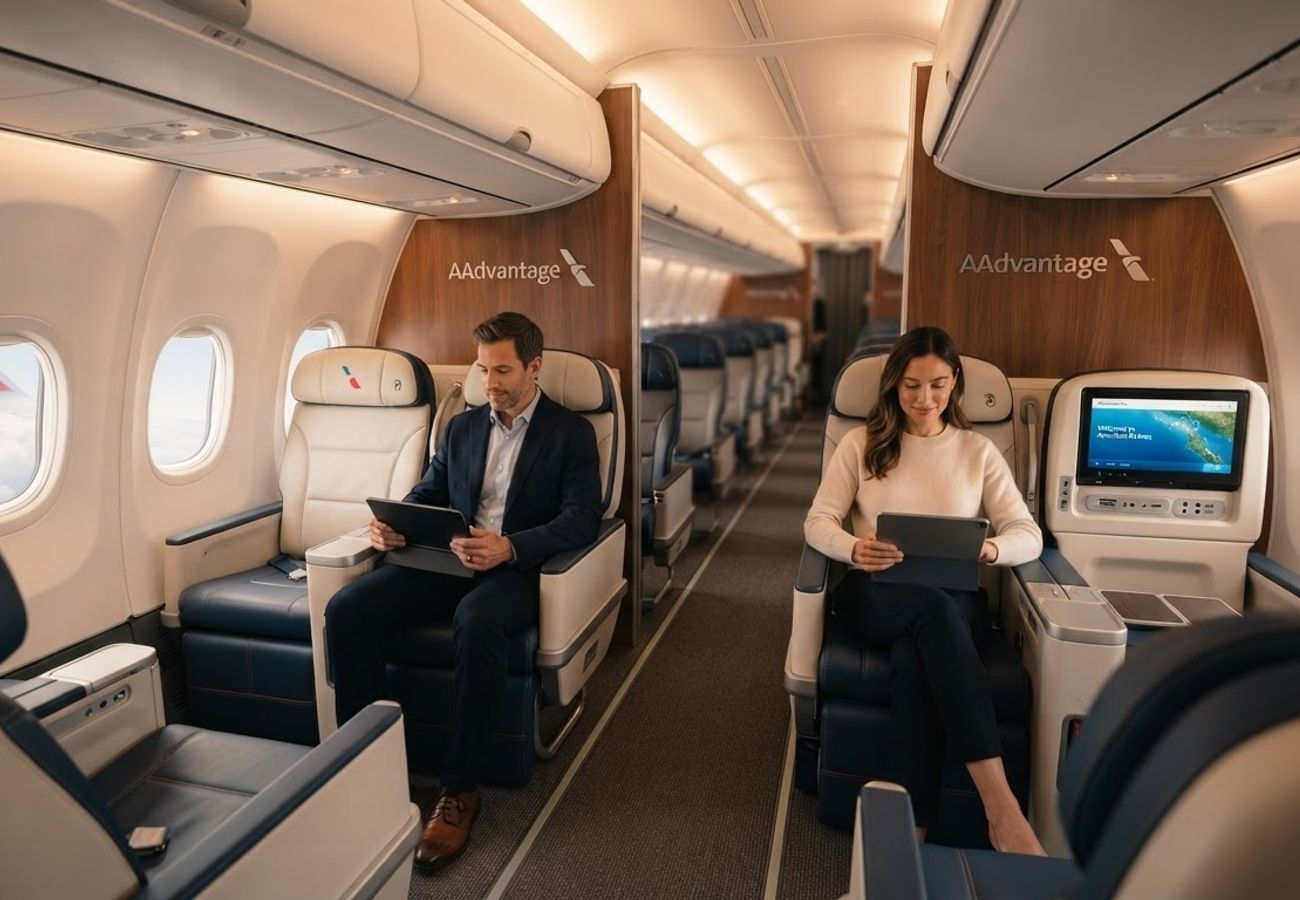
Image generated by AI
American Airlines is pivoting its business model to aggressively target high-net-worth travelers by adding more premium seats and restoring seatback entertainment across its narrowbody and widebody fleets.
The carrier is initiating a comprehensive interior overhaul designed to close a profitability gap with primary competitors Delta Air Lines and United Airlines. By shifting toward a more stratified cabin architecture, American aims to increase revenue per seat through enhanced ancillary offerings and a superior onboard experience.
Narrowbody Fleet Transformation and Capacity Shifts
The backbone of American's domestic network—comprising Airbus A319, A320, and Boeing 737 aircraft—will undergo a significant reconfiguration. The primary objective is to expand revenue-generating premium space at the front of the aircraft without sacrificing total passenger capacity.
Key modifications include:
- First Class Expansion: Many A319 and A320 jets will receive at least one additional row of first-class seating.
- Main Cabin Extra: An increase in extra-legroom seats to attract business travelers and leisure passengers opting for upgrades.
- Phased Implementation: Retrofit programs for existing aircraft are scheduled to ramp up from 2028, continuing into the early 2030s.
New aircraft deliveries from Boeing and Airbus will arrive with these updated interiors pre-installed, ensuring a standardized experience for passengers as the fleet ages out.
The Return of Seatback Entertainment and Satellite Connectivity
In a strategic reversal of its previous "bring your own device" policy, American Airlines is bringing back seatback screens to its narrowbody fleet. This move addresses a growing demand for integrated entertainment and reduces passenger reliance on personal battery life.
The new hardware specifications include:
- Visuals & Audio: 4K resolution screens with Bluetooth connectivity for wireless headphones.
- Power Integration: Integrated USB-C charging ports at every seat.
- Timeline: New deliveries starting in 2028 will feature these screens, with the goal of a fully equipped narrowbody fleet by the early 2030s.
Complementing the hardware is a massive investment in next-generation satellite Wi-Fi. American intends to provide high-speed connectivity on virtually all mainline flights by the middle of the decade, enabling seamless streaming, real-time messaging, and professional work applications.
Widebody and Regional Jet Enhancements
The premium push extends beyond domestic short-haul flights. American is progressively altering its international long-haul configuration to prioritize higher-yield seats over standard economy.
On Boeing 787-9 aircraft, the airline is rolling out new business-class suites. Across other widebody models, the carrier is increasing the concentration of lie-flat business suites and premium economy rows.
Regional connectivity is also being addressed. Dual-class regional jets are slated for an interior refresh to align them with mainline standards. These updates—including updated seating, in-seat power, and expanded satellite Wi-Fi—are targeted for completion by early 2026.
Strategic Alignment with AAdvantage and Market Competition
This capital investment is not merely about comfort; it is a calculated move to increase the inventory of premium seats available for sale or as rewards for AAdvantage elite members. By creating a more differentiated product at the front of the plane, American can better compete for lucrative corporate contracts.
The shift reflects an industry-wide trend toward "stratified interiors," where airlines maximize revenue by charging varying price points for incremental improvements in space and technology.
Fleet Upgrade Timeline and Specifications
| Aircraft Category | Key Upgrade | Feature Detail | Expected Completion/Start |
|---|---|---|---|
| Narrowbody (A319/A320/B737) | Cabin Reconfiguration | +1 Row First Class / More Extra-Legroom | 2028 $\rightarrow$ early 2030s |
| Narrowbody (All) | Entertainment | 4K Screens, Bluetooth, USB-C | 2028 (New) $\rightarrow$ 2030s (Retrofit) |
| Narrowbody (All) | Connectivity | High-speed Satellite Wi-Fi | Mid-decade |
| Widebody (B787-9 & others) | Long-haul Cabins | Lie-flat suites / Premium Economy | Ongoing |
| Regional Jets | Interior Refresh | Power, Wi-Fi, Updated Seats | Early 2026 |
Key Takeaways
- Premium Pivot: American is adding more first-class and extra-legroom seats to increase revenue per passenger.
- Tech Rebound: 4K seatback screens return to narrowbody jets starting in 2028, ending the era of device-only streaming.
- Connectivity Goal: High-speed satellite Wi-Fi will be standard across almost all mainline flights by 2030.
- Competitive Gap: The strategy specifically targets the profitability lead currently held by Delta and United.
FAQ
When will I see the new seatback screens on American Airlines? New aircraft delivered from 2028 will have them installed; existing aircraft will be retrofitted gradually through the early 2030s.
Will the new premium seats reduce legroom in economy? While American intends to preserve overall capacity, analysts are monitoring whether the addition of premium rows will impact the pitch of standard economy seats.
Which aircraft are getting the first updates? Regional jets are the first priority, with updates expected by early 2026, followed by new narrowbody deliveries in 2028.
The battle for the skies is no longer just about the destination, but the digital and physical luxury of the journey.
Related Travel Guides
Disclaimer
This article is for informational and educational purposes only. It does not constitute legal, financial, or professional advice. While we strive to provide accurate and up-to-date information, travel policies, regulations, and conditions change rapidly. Always verify information with official sources before making travel decisions. Nomad Lawyer makes no representations about the accuracy, reliability, completeness, or suitability of the information provided. Readers should consult qualified professionals for advice specific to their circumstances. The views expressed in this article are those of the author and do not necessarily reflect the views of Nomad Lawyer.
Preeti Gunjan
Contributor & Community Manager
A passionate traveller and community builder. Preeti helps grow the Nomad Lawyer community, fostering engagement and bringing the reader experience to life.
Learn more about our team →