
European Aviation Crisis 2026: 3,702 Flight Delays and 102 Cancellations Hit Munich and 15 Major Hubs
Massive travel disruptions across 16 European hubs saw 3,702 delays and 102 cancellations, with Charles de Gaulle and Munich facing the heaviest operational pressure.

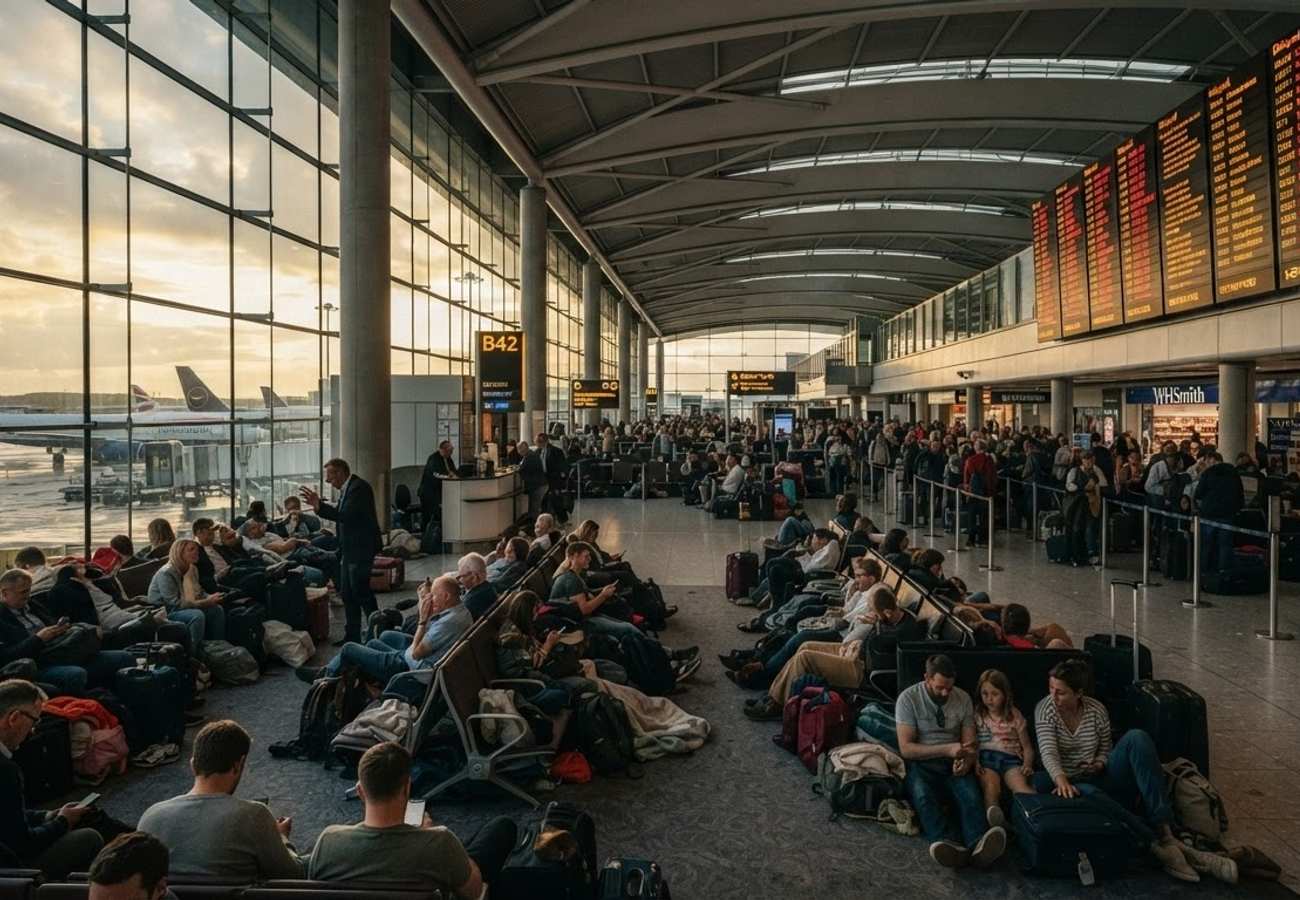
Image generated by AI
Across 16 major European hubs, 3,702 delays and 102 cancellations have paralyzed air travel, leaving thousands of passengers stranded across eight countries. The disruption is most acute at Charles de Gaulle and Munich, where operational bottlenecks have triggered a systemic ripple effect.
The 2026 European Aviation Bottleneck
A sudden surge in operational failures has hit the heart of European aviation, affecting Italy, Germany, Switzerland, the United Kingdom, the Netherlands, Spain, France, and Sweden. The scale of the disruption is vast, with a combination of crew scheduling conflicts, aircraft availability, and air-traffic management failures creating a "knock-on" effect where a single delayed aircraft disrupts an entire network of subsequent flights.
The data reveals a stark concentration of delays. Charles de Gaulle/Roissy emerged as the most delayed airport with 412 delays and 9 cancellations. Meanwhile, Munich International reported the highest volume of cancellations, recording 21.
Hub-by-Hub Disruption Breakdown
The following data highlights the severity of the impact across the most affected regional gateways:
| Airport | Delays | Cancellations | Primary Affected Carrier |
|---|---|---|---|
| Charles de Gaulle/Roissy | 412 | 9 | Air France (166 delays) |
| Leonardo da Vinci (Fiumicino) | 385 | 4 | ITA Airways (152 delays) |
| Munich Int’l | 356 | 21 | Lufthansa (167 delays, 11 cancellations) |
| Zurich (Kloten) | 344 | 5 | Swiss (102 delays) |
| Amsterdam Schiphol | 329 | 7 | KLM (148 delays) |
| Frankfurt Int’l | 307 | 2 | Lufthansa (125 delays) |
| London Heathrow | 281 | 5 | British Airways (182 delays) |
| Barcelona Int’l | 276 | 2 | Vueling Airlines (111 delays) |
| Malpensa Int’l | 236 | 5 | easyJet (94 delays, 5 cancellations) |
| Madrid-Barajas | 174 | 6 | Iberia (36 delays, 5 cancellations) |
| Geneva Cointrin Int’l | 144 | 8 | easyJet (70 delays, 6 cancellations) |
| Naples Int’l | 135 | 4 | easyJet (48 delays, 4 cancellations) |
Carrier Impact: The Hardest Hit Airlines
Low-cost carriers and national flag carriers alike have struggled to maintain schedules. easyJet recorded the highest overall disruption with 389 delays and 29 cancellations, with significant failures at Malpensa, Geneva, and Naples.
Lufthansa followed closely with 326 delays and 12 cancellations, primarily centered around its Munich and Frankfurt hubs. British Airways saw 194 delays, the vast majority of which occurred at London Heathrow. Other heavily impacted carriers include ITA Airways (188 delays), Air France (178 delays), and Ryanair (160 delays).
Even long-haul partners were not immune; Delta Air Lines, United Airlines, Emirates, Qatar Airways, American Airlines, and TAP Air Portugal all reported individual airport disruptions.
Cultural & Environmental Value: The Shift Toward Resilient Travel
For the traveler, the real impact of these systemic failures is a growing realization that "hub-and-spoke" travel is increasingly fragile. This trend is pushing a shift toward regional rail and "slow travel" across Europe, supporting local economies by encouraging visitors to spend more time in secondary cities rather than rushing through primary hubs.
The environmental cost of these disruptions is also significant. Hundreds of aircraft circling in holding patterns over cities like Paris and Munich increase carbon emissions per flight. Regional conservation bodies and tourism departments are increasingly advocating for integrated multi-modal transport—combining high-speed rail with short-haul flights—to reduce the pressure on these 16 critical airports.
Visitor Insider Tips: Navigating European Airport Chaos
When facing systemic disruptions in Europe, standard airline apps are often overwhelmed. Use these local strategies to minimize stress:
- The "Secondary Hub" Pivot: If you are stranded at a major hub like CDG or Frankfurt, check rail connections to secondary airports (e.g., Orly in Paris or regional airports in Germany) where congestion is lower.
- Digital Paper Trails: European aviation authorities require strict documentation for compensation. Save PDF copies of all boarding passes and time-stamped photos of the departure boards.
- Local Dining Strategy: During mass delays, airport food courts become unusable. Look for "Grab-and-Go" kiosks in the periphery of the terminal or use airport delivery services to avoid three-hour queues.
- The EU 261 Advantage: Be aware of your rights under EU Regulation 261/2004. If your delay exceeds a certain threshold, you are entitled to meals, communication, and potentially financial compensation regardless of the "operational" reason given.
Tourism Outlook
The long-term impact of these disruptions is likely to accelerate the digitalization of air traffic management across the EU. As airports like Munich and Charles de Gaulle reach peak capacity, the industry must move toward AI-driven scheduling to prevent the "knock-on" effect. For the traveler, this means a future where flexible booking and multi-modal itineraries are no longer optional but essential for survival in the European travel market.
Safe travels are now a matter of strategy, not just scheduling.
Related Travel Guides
Disclaimer
This article is for informational and educational purposes only. It does not constitute legal, financial, or professional advice. While we strive to provide accurate and up-to-date information, travel policies, regulations, and conditions change rapidly. Always verify information with official sources before making travel decisions. Nomad Lawyer makes no representations about the accuracy, reliability, completeness, or suitability of the information provided. Readers should consult qualified professionals for advice specific to their circumstances. The views expressed in this article are those of the author and do not necessarily reflect the views of Nomad Lawyer.
Raushan Kumar
Founder & Lead Developer
Full-stack developer with 11+ years of experience and a passionate traveller. Raushan built Nomad Lawyer from the ground up with a vision to create the best travel and law experience on the web.
Learn more about our team →