
American Airlines Expands Premium Seating and High-Speed Wi-Fi in 2026 Fleet Retrofit
American Airlines is accelerating a fleetwide cabin overhaul to increase premium seat capacity and deploy high-speed satellite Wi-Fi, targeting higher-yield corporate and luxury travelers.

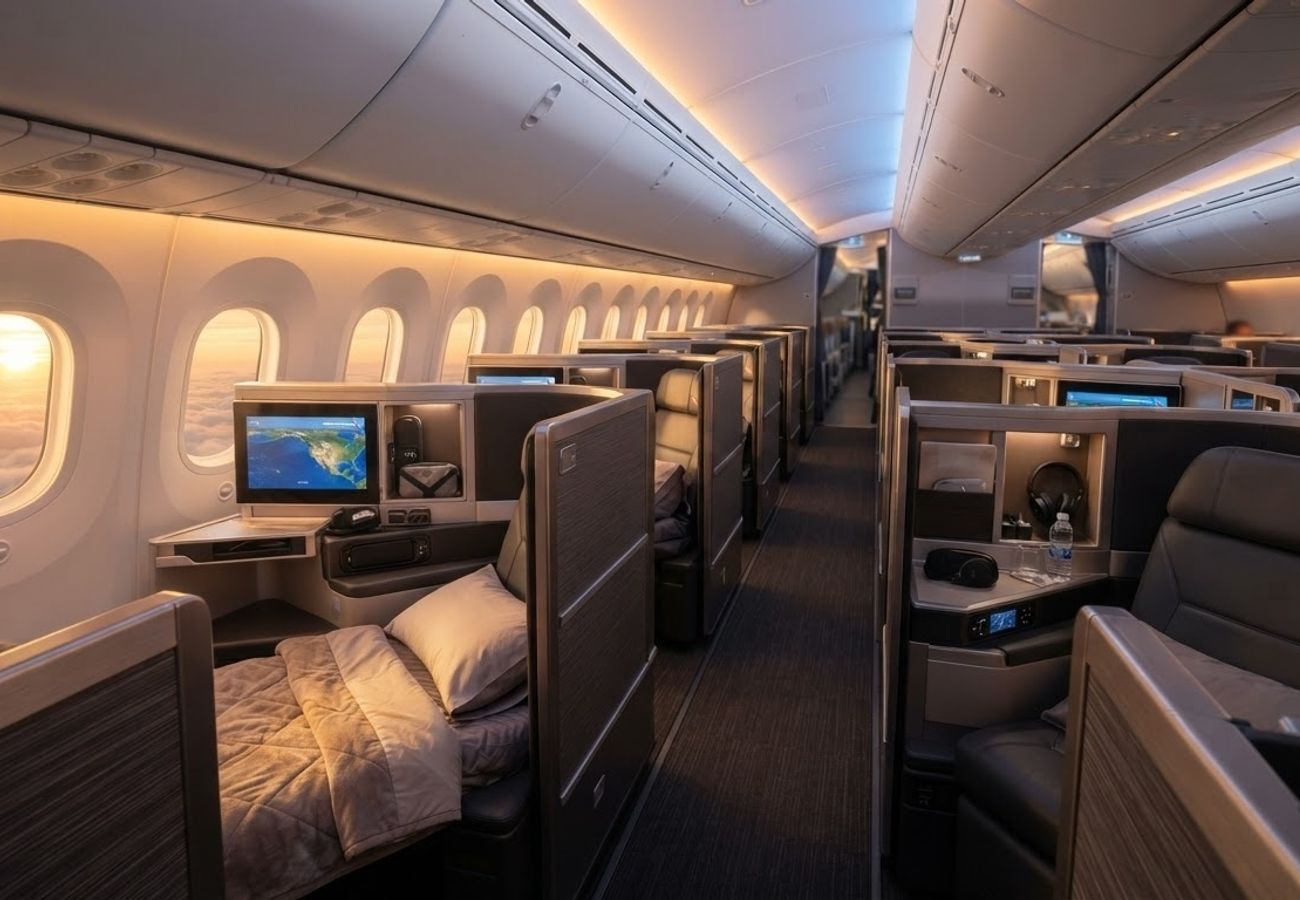
Image generated by AI
American Airlines is aggressively reconfiguring its fleet to prioritize high-yield passengers, increasing premium seat counts on narrowbody jets and expanding lie-flat capacity on long-haul aircraft.
The carrier is executing a multiyear strategic pivot designed to capture the growing demand for upscale travel. This overhaul combines physical cabin reconfigurations with a massive investment in satellite-based connectivity to compete for corporate and affluent leisure travelers.
Narrowbody Fleet Reconfiguration
American is currently updating its Airbus A319 and A320 aircraft. The goal is to create a consistent aesthetic across the fleet, mirroring the design language found in the Boeing 787-9 and Airbus A321XLR.
The specific seat count adjustments are as follows:
- Airbus A319: Domestic first class capacity increased from 8 to 12 seats.
- Airbus A320: Domestic first class capacity increased from 12 to 16 seats.
These aircraft now feature updated trim, larger overhead bins, and powered seats. To accommodate the larger premium sections, American has increased the number of Main Cabin Extra seats and slightly reduced the seat pitch in standard economy sections.
Widebody Strategy and the "Olympus" Project
For long-haul operations, the airline is shifting its inventory toward privacy-centric products. Market data indicates a plan to increase lie-flat and premium economy seating by approximately 50% by the end of the decade.
Key widebody developments include:
- Boeing 787-9 & Airbus A321XLR: Integration of the Flagship Suite business class, featuring enlarged cabins and privacy-focused suites.
- Boeing 777-300ER: Under the internal project name "Olympus," American is retrofitting these aircraft to increase business class capacity while completely removing international first class.
This move aligns the 777-300ER with the broader Flagship Suite strategy, ensuring a uniform product across all major international gateways.
Connectivity and Digital Infrastructure
Physical comfort is being paired with a digital upgrade. High-speed satellite Wi-Fi is now installed across the vast majority of the mainline fleet.
In early 2026, American introduced complimentary high-speed Wi-Fi for AAdvantage loyalty members on most domestic and short-haul routes via a telecommunications partnership. Looking ahead to 2027, the airline plans to introduce next-generation satellite systems to support high-bandwidth activities, including real-time collaboration tools and video streaming.
Fleet Upgrade Specifications
| Aircraft Model | Previous First/Business | New First/Business | Key Upgrade Feature |
|---|---|---|---|
| Airbus A319 | 8 Seats | 12 Seats | Powered seats & larger bins |
| Airbus A320 | 12 Seats | 16 Seats | Widebody-style finishes |
| Boeing 787-9 | Standard | Flagship Suite | Privacy-focused suites |
| Boeing 777-300ER | Int'l First Included | Business Class Only | "Olympus" Retrofit |
Why This Matters: Industry Analysis
From a logistical perspective, this is a calculated gamble on "yield over volume." By reducing the number of standard economy seats to make room for first class and premium economy, American is betting that the higher margins from premium fares will outweigh the loss of total passenger capacity.
For the frequent flyer, the impact is binary:
- Premium Passengers: Will experience a more seamless transition between short-haul and long-haul flights, with consistent seating and superior connectivity.
- Economy Passengers: Will likely encounter denser seating arrangements and tighter legroom (pitch) as the airline optimizes every inch of the cabin for revenue.
Our analysis suggests this is a direct response to the "premiumization" trend in aviation. As corporate travel budgets stabilize and "bleisure" (business + leisure) travel grows, the ability to offer a private, connected environment is now a primary competitive advantage.
Forward Outlook
Expect American to continue the rollout of the "Olympus" retrofits across the 777-300ER fleet through 2027. The industry should also monitor whether competitors respond by further reducing economy pitch to match American's new narrowbody densities. The success of the free Wi-Fi initiative will likely dictate whether other US carriers are forced to abandon per-flight charging models to remain competitive.
The era of the generic economy cabin is fading as airlines pivot toward high-margin, tech-integrated luxury.
Related Travel Guides
Disclaimer
This article is for informational and educational purposes only. It does not constitute legal, financial, or professional advice. While we strive to provide accurate and up-to-date information, travel policies, regulations, and conditions change rapidly. Always verify information with official sources before making travel decisions. Nomad Lawyer makes no representations about the accuracy, reliability, completeness, or suitability of the information provided. Readers should consult qualified professionals for advice specific to their circumstances. The views expressed in this article are those of the author and do not necessarily reflect the views of Nomad Lawyer.
Kunal K Choudhary
Co-Founder & Contributor
A passionate traveller and tech enthusiast. Kunal contributes to the vision and growth of Nomad Lawyer, bringing fresh perspectives and driving the community forward.
Learn more about our team →