
American Airlines Expands Premium Seating in Narrow-Body and Regional Jets for 2026
American Airlines is aggressively reconfiguring its A319, A320, and regional fleets to increase first-class capacity and install seatback screens across 800 aircraft.

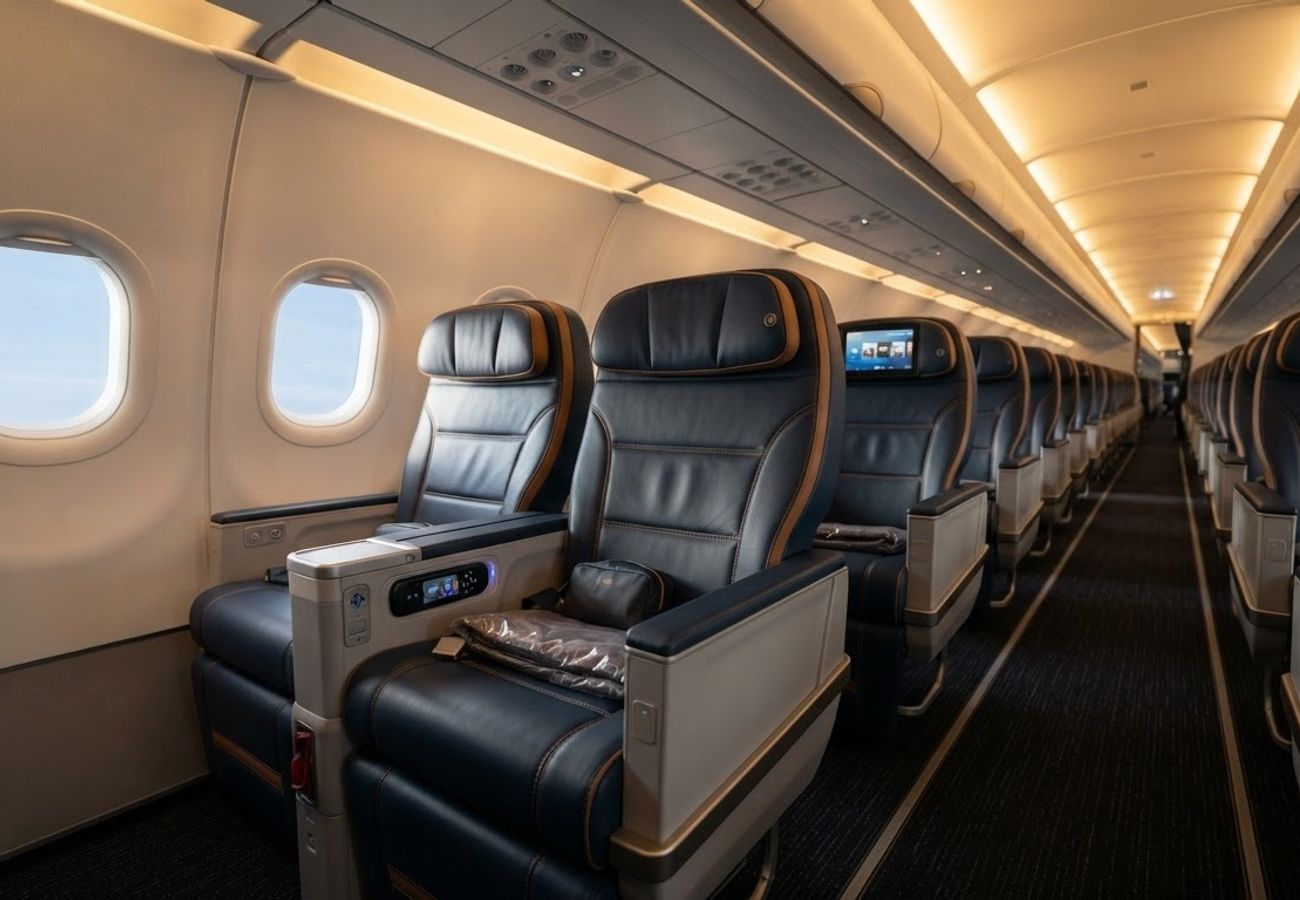
Image generated by AI
American Airlines is pivoting its fleet strategy to prioritize high-yield passengers by expanding premium cabins in its smallest aircraft. This shift includes increasing first-class capacity on narrow-body jets and reintegrating seatback entertainment across 800 aircraft.
The airline is currently overhauling its narrow-body and regional cabins to capture a larger share of corporate contracts and elite frequent flyers. By increasing the ratio of premium seating on domestic and regional routes, American aims to maximize revenue per seat without necessarily increasing the total number of aircraft in operation.
Narrow-Body Fleet Reconfiguration: A319 and A320
American Airlines is executing a targeted refurbishment of its Airbus A319 and A320 fleets. The goal is to align seat capacity with the growing demand for domestic first-class travel on high-frequency routes.
The A319, which previously featured only eight first-class seats, is being reconfigured to accommodate 12 seats at the front of the cabin. Similarly, the larger A320 is receiving an additional row of first-class seating as part of a comprehensive interior refresh.
These updates are not limited to existing planes. Future deliveries of the Boeing 737 MAX 10 are planned with approximately two dozen domestic first-class seats—a significant increase over previous narrow-body layouts. The A321neo is also being prioritized for premium-heavy configurations.
The airline has signaled a long-term strategic target where approximately 40 percent of seats on narrow-body flights will fall into premium or extra-legroom categories.
Regional Network Evolution via American Eagle
The premium push extends into the regional network, where American Eagle is phasing out 50-seat aircraft in favor of larger, dual-class models.
The Embraer 175 (E175), a 76-seat jet, is now the cornerstone of this regional strategy. Unlike the single-class 50-seaters they replace, these E175s feature:
- Dedicated first-class cabins.
- High-speed connectivity and in-seat power.
- Increased seat pitch and width.
This transition ensures a consistent "mainline" experience for passengers connecting from long-haul or transcontinental flights into smaller regional hubs. This alignment supports the airline's broader goal to eliminate its smallest regional jets by the end of the decade.
Technology Reversal: The Return of Seatback Screens
In a major reversal of previous cost-cutting measures, American Airlines is reinstalling individual seatback screens on more than 800 aircraft. This move directly addresses competitive pressure from Delta Air Lines and United Airlines, both of which use integrated entertainment as a primary premium differentiator.
The rollout strategy includes:
- New Deliveries: Aircraft arriving later this decade will feature 4K seatback displays.
- Retrofits: Existing planes will be upgraded during scheduled maintenance.
- Cabin Bundling: Screen installations are being paired with new cabin lighting and refreshed sidewalls.
Market Positioning and Revenue Strategy
This strategic pivot is a direct response to the North American aviation trend where leisure travelers are increasingly willing to pay for extra space, and business travel remains robust on key corridors.
By investing in the cabins of existing fuel-efficient models, American is attempting to increase its "premium revenue" pillar for the late 2020s. This allows the carrier to compete with low-cost rivals on total seat count while simultaneously extracting higher yields from affluent travelers.
The transition involves significant operational hurdles, including aircraft downtime for refits and the need to balance premium capacity with upgrade availability for loyalty members. However, the move signals that American now views even short-haul regional flights as a critical battleground for high-value passengers.
Premium Capacity Shift Summary
| Aircraft Model | Previous/Standard Layout | New/Planned Layout | Key Change |
|---|---|---|---|
| Airbus A319 | 8 First Class Seats | 12 First Class Seats | +4 Premium Seats |
| Airbus A320 | Standard Configuration | Added First Class Row | Increased Premium Capacity |
| Boeing 737 MAX 10 | Standard Narrow-body | ~24 First Class Seats | Substantial Premium Increase |
| Embraer 175 | Replacing 50-seat jets | 76-seat Dual Class | Shift to Mainline-style Regional |
| Fleet-wide (800+ jets) | No seatback screens | 4K/Individual Screens | Return of IFE |
Key Takeaways
- Capacity Increase: American is adding more first-class seats to A319, A320, and 737 MAX 10 aircraft.
- Regional Upgrade: 50-seat regional jets are being replaced by dual-class Embraer 175s.
- Tech Refresh: 800+ aircraft will receive seatback screens to compete with Delta and United.
- Revenue Goal: A long-term target of 40% premium/extra-legroom seating on narrow-body flights.
FAQ
Why is American Airlines adding more premium seats to smaller planes? The airline is responding to high demand from corporate travelers and leisure passengers willing to pay for extra comfort, aiming to increase revenue per flight.
Which aircraft are getting the most upgrades? The Airbus A319, A320, and the upcoming Boeing 737 MAX 10 are seeing the most significant first-class expansions, while the Embraer 175 is dominating the regional upgrade.
Are seatback screens returning to all American Airlines flights? While not every single aircraft may be updated, the airline is installing screens on over 800 jets, including many narrow-body and domestic routes.
The battle for the premium passenger has officially moved to the regional jet.
Related Travel Guides
Disclaimer
This article is for informational and educational purposes only. It does not constitute legal, financial, or professional advice. While we strive to provide accurate and up-to-date information, travel policies, regulations, and conditions change rapidly. Always verify information with official sources before making travel decisions. Nomad Lawyer makes no representations about the accuracy, reliability, completeness, or suitability of the information provided. Readers should consult qualified professionals for advice specific to their circumstances. The views expressed in this article are those of the author and do not necessarily reflect the views of Nomad Lawyer.
Preeti Gunjan
Contributor & Community Manager
A passionate traveller and community builder. Preeti helps grow the Nomad Lawyer community, fostering engagement and bringing the reader experience to life.
Learn more about our team →