
Aviation Updates: Alaska Airlines Flight Forced into Mid-Air U-Turn Over West Coast Travel Chaos
A SkyWest-operated Alaska Airlines Embraer 175 bound for Arcata abruptly U-turned back to Seattle, exposing the operational volatility of regional coastal routes.

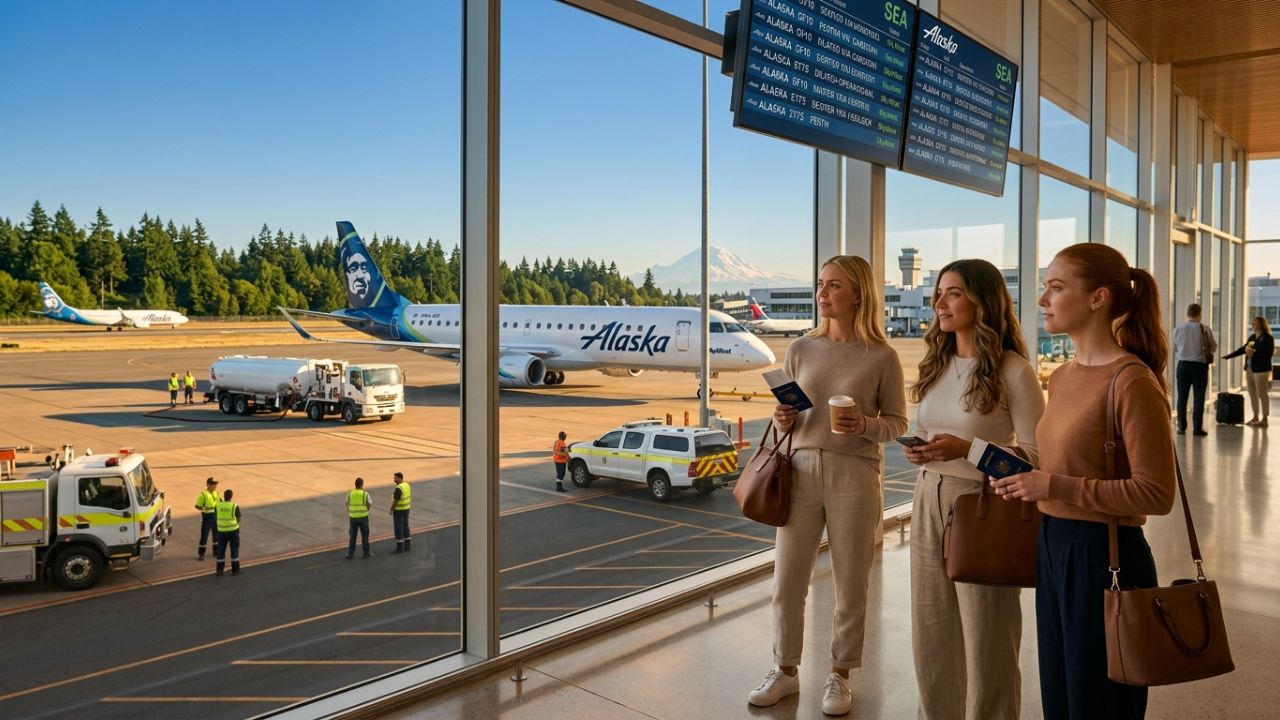
Image Credit: SkyWest Airline
Aviation Updates: Alaska Airlines Flight Forced into Mid-Air U-Turn Over West Coast Travel Chaos
In a highly disruptive mid-air incident that perfectly underscores the unpredictable operational hazards of regional coastal flying, an Alaska Airlines flight was abruptly forced to abandon its destination, executing a massive U-turn directly back to its departure hub.
Image Credit: SkyWest Airline
As daily airline news platforms and continuous aviation updates heavily document massive, system-wide airport disruptions at major global hubs, the extreme volatility of secondary regional aviation often goes unreported. However, a recent incident involving SkyWest Airlines—operating under the Alaska Airlines brand—has drawn intense scrutiny from travelers who absolutely depend on seamless connectivity between Washington and Northern California. Flight SKW3220, operated by an Embraer 175 regional jet, departed Seattle with scheduled service to Arcata but was abruptly forced into a highly dramatic mid-air U-turn, ultimately returning to Seattle-Tacoma International Airport. While this specific event avoided massive, systemic flight cancellations, it perfectly highlights how rapidly regional aviation operations must execute extreme precautionary measures. By abandoning the route mid-journey, the airline instantly generated a localized pocket of intense travel chaos, forcing passengers to suddenly recalculate their entire West Coast itineraries.
Expanded Overview: The FAA Safety Framework
When analyzing the sudden collapse of regional flight itineraries, the absolute priority of the FAA safety framework dictates every mid-air decision.
The US commercial aviation safety system, fiercely monitored by the FAA and the US Department of Transportation, enforces strictly mandated operational guidelines for carriers like SkyWest Airlines. According to these rigid operational standards, pilots must aggressively prioritize aircraft integrity over schedule adherence whenever irregular conditions arise. The sudden diversion of flight SKW3220 perfectly aligns with these non-negotiable safety-first protocols. Secondary coastal airports frequently suffer from incredibly fast-moving, weather-dependent landing conditions that severely compromise controlled navigation approaches. The decision to execute a U-turn and return to Seattle was not an emergency escalation, but rather a highly calculated, precautionary withdrawal designed to protect passenger safety at the direct expense of operational continuity.
Section-Wise Breakdown: The Seattle-Tacoma (SEA) Hub
The successful execution of this mid-air U-turn heavily relied on the massive infrastructure capabilities of the departure airport.
Governed under the strict oversight of the Port of Seattle aviation authority, Seattle-Tacoma International Airport (SEA) continued absolutely normal operations despite the sudden, unscheduled return of SKW3220. SEA functions as an incredibly robust Pacific Northwest aviation hub, actively connecting massive international and domestic tourism routes. Diversions and aborted flights returning to SEA are absorbed highly efficiently due to the hub's advanced runway capacity and massive maintenance infrastructure. Because the airport supports multiple Alaska Airlines regional rotations daily, SEA ensures that rapid aircraft turnarounds are executed flawlessly, guaranteeing that diverted flights can be rapidly reassigned or serviced without completely destroying broader tourism schedules.
Section-Wise Breakdown: The Arcata Arrival Failure
Conversely, the failure to land in Northern California represents a significant, highly disruptive blow to local, eco-driven tourism networks.
Located in Humboldt County, Arcata relies heavily on uninterrupted air connectivity through the Arcata-Eureka Airport for massive inbound tourism flows. According to official Humboldt County transportation planning resources, this secondary airport serves as a critical gateway for regional eco-tourism and elite coastal exploration. The SKW3220 diversion instantly interrupted inbound travel schedules, severing the vital link from Seattle’s major international hub. Fortunately, Arcata’s tourism infrastructure is somewhat resilient, heavily supported by the California Department of Transportation (Caltrans) and the highly scenic Highway 101 corridor. While the flight disruption was ultimately limited in duration, it briefly paralyzed seasonal visitor movement into the region.
Flight Details: SKW3220 Diversion Matrix
The exact operational telemetry outlining this highly disruptive regional diversion, detailing the specific aircraft deployment and the mid-air geographic detour, has been consolidated into the mandatory matrix below.
Alaska Airlines (SkyWest) SKW3220 Diversion Matrix
| Operational Metric | Flight Data |
|---|---|
| Operating Carrier | SkyWest Airlines (for Alaska Airlines) |
| Flight Number | SKW3220 |
| Aircraft Type | Embraer 175 (E175) |
| Origin Airport | Seattle-Tacoma International Airport (SEA) |
| Original Destination | Arcata-Eureka Airport (Humboldt County) |
| Diversion Location | U-turn return to Seattle (SEA) |
| Operational Trigger | Precautionary FAA safety protocol execution |
| Primary Passenger Impact | Temporary schedule disruption |
Passenger Impact: Navigating the U-Turn
For the passengers trapped aboard SKW3220, the experience of executing a mid-air U-turn translates directly into immediate, highly frustrating travel chaos.
When a flight completely abandons its destination and returns to the origin airport, passengers face a massive logistical nightmare. They are suddenly forced to desperately rebook onto subsequent regional flights, drastically altering their hotel reservations and rental car agreements in Northern California. For business travelers and eco-tourists relying on strict itineraries, this temporary change in plans can completely ruin a weekend trip. However, because SEA is a massive Alaska Airlines hub, airline systems eventually ensured continuity, aggressively re-accommodating passengers and minimizing the long-term financial costs of the delay.
Industry Analysis: The Embraer 175 in Coastal Aviation
Aviation strategists explicitly note that this diversion highlights the operational reality of utilizing regional jets on highly volatile coastal routes.
SkyWest Airlines heavily utilizes the Embraer 175 (E175) because it provides incredible fuel efficiency on lower-demand, short-haul routes. However, these lighter regional aircraft are frequently subjected to highly restrictive operational limits when attempting to land at coastal airports heavily plagued by sudden marine layers, high crosswinds, and low visibility. The diversion of SKW3220 simply reinforces the broader operational patterns in US regional aviation: when coastal weather degrades, airlines operating E175s will instantly override schedule adherence, executing controlled diversions to absolutely guarantee system reliability and passenger safety across interconnected airport networks.
Conclusion: Resilience in Regional Flying
Ultimately, the sudden U-turn of Alaska Airlines flight SKW3220 perfectly demonstrates the extreme operational resilience of the US domestic aviation network. While the sudden cancellation of the Arcata arrival briefly generated intense travel chaos and severely frustrated passengers, the controlled return to Seattle-Tacoma International Airport was executed flawlessly under strict FAA safety standards. As airlines continue to heavily service smaller, weather-dependent tourism destinations across the West Coast, these highly calculated, precautionary diversions will remain an absolute necessity. Temporary flight disruptions are simply the cost of doing business, ensuring that the critical eco-tourism link between Washington and Northern California remains fundamentally safe and structurally unbreakable.
Key Takeaways
- Mid-Air Diversion: SkyWest-operated Alaska Airlines flight SKW3220 executed a massive mid-air U-turn, abandoning its route to Arcata.
- Return to Origin: The Embraer 175 aircraft safely returned to its departure hub at Seattle-Tacoma International Airport (SEA).
- Safety Protocols: The diversion was not an emergency escalation, but a highly calculated, precautionary decision governed by strict FAA safety standards.
- Passenger Disruption: The aborted flight caused immediate, localized travel chaos for passengers bound for Humboldt County’s eco-tourism sector.
- Hub Resilience: The massive infrastructure at Seattle-Tacoma allowed the airport to instantly absorb the diverted flight and initiate rapid passenger rebooking.
FAQ: Alaska Airlines SKW3220 Seattle to Arcata Flight
What happened to Alaska Airlines flight SKW3220? The SkyWest-operated flight, an Embraer 175 flying from Seattle to Arcata, California, was forced to abandon its destination mid-flight, executing a U-turn and returning directly to Seattle-Tacoma International Airport.
Why did the flight return to Seattle? The diversion was a highly calculated, precautionary decision mandated by FAA safety protocols, typically triggered when secondary coastal airports like Arcata experience sudden, restrictive landing conditions.
Was the Alaska Airlines U-turn an emergency? No. The return to Seattle was not an emergency escalation. It was a controlled operational withdrawal designed to protect aircraft integrity and passenger safety rather than forcing a risky landing.
Related Travel Guides
Qantas London Perth Flight Diverts Karratha Travel Chaos 2026
SpiceJet Receives 16 Million Government Crisis Fund Travel Chaos 2026
US Domestic Flight Delay Compensation Guide 2026
Disclaimer: This article is strictly for informational purposes. The aviation route data, specific flight incident details (SkyWest-operated Alaska Airlines SKW3220), origin and destination airports (Seattle and Arcata), and aircraft telemetry (Embraer 175) are based on operational reports available at the time of publication. Regional airline network planning, FAA safety regulations, and specific emergency diversion protocols are highly dynamic and subject to continuous, strict oversight by the US Department of Transportation. Passengers must explicitly verify exact flight availability, routing timetables, and carrier safety records directly with Alaska Airlines prior to booking travel.
Disclaimer
This article is for informational and educational purposes only. It does not constitute legal, financial, or professional advice. While we strive to provide accurate and up-to-date information, travel policies, regulations, and conditions change rapidly. Always verify information with official sources before making travel decisions. Nomad Lawyer makes no representations about the accuracy, reliability, completeness, or suitability of the information provided. Readers should consult qualified professionals for advice specific to their circumstances. The views expressed in this article are those of the author and do not necessarily reflect the views of Nomad Lawyer.
Raushan Kumar
Founder & Lead Developer
Full-stack developer with 11+ years of experience and a passionate traveller. Raushan built Nomad Lawyer from the ground up with a vision to create the best travel and law experience on the web.
Learn more about our team →