
Yucatán Peninsula Travel Guide 2026: Navigating Mayan Ruins, Cenotes, and Caribbean Coasts
A comprehensive 2026 guide to Mexico's Yucatán Peninsula, covering essential logistics for first-time visitors exploring Quintana Roo, Yucatán, and Campeche states.

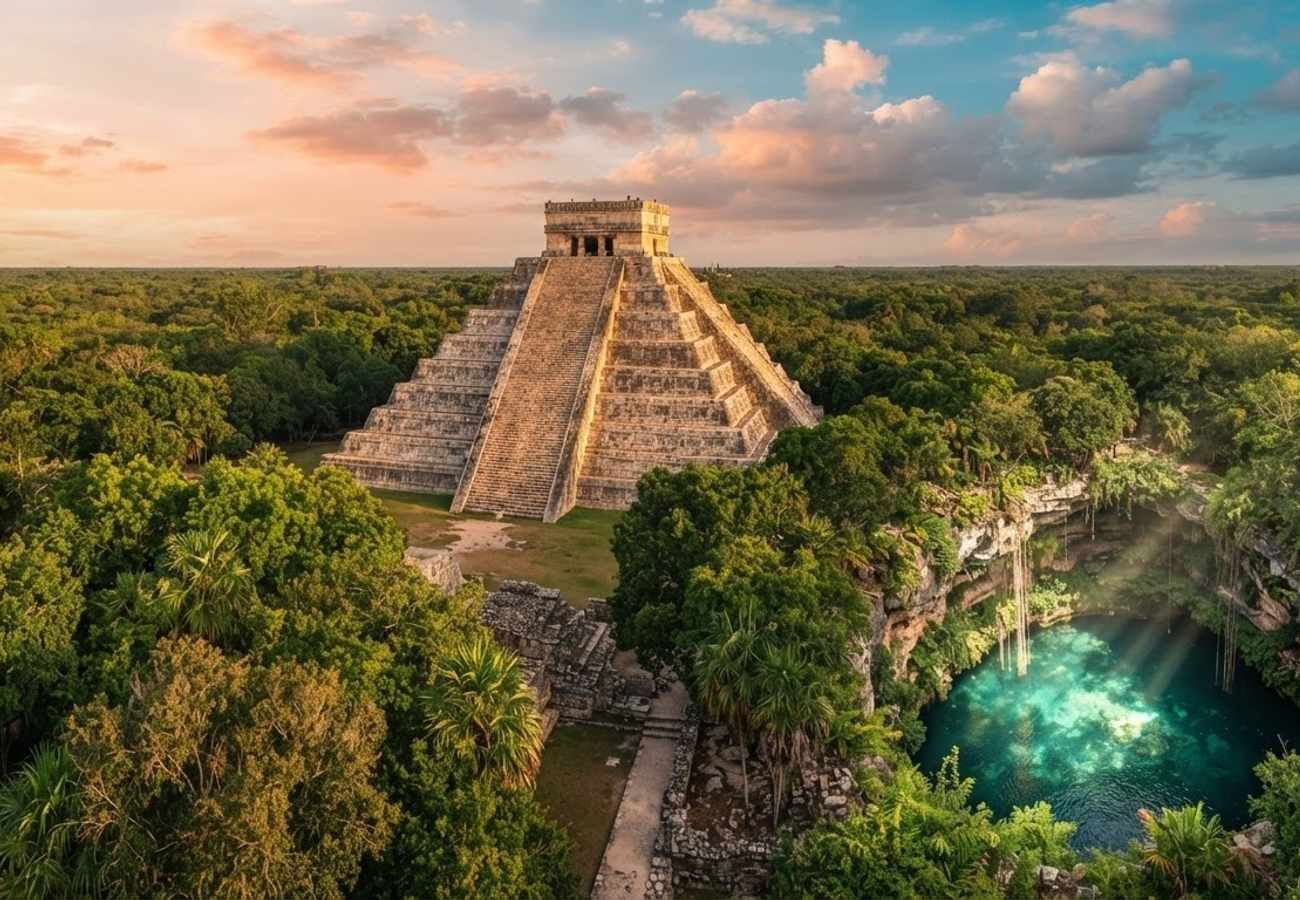
Image generated by AI
The Yucatán Peninsula is often the first introduction to Mexico for global travelers, offering a high-contrast mix of Caribbean turquoise waters and deep jungle mysteries. Spanning Quintana Roo, Yucatán, and Campeche, the region is compact enough for a 5–14 day itinerary but diverse enough to require strategic planning.
The Shift Toward Regional Dispersion
While the "Hotel Zone" of Cancún remains a powerhouse for all-inclusive luxury, a clear trend is emerging: travelers are moving away from the saturated coastlines toward the colonial heartlands. The shift is driven by a desire for authentic cultural immersion over resort isolation.
Quintana Roo continues to anchor the Caribbean experience with Cancún, Playa del Carmen, and Tulum. Highway 307 serves as the primary artery for these destinations, connecting the boutique eco-hotels of Tulum with the high-density resorts of Puerto Morelos and Playa Mujeres. However, the real growth is happening in Yucatán state. Cities like Mérida, Valladolid, and Izamal are seeing a surge in visitors who prioritize museums, local markets, and early-morning access to archaeological sites over beach clubs.
For those pushing the boundaries of the standard itinerary, Campeche offers a slower pace. The walled city of San Francisco de Campeche—a UNESCO-listed port—provides a stark contrast to the Caribbean side, trading sunrise beach walks for Gulf sunsets and the remote, wildlife-rich ruins of Calakmul.
Cultural & Environmental Value: Beyond the Surface
For the visitor, the real impact of the Yucatán is found in the intersection of Mayan heritage and unique geology. The region's cenotes—limestone sinkholes—are not just swimming holes; they are sacred sites in Mayan cosmology and critical freshwater sources for the local ecosystem.
The experience of visiting ruins like Chichén Itzá or Uxmal is evolving. Rather than simply observing the stone structures, there is a growing movement toward hiring licensed local guides at the entrance. This ensures that the economic benefit of tourism stays within the community and provides visitors with a nuanced understanding of Mayan astronomy and politics that a guidebook cannot offer.
Environmentally, the region faces the challenge of sargassum (seaweed) blooms, particularly between March and September. This has pushed travelers to appreciate the "inland Caribbean"—the cenotes of Valladolid (such as Suytun, Zací, and Samulá) and the jungle paths of Cobá—reducing the environmental pressure on the fragile coastline.
Visitor Insider Tips
To navigate the peninsula like a local and avoid common tourist pitfalls, keep these practicalities in mind:
- The "Early Bird" Rule: To avoid the crushing crowds and oppressive heat (especially from March to May), arrive at Chichén Itzá and Tulum ruins exactly at opening time. You will beat the tour buses and the midday sun.
- Cenote Etiquette: Most cenotes require a quick shower before entry. This is not optional; it is to remove sunscreens and oils that damage the delicate aquatic ecosystem.
- Transport Hacks: While taxis are plentiful, they rarely use meters. Always negotiate the fare before starting the engine. For short trips, use colectivos (shared vans); a ride that costs 10 to 20 US dollars in a taxi often costs only a few US dollars via colectivo.
- The ADO Advantage: For inter-city travel (e.g., Cancún to Mérida), use the ADO bus network. Tickets typically range from 15 to 25 US dollars depending on the class of service, offering air-conditioned comfort and reliable schedules.
- Sargassum Tracking: Before booking a beach hotel, check local social media groups or hotel-specific "sargassum cams" to see the current state of the shoreline.
Tourism Outlook
The long-term trajectory for the Yucatán Peninsula is one of sustainable diversification. By promoting the "Mayan Route" inland and encouraging visits to the less-crowded state of Campeche, regional tourism bodies are attempting to mitigate the over-tourism seen in the Riviera Maya. The integration of eco-chic accommodation in Tulum and the preservation of colonial architecture in Mérida suggest a future where luxury and heritage coexist, provided that environmental protections for the cenotes and reefs remain a priority.
Experience the Yucatán not as a resort guest, but as a student of the jungle and the coast.
Related Travel Guides
Disclaimer
This article is for informational and educational purposes only. It does not constitute legal, financial, or professional advice. While we strive to provide accurate and up-to-date information, travel policies, regulations, and conditions change rapidly. Always verify information with official sources before making travel decisions. Nomad Lawyer makes no representations about the accuracy, reliability, completeness, or suitability of the information provided. Readers should consult qualified professionals for advice specific to their circumstances. The views expressed in this article are those of the author and do not necessarily reflect the views of Nomad Lawyer.
Kunal K Choudhary
Co-Founder & Contributor
A passionate traveller and tech enthusiast. Kunal contributes to the vision and growth of Nomad Lawyer, bringing fresh perspectives and driving the community forward.
Learn more about our team →