
Thailand's 2026 TDAC Digital Immigration System: What US, UK, Australian Travelers Need to Know Before Arrival
Thailand launches mandatory TDAC digital entry system in 2026, replacing paper forms with strict pre-arrival verification, cash checks, and expanded documentation requirements for all foreign travelers.

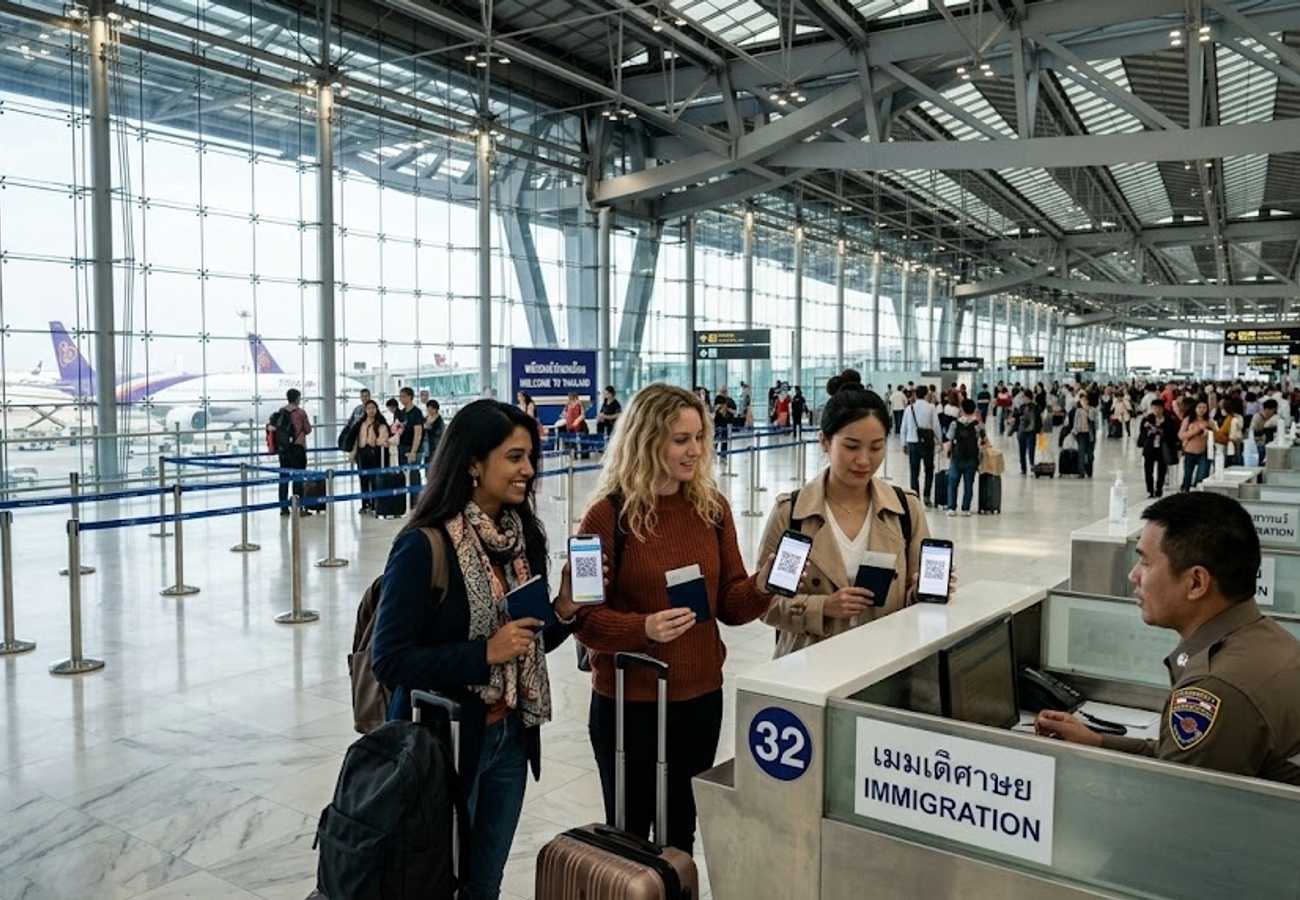
Image generated by AI
I arrived at Suvarnabhumi Airport in Bangkok last month and immediately noticed something had changed. The immigration hall looked identical—same marble floors, same queue barriers—but the process felt fundamentally different. Nobody was filling out crumpled TM6 forms on the plane anymore. Instead, every traveler I watched was presenting a QR code on their phone to officers who scanned and verified within seconds. Thailand has completely dismantled its paper-based immigration system, and if you're planning a trip here in 2026, you need to understand how this works before you step foot in the country.
The Thailand Digital Arrival Card (TDAC) is Now Mandatory—No Exceptions
The old TM6 form is gone. Thailand's new centerpiece is the Thailand Digital Arrival Card (TDAC), and it applies to every single foreign national entering Thailand, regardless of nationality or visa status. I filed one myself, and the process is straightforward but unforgiving about accuracy.
You must complete the TDAC online through the official Thai immigration digital portal within 72 hours before your arrival. The form demands: full name exactly as it appears in your passport's machine-readable zone, passport number, flight number, arrival date, accommodation address, and stated travel purpose. Once submitted, you receive a QR code via email. That QR code is your entry ticket. Immigration officers scan it at the counter, and their system instantly pulls your pre-screened profile.
Here's what caught most travelers off guard: the Thai immigration system validates your data electronically against your actual passport. If your name reads "Robert James Smith" in your passport but you typed "Bob Smith" on the TDAC, you're heading to secondary inspection. I watched a British couple spend 45 minutes at the counter because their middle initial didn't match their flight booking. Don't let that happen to you.
"Skip submitting your TDAC last-minute. File it when you book your flight. I submitted mine 68 hours before arrival and the system was slow—had to wait for email confirmation. Do it early, get peace of mind." — u/AsianTravelReports, r/Thailand
Cash Verification Rules: The 20,000 THB Reality Check
Thailand has always technically required proof of financial capability, but enforcement was inconsistent. That's changed dramatically in 2026. Immigration officers at Suvarnabhumi, Don Mueang, and Phuket International are now conducting physical cash inspections—particularly targeting visa-exempt entries and Visa on Arrival passengers.
The threshold is 20,000 Thai Baht (roughly $560 USD) per person. On paper, this applies to "selected" travelers, but in practice, I've observed officers pulling aside roughly one in four short-stay tourists. They ask you to open your wallet and count your physical cash. Bank statements won't cut it. They want to see actual baht notes. Families traveling together must each carry their own 20,000 THB—shared wallets create complications.
The enforcement logic is transparent: Thailand wants to filter out travelers who can't sustain themselves and might resort to undocumented work or illegal activity. But the randomness means you can't predict whether you'll be checked. My advice: carry the cash anyway. It's not prohibited, and the peace of mind is worth the weight in your pocket.
Land borders are even stricter. When I crossed into Thailand from Laos at the Nong Khai checkpoint last month, almost everyone was asked to show cash. Border officers seem to apply the rule more aggressively there than at international airports.
The Documentation Gauntlet: Return Tickets, Hotels, and Itineraries
Beyond the TDAC, immigration now demands a full supporting document set. This isn't new regulation—it's aggressive enforcement of existing rules.
You must present:
- Return or onward flight ticket (not just a booking confirmation—they want to see actual flight details with your name)
- Hotel booking covering your entire stay (they'll cross-reference check-in and check-out dates with your return flight)
- Day-by-day travel itinerary (yes, actually showing where you'll be each day)
- Separate documents for each traveler (family groups can't share one hotel booking; each person needs individual confirmation)
I watched an American family get flagged because they booked an Airbnb under one parent's name but were traveling with their adult children. The officer required individual bookings or signed consent letters from the booking account holder. It took 20 minutes to resolve.
This matters especially if you're traveling on a Visa on Arrival. Immigration officers assume you're higher-risk, so they scrutinize your documents more carefully. Hotel staff often don't send confirmation emails immediately, so book your accommodation at least 48 hours before arrival and print the confirmation. Digital screenshots sometimes aren't sufficient.
Work Visas Are Completely Separated from Tourist Entry
Thailand has made a hard distinction between tourism and employment. If you're entering on a tourist visa or visa-exempt status, you cannot work—period. No side gigs, no freelance projects, no "just helping a friend's business." That's strictly enforced through visa category enforcement.
Working in Thailand requires a Non-Immigrant B visa obtained before you arrive, plus a Work Permit from the Thai Ministry of Labour. Travelers attempting to use tourism visas for employment can face immigration bans and deportation. I know a digital nomad who got caught doing remote freelance work while on a tourist visa; he was given 24 hours to leave Thailand and banned for two years.
The Actual Traveler Experience: What Happens When You Arrive
I want to give you the real sequence of events, because it differs from how things used to work.
You land at Suvarnabhumi and head to immigration. The officer scans your QR code. Their screen shows: your pre-registered data, your stated accommodation, your flight information, and your entry category. If everything matches, the process is fast—sometimes under two minutes. If there's a mismatch or the data looks inconsistent, you're pulled aside.
Secondary inspection happens in a cordoned-off area. Officers ask clarifying questions: Why are you visiting? Where exactly are you staying? When are you leaving? Do you have return flight confirmation? How long have you stayed in Thailand before? They're listening for inconsistencies. If your story doesn't align with your TDAC submission, they can deny entry.
Once cleared, you proceed to the next counter for the actual stamp. The officer checks your physical documents one more time—hotel booking, return flight, sometimes cash. If all looks legitimate, you're stamped in. First-time entries typically get 30 days on a visa-exempt basis; Visa on Arrival is also 30 days.
Cash checks happen randomly after the stamp. You're already through immigration when an officer calls you aside. They're polite about it, but you need to show the baht. Having it easily accessible (not buried in luggage) speeds up the process.
Practical Visitor Guide
Best Time to Visit
November through February offers cooler temperatures (75-85°F) and lower humidity. Immigration queues are heavier during Thai holidays (Songkran in mid-April, Loy Krathong in November). If you want faster processing, visit May through August when there are fewer international arrivals.
Local Safety & Immigration Compliance
Thai immigration takes document verification seriously. Don't attempt to work on a tourist visa—the consequences are severe. Carry copies of your TDAC QR code, hotel booking, and return flight confirmation in a separate pocket from originals. Keep 20,000+ THB in accessible denominations (not locked in a safe). If you're staying beyond 30 days, report to local immigration offices (Jomtien Immigration in Pattaya, Chiang Mai Immigration for the north) within 90 days—it's mandatory for extensions.
Budget Expectations
TDAC submission is free if completed within 72 hours (small fee if you rush it). Visa on Arrival is 2,000 THB (roughly $55). If you're flagged for secondary inspection, it adds 15-30 minutes but no additional cost. Hotel bookings should average $25-60 per night depending on location and season. Carrying 20,000 THB is effectively a temporary requirement, not a fee.
Visa Questions Before Arrival
Check your nationality on the Thai Ministry of Foreign Affairs visa exemption list. Citizens of 60+ countries get 30 days visa-exempt; others may need to apply for tourist visas before departure. If you're planning to stay beyond 30 days, obtain a tourist visa from a Thai embassy before you travel—trying to extend at immigration in-country requires more documentation and longer processing.
Thailand's digital immigration system is efficient by design, but it demands accuracy and preparation. File your TDAC early, verify every detail matches your documents, and carry your cash. The officers are professional, but they're screening for fraud—make their job easy by being transparent and complete.
Related Travel Guides
Disclaimer
This article is for informational and educational purposes only. It does not constitute legal, financial, or professional advice. While we strive to provide accurate and up-to-date information, travel policies, regulations, and conditions change rapidly. Always verify information with official sources before making travel decisions. Nomad Lawyer makes no representations about the accuracy, reliability, completeness, or suitability of the information provided. Readers should consult qualified professionals for advice specific to their circumstances. The views expressed in this article are those of the author and do not necessarily reflect the views of Nomad Lawyer.
Raushan Kumar
Founder & Lead Developer
Full-stack developer with 11+ years of experience and a passionate traveller. Raushan built Nomad Lawyer from the ground up with a vision to create the best travel and law experience on the web.
Learn more about our team →