
US Airline Passenger Rights 2026: Why Travelers Still Face Overnight Airport Floor Stays
Despite new DOT refund mandates, systemic operational failures and hotel shortages continue to force thousands of passengers to sleep on airport floors during major disruptions.

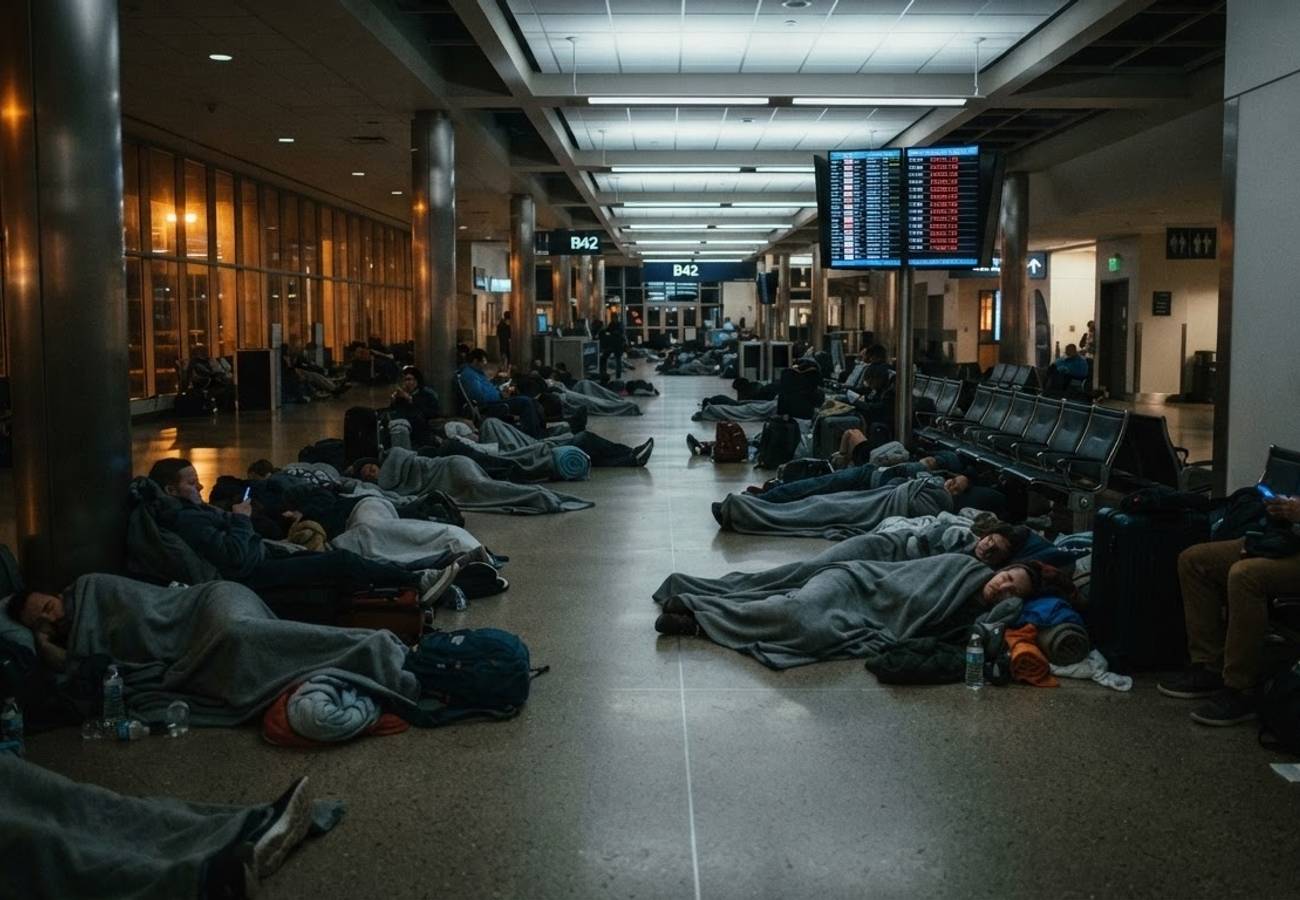
Image generated by AI
Systemic failures in aviation infrastructure and rigid airline policies are leaving passengers with no choice but to use terminal floors as makeshift beds.
The image of families and solo travelers huddled on concourse tiles has shifted from a rare anomaly to a recurring feature of modern air travel. Despite the introduction of stricter consumer protection laws, the gap between regulatory mandates and the physical reality of airport operations remains vast.
The Mechanics of Terminal Displacement
Recent data and passenger reports highlight a recurring pattern of "terminal camping" in major US hubs, including Atlanta, Chicago, and Las Vegas. These incidents are rarely isolated; they are typically the result of cascading operational collapses.
A primary example occurred during the July 2024 global technology outage triggered by a CrowdStrike failure. At Hartsfield-Jackson Atlanta International Airport—the primary hub for Delta Air Lines—thousands of passengers were stranded. The sheer volume of cancellations exhausted the available supply of cots and seating, forcing a significant portion of the passenger load to sleep directly on the ground.
This phenomenon is not limited to technical outages. In 2023, high-profile instances at Boston Logan Airport illustrated that even rolling delays can lead to overnight stays when local hotel inventory is depleted. The "vacation from hell" narrative has become a staple of traveler forums, where the lack of affordable, immediate lodging turns a flight delay into a survival exercise.
Primary Drivers of Airport Sleepovers
Our analysis of current travel patterns indicates three converging factors that force passengers onto terminal floors:
- Operational Overload: Summer 2024 schedules saw the addition of millions of extra seats compared to the previous year. This increased density means that a single storm or staffing shortage creates a larger volume of stranded passengers than the infrastructure can support.
- The "Gate Proximity" Strategy: Many passengers refuse to leave the terminal even if hotels are available, fearing that leaving the airport will jeopardize their position on a standby list for early morning departures.
- Financial Barriers: Low-cost carriers and basic economy fares often lack comprehensive passenger care commitments. When delays are attributed to weather (classified as "outside airline control"), carriers are not legally required to provide hotel vouchers, leaving budget-conscious travelers to choose between expensive last-minute rooms and the airport carpet.
The Intersection of Aviation and Emergency Shelter
A concerning trend has emerged where airports are functioning as de facto shelters. In early 2024, reports from Boston Logan Airport detailed migrant and homeless families being directed to sleep in baggage claim areas due to a city-wide shortage of emergency shelter space. On some nights, over 100 individuals, including children, utilized the terminal as a refuge.
This blurring of lines between a transit hub and a social service center creates significant logistical tension. During the 2024 Delta IT crisis, the presence of vulnerable populations—including unaccompanied minors—alongside exhausted ticketed passengers intensified the debate over the ethical responsibilities of airport authorities and airlines.
Regulatory Shift: The 2024 DOT Refund Mandates
To combat these systemic failures, the U.S. Department of Transportation (DOT) finalized a critical rule in April 2024. This regulation aims to provide financial recourse to passengers who are effectively stranded.
Passenger Rights Framework
| Trigger Event | Domestic Threshold | International Threshold | Required Action |
|---|---|---|---|
| Significant Delay | > 3 Hours | > 6 Hours | Cash refund to original payment method |
| Flight Cancellation | Any | Any | Cash refund (if alternate flight is declined) |
| Contract Limits | N/A | N/A | Terms limiting these rights are deemed "deceptive" |
Under these rules, airlines can no longer force passengers to accept vouchers or credits if a qualifying delay occurs and the passenger chooses not to travel.
Why This Matters: The Industry Implication
From a logistical perspective, the DOT refund rule is a financial deterrent for airlines, but it does not solve the immediate physical problem of where a passenger sleeps at 2:00 AM.
For the traveler, the real impact is a shift in leverage. Previously, passengers were trapped in a "sunk cost" loop—staying at the airport because they had already paid for the flight and had no means to recover that money. Now, the ability to demand a cash refund for a significant delay provides the liquidity needed to book a hotel independently.
However, this creates a secondary market pressure. When thousands of passengers are simultaneously empowered to seek refunds and book hotels, local hospitality infrastructure in hub cities (like Atlanta or Las Vegas) collapses instantly, driving room rates to predatory levels and pushing the most vulnerable passengers back onto the floor.
Forward Outlook
The aviation industry is moving toward a period of "forced accountability." We expect to see a rise in legal challenges regarding the "duty of care" for passengers, moving beyond simple refunds to include mandatory minimum standards for overnight accommodations.
Until airports integrate dedicated transit hotels or expanded sleep pods into their core design, the terminal floor will remain the default safety valve for a system operating at maximum capacity with zero margin for error.
The transition from transit hub to temporary shelter is a symptom of an industry that scaled its seat count without scaling its recovery infrastructure.
Related Travel Guides
Disclaimer
This article is for informational and educational purposes only. It does not constitute legal, financial, or professional advice. While we strive to provide accurate and up-to-date information, travel policies, regulations, and conditions change rapidly. Always verify information with official sources before making travel decisions. Nomad Lawyer makes no representations about the accuracy, reliability, completeness, or suitability of the information provided. Readers should consult qualified professionals for advice specific to their circumstances. The views expressed in this article are those of the author and do not necessarily reflect the views of Nomad Lawyer.
Kunal K Choudhary
Co-Founder & Contributor
A passionate traveller and tech enthusiast. Kunal contributes to the vision and growth of Nomad Lawyer, bringing fresh perspectives and driving the community forward.
Learn more about our team →