
UK Flight Cancellations Surge as NATS Air Traffic Control System Failure Strands Thousands in 2026
A critical technical failure at National Air Traffic Services (NATS) on September 8, 2026, triggered over 2,000 flight cancellations, causing massive disruption across major UK hubs.

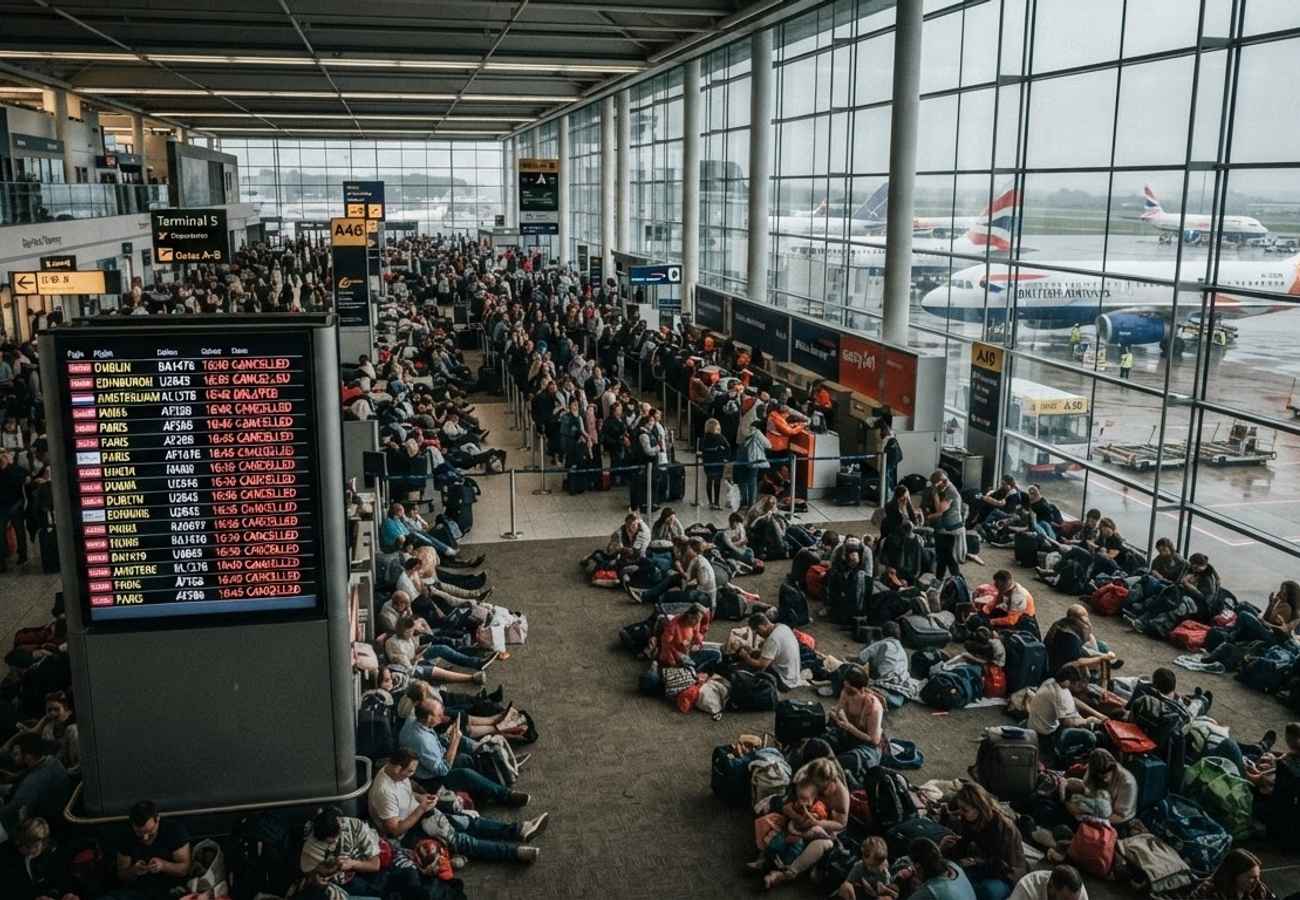
Image generated by AI
Over 2,000 flights across the United Kingdom were cancelled following a critical failure in the National Air Traffic Services (NATS) processing system on September 8, 2026. The outage left hundreds of thousands of passengers stranded and has sparked an urgent government demand for a root-cause analysis within seven days.
The collapse of the flight processing system, which lasted approximately four hours, created a ripple effect that paralyzed air travel across the British Isles and impacted international corridors. This incident marks a significant blow to the resilience of the UK's aviation infrastructure, as airlines struggled to manage the resulting backlog of aircraft and crew displacements.
Technical Outage Paralyzes Major UK Aviation Hubs
The crisis began on 8 September 2026, when a technical fault struck the NATS system responsible for validating and processing flight plan data. This critical failure forced immediate restrictions on air traffic, leading to a surge in cancellations that initially numbered in the hundreds. By 9 September 2026, flight-tracking data confirmed that the cumulative total of scrapped services had climbed past 2,000.
London Heathrow, London Gatwick, and Manchester Airport bore the brunt of the disruption. Early reports indicate that Heathrow alone saw hundreds of flights cancelled in the first few hours of the outage. The impact was not limited to domestic or short-haul travel; the failure disrupted overflights across Europe and severely hampered long-haul schedules, leaving international travelers in a state of limbo.
NATS officials have explicitly stated that the incident was not the result of a cyberattack. However, the UK government has imposed a strict one-week deadline for the organization to provide a comprehensive explanation of the failure and a strategy to prevent a recurrence.
Passenger Crisis: Stranded Travelers and Systemic Delays
The human cost of the outage was immediate and severe. Thousands of passengers found themselves trapped on grounded aircraft or crowded into terminals with little information. Reports indicate that some travelers remained on board planes for several hours before being told their flights were cancelled and being asked to disembark.
The disruption was particularly acute for those on multi-sector itineraries. In many cases, only one leg of a journey was cancelled, leaving passengers to navigate overwhelmed rebooking systems. Social media reports and passenger forums highlight a breakdown in communication, with travelers reporting dropped calls to airline support and conflicting instructions regarding new flight arrangements.
The crisis extended to global travelers connecting through the UK. Passengers arriving from North America, the Asia-Pacific region, and the Middle East faced missed connections and forced overnight stays, leading to widespread uncertainty regarding the reimbursement of emergency expenses.
Financial Fallout for Airlines and Airport Operators
The economic repercussions of the September 8 failure are expected to be immense. Industry observers suggest that total losses across the sector could reach tens of millions of pounds when accounting for passenger care, crew repositioning, and mandatory compensation.
One prominent low-cost carrier reported that the single day of disruption resulted in hundreds of cancelled flights and affected tens of thousands of passengers, with direct losses estimated in the low millions of pounds. These figures exclude the potential long-term damage to brand loyalty and consumer confidence.
Airport operators also faced significant operational strain. Because aircraft and crew were displaced, the chaos bled into 9 and 10 September. Terminals experienced atypical passenger peaks, requiring additional staffing for crowd control. While airport retail and hospitality sectors may have seen a short-term revenue bump from stranded passengers, this is largely offset by the reputational damage and logistical complexity of the event.
Insurance and reinsurance firms are now reviewing policy wordings to determine if the NATS failure falls under specific operational disruption clauses, which could influence future risk premiums for the aviation industry.
Regulatory Oversight and Passenger Compensation Rights
The UK Civil Aviation Authority (CAA) has stepped in to remind airlines that they are legally obligated to provide "duty of care" to affected passengers. This includes the provision of meals, refreshments, and hotel accommodation, regardless of whether the fault lies with the airline or the air traffic control provider.
A central point of contention will be whether the NATS failure constitutes an "extraordinary circumstance." Under UK and retained EU regulations, if the event is deemed extraordinary, airlines may be exempt from paying fixed-sum compensation. However, the CAA has emphasized that passengers are still entitled to refunds or re-routing to their final destination at the earliest opportunity.
Consumer rights groups are advising travelers to maintain a meticulous paper trail. This includes saving:
- Original booking confirmations
- Digital and physical boarding passes
- Itemized receipts for meals, transport, and hotels
These documents will be vital for those pursuing claims through alternative dispute resolution (ADR) schemes or small claims courts.
A Pattern of Failure: Calls for Infrastructure Reform
This latest outage is not an isolated event. It represents the third major NATS-related disruption in three years. A similar failure of the flight plan processing system occurred in August 2023, and a radar-related issue caused widespread chaos in 2025.
Industry bodies, including Airlines UK, are now calling for a total overhaul of the UK's air traffic management oversight. Executives argue that the repeated nature of these failures proves that current redundancy and backup systems are insufficient for modern traffic volumes. There is a growing demand for an independent review into NATS' investment levels and accountability mechanisms to ensure that the financial burden of infrastructure failure does not fall solely on airlines and passengers.
Summary of NATS Disruption Impact
| Impact Category | Detail |
|---|---|
| Total Cancellations | Over 2,000 flights |
| Primary Date of Failure | 8 September 2026 |
| Duration of Outage | Approximately 4 hours |
| Most Affected Hubs | London Heathrow, London Gatwick, Manchester |
| Government Deadline | 7 days for root-cause report |
| Key Regulatory Body | UK Civil Aviation Authority (CAA) |
Why This Matters: The Traveler's Perspective
For the modern traveler, this incident highlights a dangerous fragility in the UK's aviation "single point of failure." When a centralized system like NATS fails, the legal responsibility for care falls on the airline, but the operational ability to provide that care is often crippled by the same system failure.
From a legal standpoint, the "extraordinary circumstance" loophole is the most critical area for passengers to watch. If the courts decide that a system failure in 2026—following similar failures in 2023 and 2025—is "foreseeable," it could set a precedent that forces airlines to pay compensation even for air traffic control errors. This would shift the financial risk from the passenger back toward the infrastructure provider.
Logistically, this event proves that relying on airline apps during a mass outage is insufficient. Travelers should always have the direct contact details of their travel insurance provider and a digital copy of their passenger rights (UK261) to ensure they are not coerced into accepting less than they are legally owed.
The repeated collapse of UK air traffic systems suggests a crisis of infrastructure that can no longer be ignored by the government.
Related Travel Guides
Disclaimer
This article is for informational and educational purposes only. It does not constitute legal, financial, or professional advice. While we strive to provide accurate and up-to-date information, travel policies, regulations, and conditions change rapidly. Always verify information with official sources before making travel decisions. Nomad Lawyer makes no representations about the accuracy, reliability, completeness, or suitability of the information provided. Readers should consult qualified professionals for advice specific to their circumstances. The views expressed in this article are those of the author and do not necessarily reflect the views of Nomad Lawyer.
Preeti Gunjan
Contributor & Community Manager
A passionate traveller and community builder. Preeti helps grow the Nomad Lawyer community, fostering engagement and bringing the reader experience to life.
Learn more about our team →