
NATS Systems Failure Triggers 2,145 Flight Cancellations Across UK and Europe in September 2026
A critical technical failure in the National Air Traffic Services (NATS) flight data processing system caused 2,145 flight cancellations and widespread delays across UK and European airspace.

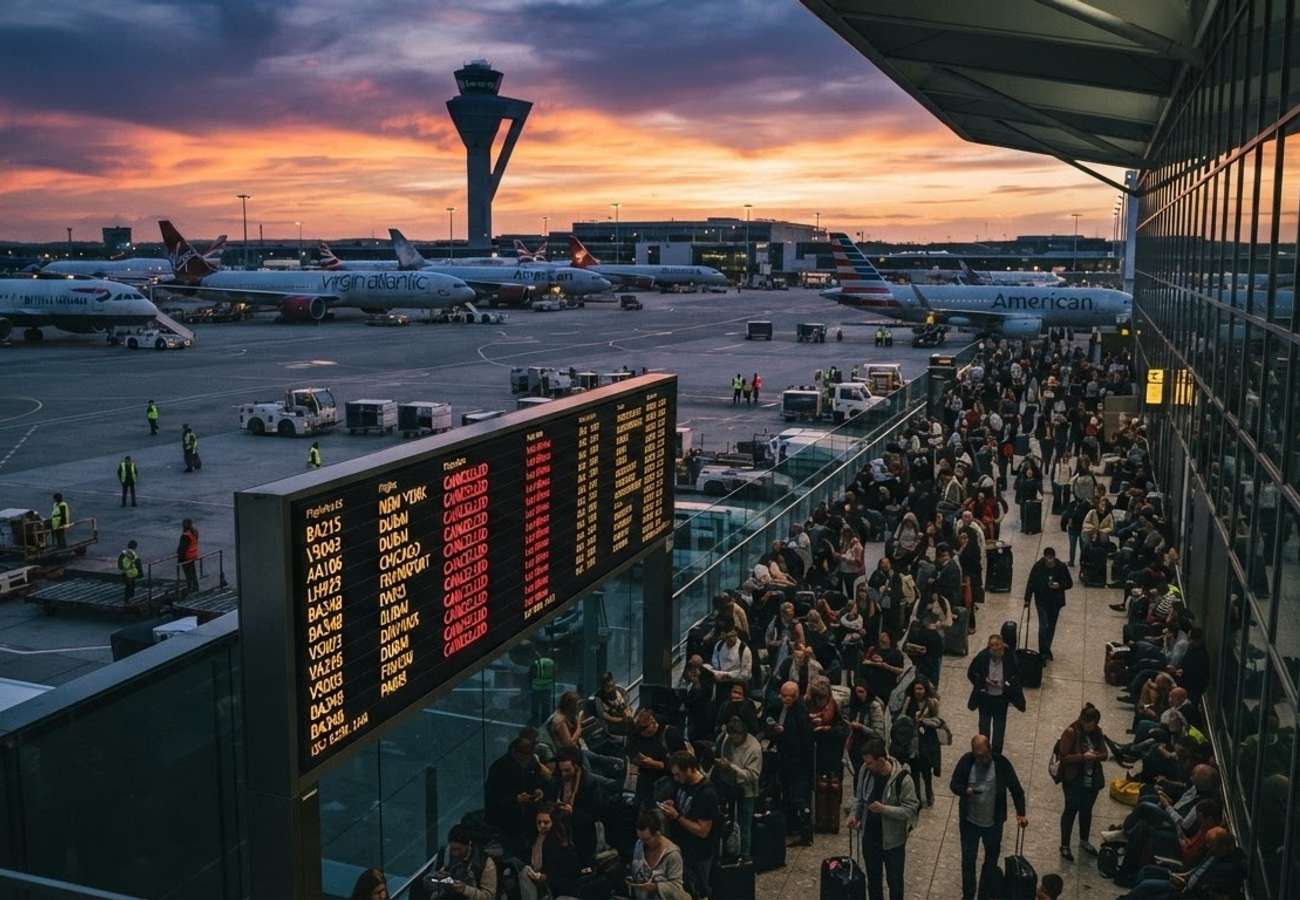
Image generated by AI
Flight disruption across the UK and Europe is persisting into Thursday following a massive air traffic control systems failure that resulted in 2,145 flights being cancelled or non-operated over a 48-hour period.
Technical Failure in UK Airspace
The crisis began on Tuesday when a critical fault occurred within the National Air Traffic Services (NATS) flight data processing system. This failure forced air traffic controllers to switch to manual handling of flight plans, a process that severely limits the volume of aircraft that can be safely managed within UK airspace simultaneously.
Official statements have explicitly ruled out a cyber attack, attributing the event to a technical failure in a core element of the control network. The disruption caused a massive bottleneck that extended beyond the UK, affecting any services transiting British airspace or relying on aircraft and crew rotations through London and regional hubs.
Data provided by aviation analytics firm Cirium highlights the scale of the operational collapse. The disruption peaked on Tuesday and Wednesday, creating a cascading effect that impacted schedules into Thursday.
- Total Impact: 2,145 flights cancelled or failed to operate over two days.
- Tuesday Volume: Over 1,700 flights affected on the first day of the failure.
- Wednesday Volume: 399 flights cancelled or non-operated.
- London Heathrow (LHR): The hardest-hit hub on Wednesday, with 79 of 666 scheduled departures disrupted.
- British Airways: Experienced significant operational loss, with 88 of 507 planned departures affected on Wednesday.
- Other Affected Hubs: Gatwick, Manchester, and Stansted reported significant delays and cancellations.
- Carrier Impact: easyJet and Ryanair reported dozens of cancellations due to displaced crews and grounded aircraft.
While long-haul schedules were prioritized to limit intercontinental disruption, short-haul leisure and intra-European services bore the brunt of the cancellations.
Passenger Rights and Advisory
Our analysis of the current situation indicates a complex landscape for passengers seeking compensation. Because the disruption was caused by a NATS systems failure, airlines will likely categorize this as an "extraordinary circumstance."
Compensation Claims Under UK and EU261/2004 frameworks, carriers are generally exempt from paying fixed financial compensation when the cause is outside their operational control, such as an air traffic control failure. For the affected passenger, this means a cash payout for the delay is unlikely.
Duty of Care Obligations Regardless of the cause of the delay, airlines maintain a legal "Duty of Care." Our analysis of the policy suggests that carriers must provide:
- Meals and Refreshments: Provided after a significant delay.
- Accommodation: Hotel stays and transport to/from the hotel if an overnight stay becomes necessary.
- Rebooking: Transport to the final destination on the next available flight.
Refunds and Expenses If a flight is cancelled, passengers have a legal right to a full refund if they choose not to travel, regardless of whether the failure was "extraordinary." Furthermore, passengers should retain all receipts for reasonable out-of-pocket expenses (such as emergency toiletries or meals) incurred during the disruption for subsequent reimbursement claims.
This incident marks one of the most severe air traffic control failures in the UK since 2023. The speed at which the network collapsed—and the subsequent struggle to recover—highlights a fragile dependency on automated flight data processing.
The transition to manual handling created an immediate capacity ceiling that the industry was unable to absorb. The "knock-on" effect seen on Wednesday and Thursday demonstrates that in a tightly interconnected hub-and-spoke system, a 24-hour technical outage can result in 72 hours of operational instability. UK transport officials have already ordered a detailed review of NATS' backup procedures and the timeframe required to restore full capacity.
Residual pressure is expected to continue through Thursday as airlines reposition aircraft and manage crew duty limitations.
Related Travel Guides
Disclaimer
This article is for informational and educational purposes only. It does not constitute legal, financial, or professional advice. While we strive to provide accurate and up-to-date information, travel policies, regulations, and conditions change rapidly. Always verify information with official sources before making travel decisions. Nomad Lawyer makes no representations about the accuracy, reliability, completeness, or suitability of the information provided. Readers should consult qualified professionals for advice specific to their circumstances. The views expressed in this article are those of the author and do not necessarily reflect the views of Nomad Lawyer.
Kunal K Choudhary
Co-Founder & Contributor
A passionate traveller and tech enthusiast. Kunal contributes to the vision and growth of Nomad Lawyer, bringing fresh perspectives and driving the community forward.
Learn more about our team →