
Bristol Airport Operational Failures: Runway Defects and ATC Faults Disrupt Summer 2026 Travel
A combination of runway safety defects and national air traffic control failures has caused widespread flight cancellations and massive queues at Bristol Airport during the 2026 summer peak.

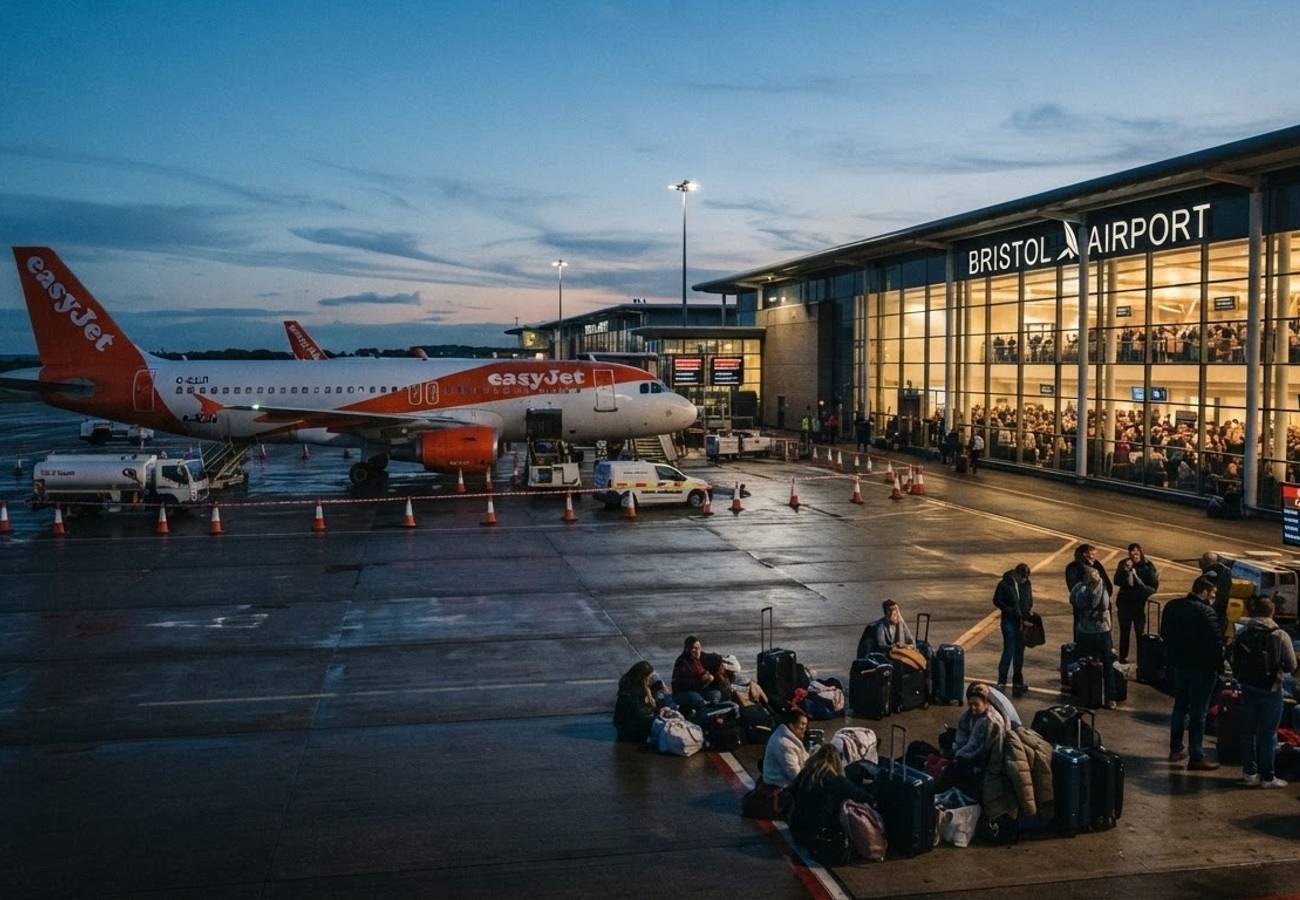
Image generated by AI
Runway safety failures and a systemic UK air traffic control collapse have left thousands of holidaymakers stranded at Bristol Airport, with many reporting the total loss of long-awaited family vacations.
The disruption at Bristol Airport has not been the result of a single event, but rather a compounding series of operational shocks. In early August, a critical runway safety defect forced a prolonged closure of the airfield. This shutdown halted all arrivals and departures for approximately half a day, triggering a domino effect that left aircraft and crew displaced and passengers facing delays of up to 15 hours or total cancellations.
This local crisis was further exacerbated in early September by a national air traffic control (ATC) systems fault. This technical failure restricted airspace capacity across southern England, hitting Bristol particularly hard as a primary regional hub. The result was a wave of knock-on delays as airlines struggled to reorganize schedules within a constrained airspace environment.
Passenger Impact and Terminal Congestion
The human cost of these failures has been significant, particularly for families embarking on their first-ever holidays. Reports indicate a pattern of "nightmare" queues at check-in and security, which left passengers with zero margin for error when flights were already delayed.
Many travelers reported a distressing cycle of waiting:
- Spending hours in security lines only to miss their scheduled departures.
- Remaining confined on aircraft for extended periods before being informed the flight could not operate.
- Facing short-notice cancellations of return legs, forcing them to source emergency overnight accommodation.
Feedback from frequent users suggests a growing perception that Bristol Airport's rapid growth has outpaced its operational capacity. Many now report an expectation of delays or diversions during peak travel windows.
Infrastructure Strain and Capacity Growth
The recent instability highlights a growing tension between Bristol Airport's expansion goals and its current infrastructure. The airport has seen annual passenger numbers climb toward 11 million. Current approved development plans aim to push this throughput further, targeting 15 million passengers per year.
However, local advocacy groups and observers argue that the terminal and airfield are already at their breaking point. Evidence of this strain includes:
- Recurring security bottlenecks and congested departure lounges.
- Overburdened baggage handling systems during school holidays.
- A lack of operational resilience when faced with unexpected safety inspections.
While management has implemented incremental upgrades—including revised car park layouts and additional seating—critics maintain these are superficial fixes that do not address the core vulnerability of the airport's scale.
Passenger Rights and Airline Accountability
The disruption has shifted scrutiny toward the airlines operating out of Bristol. In June, a major low-fare carrier publicly criticized the UK’s national air traffic provider following a separate technical failure, claiming that repeated systems issues are destroying passenger reliability.
For those affected, the path to compensation is complex. Under UK261 regulations, passengers are entitled to meals, refreshments, and hotel accommodation during severe disruptions, as well as rebooking or refunds.
Compensation Eligibility Matrix
| Incident Type | Likely Compensation Status | Primary Reason |
|---|---|---|
| Runway Safety Defect | Limited / Unlikely | Often classified as "extraordinary circumstances" due to safety. |
| ATC Systems Fault | Variable | Depends on whether the fault was avoidable or systemic. |
| Crew/Operational Planning | High Eligibility | Factors within the airline's direct control. |
| Security Queues | Low Eligibility | Usually viewed as airport infrastructure issues, not airline faults. |
Travel rights specialists advise passengers to maintain meticulous records of all communications and expenses, as the line between "unavoidable safety actions" and "preventable operational failures" is often contested by airlines.
Current Operational Status and Outlook
As of mid-September, day-to-day operations at Bristol Airport have largely stabilized. However, residual delays persist, particularly during early morning peaks or when adverse weather adds pressure to the fragile schedule.
Travelers are urged to rely on airline-specific apps rather than general airport boards, as airlines are the primary entities responsible for welfare and rebooking. The recent turmoil is expected to intensify the regional debate over whether Bristol should continue its push toward 15 million passengers or pivot toward stabilizing its current reliability.
For those whose travel plans were derailed, the focus now shifts to the arduous process of securing refunds and reclaiming lost holiday costs.
Related Travel Guides
Disclaimer
This article is for informational and educational purposes only. It does not constitute legal, financial, or professional advice. While we strive to provide accurate and up-to-date information, travel policies, regulations, and conditions change rapidly. Always verify information with official sources before making travel decisions. Nomad Lawyer makes no representations about the accuracy, reliability, completeness, or suitability of the information provided. Readers should consult qualified professionals for advice specific to their circumstances. The views expressed in this article are those of the author and do not necessarily reflect the views of Nomad Lawyer.
Preeti Gunjan
Contributor & Community Manager
A passionate traveller and community builder. Preeti helps grow the Nomad Lawyer community, fostering engagement and bringing the reader experience to life.
Learn more about our team →