
U.S. Export Ban on F-22 Raptor Created Costly Military Capability Gap, Defense Analysts Warn
Breaking airline news and aviation industry updates for 2026.

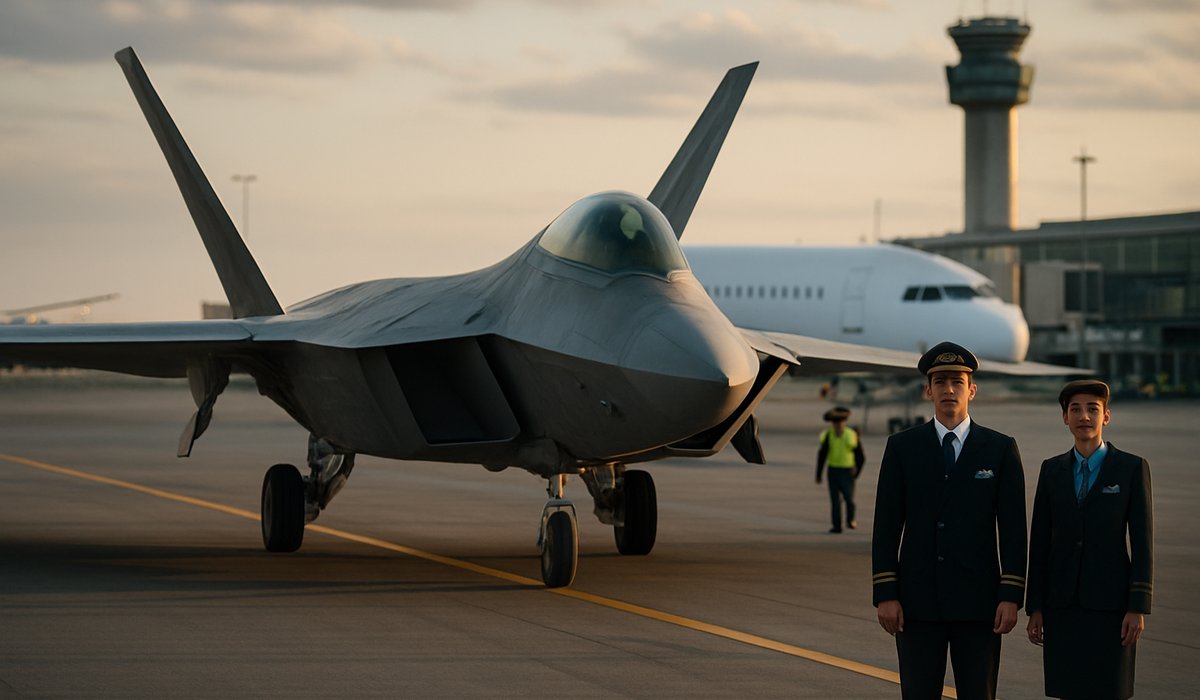
Image generated by AI
U.S. Export Ban on F-22 Raptor Created Costly Military Capability Gap, Defense Analysts Warn
Restricted fighter jet production triggered financial collapse of program, leaving allied nations vulnerable and straining defense partnerships
The Export Prohibition That Changed Defense Strategy
The United States' decision to prohibit international sales of Lockheed Martin's F-22 Raptor fighter jet has created a cascading crisis within defense procurement that continues to reverberate across global military partnerships nearly two decades later. By blocking exports of what many consider the world's most advanced air superiority platform, policymakers inadvertently triggered a production death spiral that dramatically curtailed the program's financial viability and operational scope.
Cold War Legacy Meets Post-Soviet Reality
Originally conceived as the cornerstone of American air superiority during peak Cold War tensions, the F-22 program faced fundamental reassessment following the Soviet Union's collapse in 1991. Military planners scrambled to justify the fighter's exorbitant development costs in a strategic landscape suddenly stripped of its primary near-peer adversary. The original acquisition target—750 aircraft—proved unsustainable under these transformed geopolitical conditions.
Production targets plummeted from the initial ambitious goal to just 187 operational airframes. This dramatic reduction meant the U.S. Air Force became dependent on retaining every single manufactured unit for domestic operations, eliminating any possibility of generating revenue through allied purchases that might have offset ballooning program expenditures.
The Financial Consequences of Restricted Sales
The export ban created a vicious cycle: without international orders, unit costs spiraled upward as production volumes contracted. Conversely, shrinking production runs made the aircraft prohibitively expensive for domestic procurement, further justifying restraint in fleet expansion. Defense analysts now acknowledge that permitting strategic sales to NATO allies could have sustained manufacturing economies of scale while strengthening collective Western defense capabilities.
Ripple Effects Across Defense Partnerships
The restriction left allied nations—including long-standing partners in Europe and the Asia-Pacific region—unable to acquire fifth-generation fighter capabilities, forcing them toward alternative platforms or accelerating independent development programs. This fragmentation weakened interoperability standards and divided air defense networks when unified technology adoption would have proven operationally superior.
Looking Forward
Today, as great-power competition resurges and near-peer threats materialize in the Pacific and European theaters, military planners confront the consequences of decisions made three decades ago. The F-22 program's abbreviated production run means the Air Force operates with historically constrained fighter inventory precisely when geopolitical conditions demand maximum operational depth.
Frequently Asked Questions
Q: How many F-22 Raptors were ultimately produced compared to original plans? A: Only 187 operational units were built, compared to the original procurement objective of 750 aircraft—a reduction of approximately 75% due to post-Cold War budget constraints and export restrictions.
Q: Why did the U.S. ban F-22 exports to allied nations? A: Policymakers cited concerns about protecting advanced stealth technology and maintaining U.S. air superiority advantages. Some restrictions stemmed from Cold War-era export control legislation that remained in force.
Q: What impact did restricted exports have on production costs? A: Limited production volumes eliminated economies of scale, causing per-unit costs to escalate substantially and making further aircraft acquisitions increasingly difficult to justify fiscally.
Q: Which allied nations were affected by the F-22 export prohibition? A: NATO partners and close allies in Europe and the Asia-Pacific region sought access to the platform but were denied, forcing alternative procurement decisions that fragmented Western air defense capabilities.
Q: Could F-22 export authorization have changed the program's trajectory? A: Defense analysts argue that allied purchases would have sustained production runs at more economical unit costs, potentially enabling larger domestic Air Force inventories while strengthening collective deterrence.
Related Travel Guides
External Resources
Disclaimer
This article is for informational and educational purposes only. It does not constitute legal, financial, or professional advice. While we strive to provide accurate and up-to-date information, travel policies, regulations, and conditions change rapidly. Always verify information with official sources before making travel decisions. Nomad Lawyer makes no representations about the accuracy, reliability, completeness, or suitability of the information provided. Readers should consult qualified professionals for advice specific to their circumstances. The views expressed in this article are those of the author and do not necessarily reflect the views of Nomad Lawyer.
Raushan Kumar
Founder & Lead Developer
Full-stack developer with 11+ years of experience and a passionate traveller. Raushan built Nomad Lawyer from the ground up with a vision to create the best travel and law experience on the web.
Learn more about our team →