
Airline Passenger Rights During Weather Disruptions: US, EU, and Canada Legal Obligations 2026
A comprehensive analysis of passenger rights and airline obligations during weather-related flight disruptions across the US, EU, and Canada, detailing refunds, hotel vouchers, and tarmac delay laws.

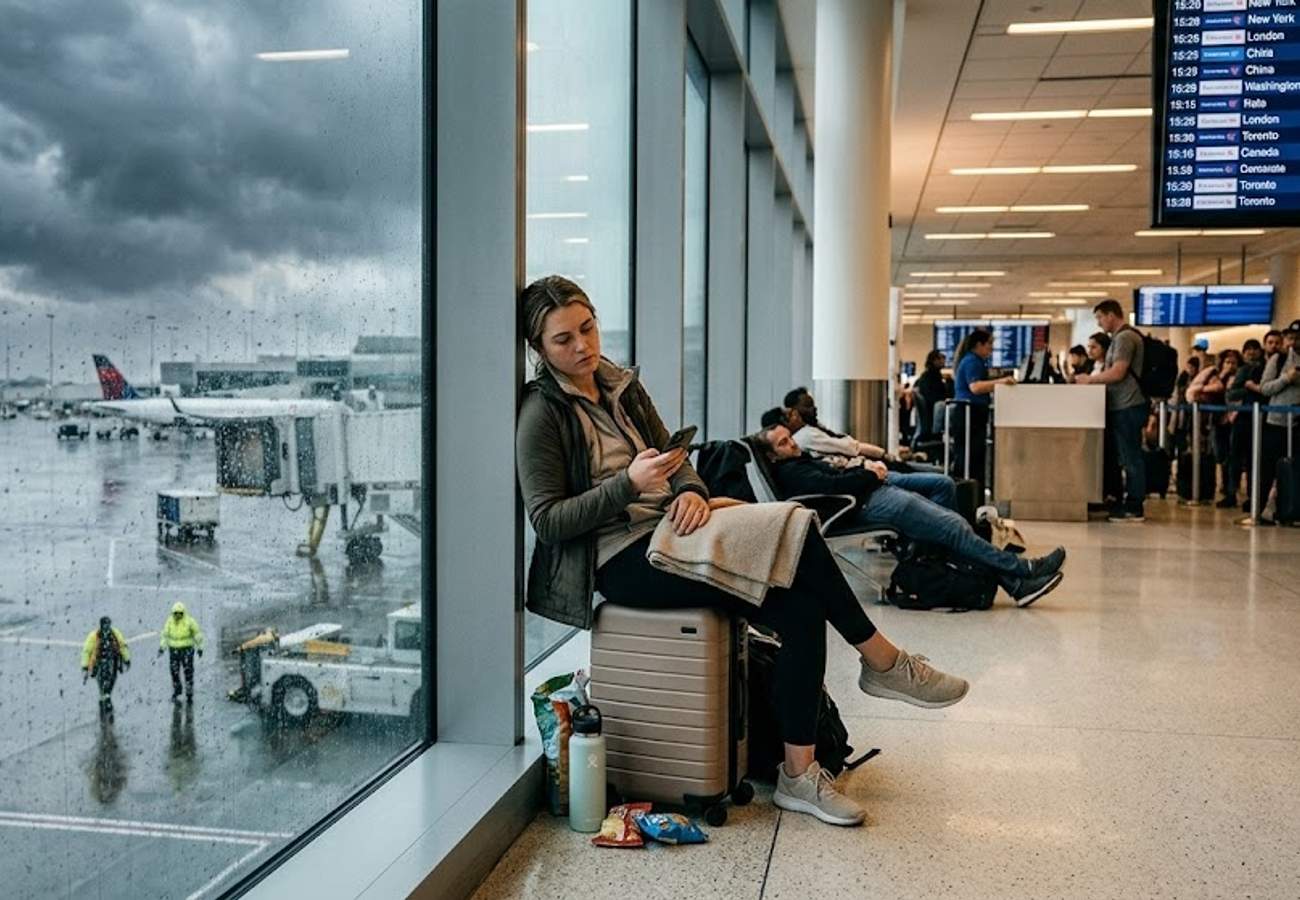
Image generated by AI
Flight disruptions attributed to "weather" often leave passengers stranded with minimal support. However, legal obligations regarding the "duty of care" vary significantly between the US, EU, and Canada.
Airlines frequently categorize severe weather, volcanic ash, or airspace closures as "extraordinary circumstances" or "acts of God" to avoid paying cash compensation. While this often exempts carriers from lump-sum payouts, it does not necessarily absolve them of their responsibility to provide basic necessities.
Regional Breakdown of Weather-Related Obligations
The level of support a passenger receives depends entirely on the jurisdiction of the flight and the specific regulatory framework governing the carrier.
European Union and United Kingdom (EC 261/2004)
Under Regulation EC 261/2004, adverse weather is classified as an extraordinary circumstance. This means airlines are not required to pay fixed financial compensation. However, the "duty of care" remains mandatory regardless of the cause.
For the affected passenger, this means the airline must provide:
- Meals and refreshments proportional to the waiting time.
- Two free communications (emails or phone calls).
- Hotel accommodation and transport between the airport and the hotel if an overnight stay is required.
United States (DOT Guidelines)
The US Department of Transportation (DOT) maintains a more lenient stance toward carriers during weather events. Federal law does not require airlines to provide meals or hotels for delays caused by weather.
Our analysis of current DOT guidance indicates:
- Vouchers for hotels or food are provided at the airline's discretion, not as a legal mandate.
- Passengers are entitled to a prompt refund if the airline cancels a flight or makes a significant schedule change and the traveler chooses not to fly, regardless of whether the cause was weather-related.
Canada (Air Passenger Protection Regulations - APPR)
Canada utilizes a tiered system. While airlines are generally excused from financial compensation for weather-related disruptions, standards of treatment still apply.
For passengers in Canada, this involves:
- Rebooking on the next available flight.
- In specific cases, large carriers may be required to rebook passengers on a competitor's flight if they cannot provide a timely alternative.
- Food and communication standards based on the length of the disruption.
Tarmac Delay Protections and Time Limits
Once passengers are boarded and the aircraft has left the gate, different safety and human rights regulations trigger, regardless of the weather outside.
| Jurisdiction | Max Tarmac Time (Domestic) | Max Tarmac Time (Intl) | Mandatory Provisions |
|---|---|---|---|
| United States | 3 Hours | 4 Hours | Food/water after 2 hours, operable lavatories, medical attention. |
| Canada | 3 Hours* | 3 Hours* | Ventilation, food, drink, toilet access, and external communication. |
| European Union | N/A | N/A | Duty of care (meals/hotels) based on distance and delay duration. |
*Canada allows a possible extension of 45 minutes if takeoff is imminent and safe.
Passenger Advisory: Navigating Rebookings and Refunds
When a flight is canceled due to weather, passengers often feel pressured to accept a travel voucher. Our analysis of aviation policy suggests a more strategic approach:
1. Demand Cash Refunds Over Credits In the US, if your flight is canceled for any reason—including weather—and you choose not to travel, you are legally entitled to a refund to your original form of payment. Do not settle for a flight credit unless it offers significant added value.
2. Verify "Controllable" vs. "Uncontrollable" Airlines may claim a delay is "weather-related" when it is actually a crew scheduling issue caused by a previous storm. If the disruption is deemed "controllable," US carriers often commit to overnight accommodations via the DOT Airline Customer Service Dashboard.
3. Document Everything Keep records of all expenses incurred during a weather delay. In the EU, if the airline refuses to provide the mandatory duty of care (hotel/meals), passengers can often claim these expenses back post-trip by providing receipts.
The divergence in global passenger rights creates a "protection gap." While EU passengers enjoy a robust safety net via EC 261/2004, US travelers are largely dependent on the individual "Contract of Carriage" of their chosen airline. We are seeing a trend where airlines use automated systems to blanket-label disruptions as "weather" to trigger the "extraordinary circumstances" clause, effectively bypassing the duty of care. Passengers should utilize official tools, such as the DOT’s Airline Cancellation and Delay Dashboard or the Canadian Transportation Agency’s summaries, to challenge these designations.
Knowledge of your jurisdiction is the only real leverage you have against a grounded aircraft.
Related Travel Guides
Disclaimer
This article is for informational and educational purposes only. It does not constitute legal, financial, or professional advice. While we strive to provide accurate and up-to-date information, travel policies, regulations, and conditions change rapidly. Always verify information with official sources before making travel decisions. Nomad Lawyer makes no representations about the accuracy, reliability, completeness, or suitability of the information provided. Readers should consult qualified professionals for advice specific to their circumstances. The views expressed in this article are those of the author and do not necessarily reflect the views of Nomad Lawyer.
Preeti Gunjan
Contributor & Community Manager
A passionate traveller and community builder. Preeti helps grow the Nomad Lawyer community, fostering engagement and bringing the reader experience to life.
Learn more about our team →