
Journey Through Scotland's West Highland Line: Europe's Most Scenic Rail Route
Scotland's West Highland Line connects Glasgow to Mallaig via Europe's most dramatic terrain. Discover why this 1890s railway engineering triumph now rivals luxury train travel and offers sustainable UK tourism alternatives in 2026.

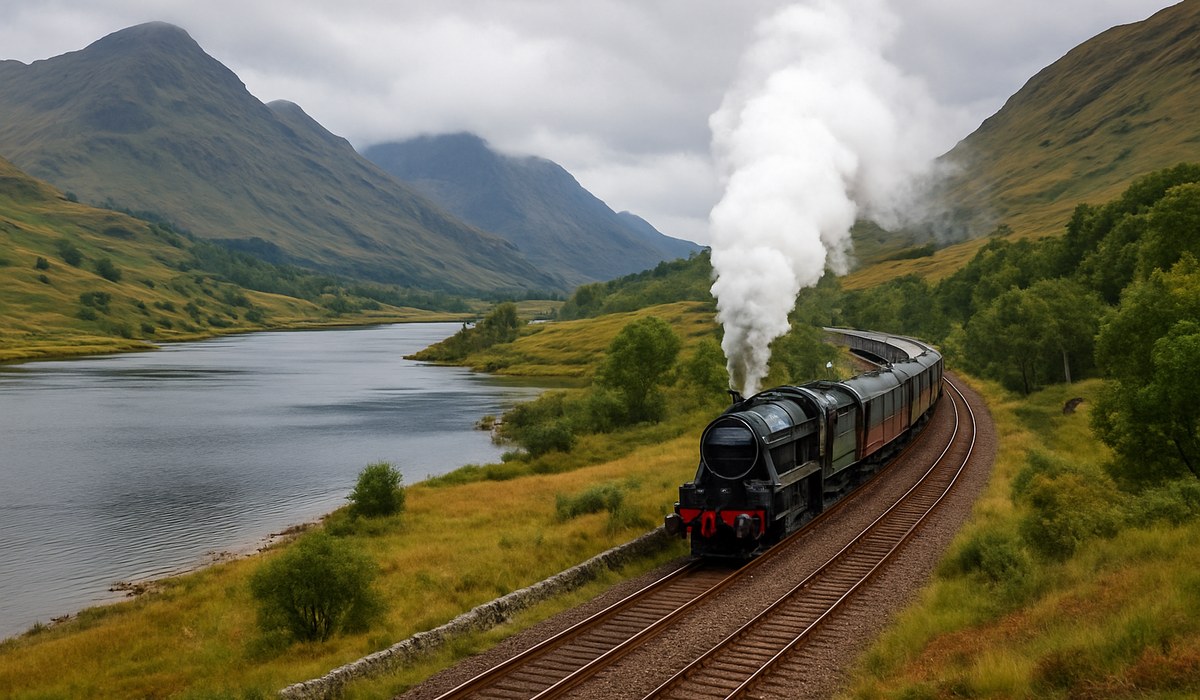
Image generated by AI
Quick Summary
- The West Highland Line stretches 164 miles from Glasgow to Mallaig, showcasing Scotland's most dramatic mountain and coastal landscapes
- Historic engineering achievement: constructed in the 1890s using innovative viaduct design to overcome impossible terrain
- Operates year-round with multiple daily departures; journey takes approximately 5.5 hours end-to-end
- Sustainable alternative to flying or driving; increasingly popular with international visitors seeking authentic Scottish experiences
Engineering Marvel: How the West Highland Line Conquered Scottish Terrain
While international travelers chase luxury rail experiences across Europe, one of the continent's greatest engineering achievements remains quietly operating in Scotland's remote northwest. The West Highland Line represents a remarkable feat of Victorian railway engineering that solved what seemed impossible: connecting Glasgow's urban heart to the Atlantic fishing village of Mallaig across terrain where mountains rise abruptly from sea level and valleys plunge thousands of feet.
The route took twelve years to complete when construction began in 1884, a timeline that reflects the extraordinary challenges faced by surveyors and engineers who had to carve a path through Scotland's most unforgiving landscape. The iconic Glenfinnan Viaduct—a 23-arch stone structure climbing 100 feet above the valley floor—exemplifies the innovative solutions required. Built without modern machinery, using only hand tools and local sandstone, the viaduct remains one of the most photographed railway structures on Earth. Its appearance in the Harry Potter films introduced millions globally to what was previously known mainly to railway enthusiasts and Scottish locals.
Network Rail, which oversees UK rail infrastructure maintenance, continues to manage this historic line as a vital component of Scotland's transport network. Recent investments in track renewal and signaling upgrades ensure the route remains operational for contemporary travelers while preserving its historical character. The line carries approximately 200,000 passengers annually, a figure that has grown steadily as awareness of sustainable rail travel alternatives increases among both domestic and international visitors.
The Route Unveiled: Glasgow to Mallaig Through Scotland's Most Iconic Landscapes
The journey begins at Glasgow Queen Street, Scotland's largest city and an industrial powerhouse during the railway's founding era. The first hour northwestward crosses rolling farmland and suburban expanses before the landscape transforms dramatically near Crianlarich, where the terrain tilts upward into genuine highlands. Passengers witness the transition from cultivated land to wilderness in real time—a natural metamorphosis impossible to experience from a car window or aircraft cabin.
From Crianlarich, the line splits into two routes: the main line continues northwest toward Mallaig via Fort William, while the Oban branch diverges westward. The primary Mallaig route gains elevation steadily, entering Glen Coe's dramatic amphitheater of mountains where three-thousand-foot peaks surround the tracks on all sides. At Tyndrum Lower station, the northbound journey accelerates toward Fort William, passing Loch Tulla and Loch Awe before reaching the foothills of Ben Nevis, Britain's highest mountain at 4,413 feet.
The most celebrated segment begins north of Fort William, where the line descends toward the coastal regions. Here sits the Glenfinnan Viaduct, constructed between 1897 and 1901 using over 21 million bricks and 1,000 tons of cement. Standing on the platform as your train crosses this structure—feeling the gentle sway and hearing the rhythmic click of wheels on rails—connects passengers viscerally to the determination and ingenuity of Victorian engineers. Beyond Glenfinnan, the route continues through Glen Finnan and Loch Eil, emerging eventually onto the Morar Peninsula where mountains meet the Sea of the Hebrides.
Mallaig station, the terminus, sits on the Atlantic coast where ferries depart for the Isle of Skye and other Hebridean islands. The journey's total duration spans approximately 5 hours and 25 minutes from Glasgow—a timeframe that allows passengers to observe the entire transition from urban Scotland to wild coastal landscape in a single day trip or overnight adventure.
Why Rail Travel Outperforms Flying for Scottish Tourism
The argument for rail travel transcends romantic notions of journeys versus destinations. Measurable advantages now position the West Highland Line as the superior choice for Scottish exploration compared to flying or driving. First, consider carbon emissions: rail travel produces approximately one-tenth the greenhouse gas emissions of car travel and one-twentieth those of domestic flights. A single return journey via this route offsets the environmental impact of driving a personal vehicle between Glasgow and Inverness for an entire week.
Second, accessibility eliminates friction from the travel experience. Glasgow Queen Street lies in the city center, requiring no advance travel to distant airport terminals, no security screening, and no baggage restrictions. Passengers arrive fifteen minutes before departure and step directly onto platforms. Compare this against flying, which requires arriving two hours early, navigating security protocols, and traveling to airports positioned 8–12 miles from city centers.
Third, the cost differential has narrowed considerably. Budget flights from London to Edinburgh or Glasgow range from £40–£80 return, while West Highland Line journeys cost £35–£65 depending on advance booking and whether you choose peak travel times. Yet the flight requires additional expenses for airport transfers, security wait time, and baggage fees that often exceed the apparent ticket savings. The rail option includes your entire journey and all luggage at one transparent price.
When Airways Resumes Rome-London Heathrow Service Amid Transatlantic Revival, international visitors increasingly recognize that connecting via London and traveling north by rail offers better value and experience than domestic flights. The West Highland Line captures a share of this market by providing authentic Scottish immersion rather than rapid transit between airport terminals.
Furthermore, the viewing experience transforms the travel into the primary activity rather than a method to reach a destination. Passengers navigate this route because of the views, not despite them. Photography enthusiasts, landscape painters, and nature documentarians have all chosen this specific line for capturing Scotland's wildest regions. The line operates year-round with multiple daily departures, providing flexibility impossible with seasonal flight routes.
Planning Your West Highland Line Journey: Practical Travel Guide
Booking and Schedules
Scotrail, the national operator, provides two daily services in each direction during standard seasons, with additional trains during summer months (May–September). Journey time from Glasgow Queen Street to Mallaig requires approximately 5 hours 25 minutes for the complete route. Return tickets range from £35 to £65 depending on advance booking window and travel date; Friday and weekend departures command premium pricing. Booking online at Scotrail.co.uk typically offers 20–30% discounts compared to station ticket offices.
Seasonal Variations
The summer season (May through September) brings multiple trains daily, higher passenger volumes, and extended daylight hours that maximize photography opportunities. Winter schedules (October–April) feature reduced frequency but offer advantages: quieter trains, better seat availability, and dramatic weather patterns that create striking photographs. Spring and autumn provide optimal balancing of comfort and visual impact.
Accommodation and Onward Travel
Fort William serves as the primary interchange point for travelers continuing north toward Inverness or west toward Isle of Skye ferries. The town offers accommodation ranging from budget hostels (£20–£35 nightly) through mid-range hotels (£60–£
Disclaimer
This article is for informational and educational purposes only. It does not constitute legal, financial, or professional advice. While we strive to provide accurate and up-to-date information, travel policies, regulations, and conditions change rapidly. Always verify information with official sources before making travel decisions. Nomad Lawyer makes no representations about the accuracy, reliability, completeness, or suitability of the information provided. Readers should consult qualified professionals for advice specific to their circumstances. The views expressed in this article are those of the author and do not necessarily reflect the views of Nomad Lawyer.
Preeti Gunjan
Contributor & Community Manager
A passionate traveller and community builder. Preeti helps grow the Nomad Lawyer community, fostering engagement and bringing the reader experience to life.
Learn more about our team →