
Hungary's Rail Renaissance: How EU Millions Will Transform Central European Tourism
A landmark EU funding agreement is unlocking major railway modernization across Hungary, promising faster connections between Budapest, Lake Balaton, and regional cultural hubs for millions of European travelers seeking sustainable rail journeys.

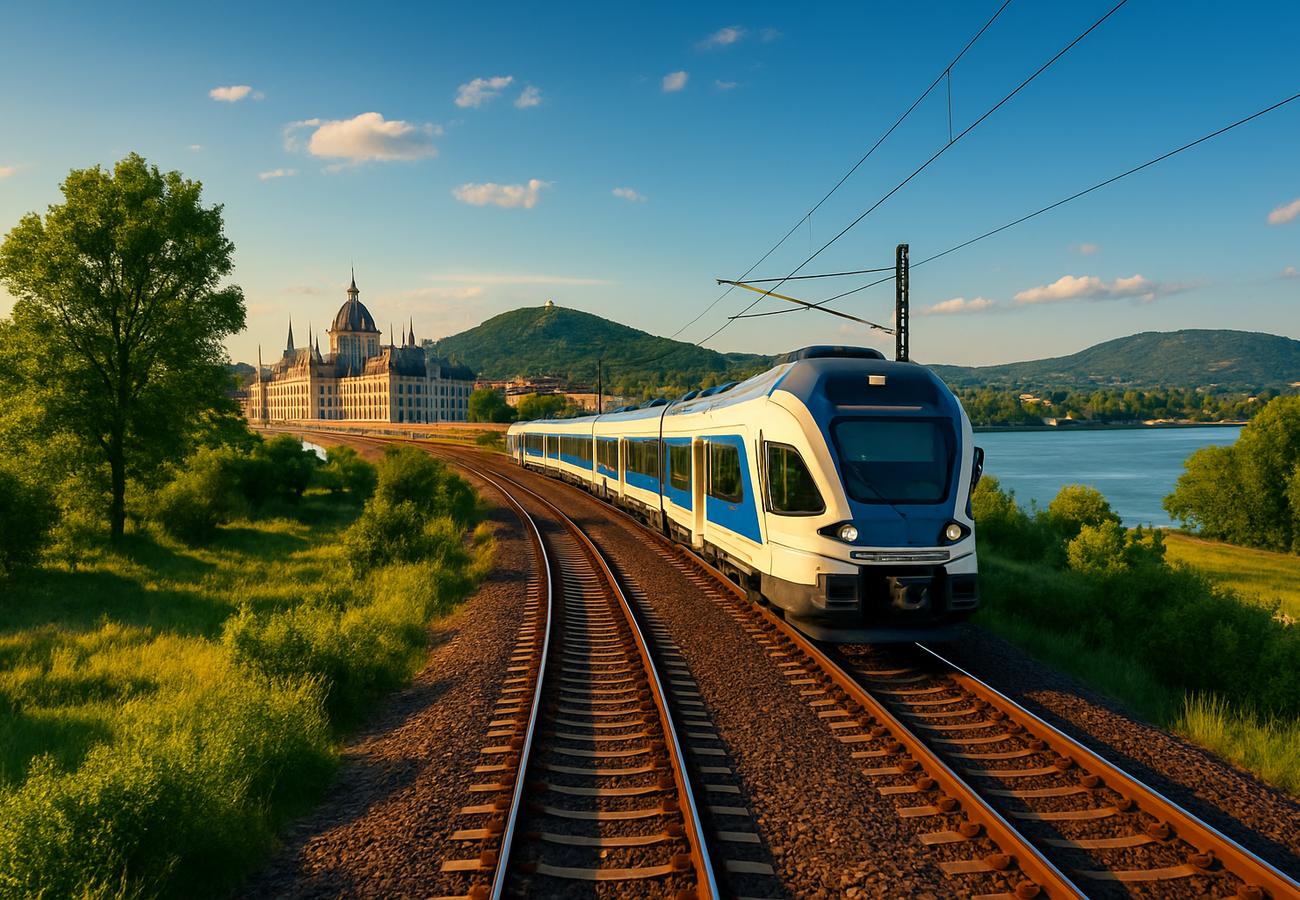
Image generated by AI
The Game-Changer: EU Funding Breaks Hungary's Rail Bottleneck
Hungary's railway system just got a lifeline. After months of uncertainty around EU funding access, a major financial agreement has landed—and it's opening doors for transport infrastructure that has been gathering dust on planning boards for years. This matters enormously. Hungary sits at the crossroads of Central Europe, and its rails connect Budapest to Vienna, Bratislava, Zagreb and Ljubljana. A modernized network doesn't just move trains faster. It transforms how millions of tourists experience an entire region.
The funding agreement grants Hungary access to substantial recovery and cohesion resources tied to governance and reform commitments. For rail infrastructure specifically, the financial package unlocks support for the core Trans-European Transport Network corridors, rolling stock upgrades, digital ticketing systems, and station renovations. This is not a symbolic gesture. These are real euros targeting real projects that travelers will feel within 18-36 months.
Reddit: "Finally someone is taking Hungary's trains seriously. I got stuck for hours trying to connect from Budapest to Lake Balaton last summer." — r/travel
What This Means For Your Next Trip
The immediate impact won't be overnight transformation. Infrastructure takes time. But the funding removes a critical barrier: uncertainty. Hungary now has the financial framework and policy backing to execute projects that were previously stalled or delayed.
For tourists, expect these changes to roll out in phases. Phase one involves digital systems—better real-time passenger information, unified ticketing platforms for rail and bus, and online booking that actually works across operators. Phase two brings physical upgrades to key routes: the Budapest Southern Ring Rail and the Törökbálint-Kelenföld section, which handle suburban and long-distance traffic around the capital. Phase three will see rolling stock replacements and station modernization at secondary cities like Debrecen, Pécs, Szeged, and Győr.
The strategic genius here is spreading tourism beyond Budapest. Lake Balaton—Hungary's leisure crown jewel—suddenly becomes more accessible without renting a car. Wine regions in Tokaj open up for day trips. The spa towns of Miskolc become viable for multi-day itineraries. For hotels and regional businesses, this is transformative.
The EU's Transport Architecture—Why Hungary Now Benefits
The European Union's Trans-European Transport Network (TEN-T) policy creates multimodal corridors connecting member states. Hungary is positioned on multiple critical TEN-T routes: the Rail Baltica corridor running north-south, and several east-west connections linking the Balkans to Central Europe. For decades, investment in these corridors was fragmented.
The new agreement consolidates support under three funding streams:
EU Recovery Funding — Allocated for reforms, resilience, and modernization projects linked to pandemic recovery and green transition.
Cohesion Policy Funding — Directed at regional development, with transport infrastructure as a priority area for balanced growth across member states.
Cohesion Fund Transport Support — Direct allocation for railway networks, rolling stock, and TEN-T infrastructure.
This triple-layered approach means Hungary can't just talk about rail modernization. The money is conditional on execution. Timelines are built in. Reporting requirements are non-negotiable. The European Commission publishes recovery plan dashboards tracking project delivery in real-time.
Hungary's recovery and resilience plan specifically includes a central traffic management system for railway lines and a national single tariff and ticketing platform bridging rail and bus services. These aren't glamorous projects. They're invisible infrastructure. But they're essential. A traveler sitting in Vienna wondering how to book a train to Budapest, transfer to a bus in Debrecen, and catch a connecting regional rail to Tokaj shouldn't need a PhD in Central European transport logistics.
The Tourism Multiplier Effect
Let's be direct about why this matters economically. Tourism is Hungary's third-largest export sector. In 2022, international arrivals exceeded 5.7 million. Most came to Budapest. That concentration creates bottlenecks—overcrowded neighborhoods, inflated prices, stressed infrastructure. Better rail connectivity redistributes tourist spending across the country.
Lake Balaton becomes a viable weekend destination from Vienna or Prague when trains run every 30 minutes instead of every 90. Regional wine tourism in Tokaj expands when logistics are smooth. Pécs—a UNESCO World Heritage site with extraordinary Ottoman-era architecture—attracts longer stays when getting there isn't an ordeal. Győr, sitting on the Austrian border, becomes a genuine Central European gateway rather than a commuter station.
For small hotels, restaurants, and cultural operators in secondary cities, this is survival and growth combined. Budapest's 300-room boutique hotels are saturated and overpriced. Regional destinations offer authentic experiences at 40-60% lower cost. The only constraint has been access. Rail modernization removes that constraint.
Digital Systems: The Invisible Revolution
Here's what most travel media misses: the sexiest upgrade isn't new trains. It's unified passenger information systems.
Imagine booking a journey from Budapest to Szeged to Pécs to Vienna entirely on one platform, with real-time updates, single payment, and seamless connections. That's what Hungary's digital transport reform is targeting. The system will integrate rail and bus operators, display seat availability, show price comparisons, and send arrival notifications.
This is competitive advantage. Austria's railway system (ÖBB) has been running this infrastructure for years. The ÖBB's ticket sales through integrated platforms exceed 60% of total revenue. Hungary is playing catch-up, but with EU funding backing the project, the catch-up happens fast.
For tourists, simplified booking means more flexibility. You can stay longer in unexpected destinations because moving on becomes logistically simple. You can afford to skip rental cars entirely. You can travel sustainably without sacrifice.
Which Destinations Benefit Most
The funding framework identifies seven priority tourism regions for rail connectivity improvements:
Budapest — Core capital access, suburban capacity, and onward travel reliability.
Lake Balaton — Primary leisure destination requiring frequent high-capacity rail services.
Debrecen — Eastern Hungary's cultural hub, currently underserved by express trains.
Pécs — Heritage and gastronomy focus, gaining better north-south connectivity.
Győr and Pannonhalma — Religious tourism and cross-border Austrian linkage.
Tokaj and Nyíregyháza — Wine region access and northeastern corridor routing.
Szeged — Southern gateway and cultural event host needing improved capacity.
Each gets targeted infrastructure investment tied to its tourism profile and EU transport corridor assignments.
The Sustainability Angle: Why Europe's Capitals Care
Brussels isn't funding Hungary's railways purely from altruism. The EU's climate targets require transport modal shift. By 2050, the bloc aims for 90% emissions reduction in transport. Rail is central to that math. Every passenger who travels by train instead of car removes roughly 100-150 grams of CO2 per kilometer traveled.
For Hungary, this framing matters politically and commercially. International tourists increasingly screen destinations on sustainability metrics. A 2024 Booking.com survey found 73% of European travelers consider environmental impact when choosing accommodation and transport. Hungary's positioning as a greener Central European destination is directly strengthened by visible railway investment.
This isn't greenwashing. It's structural change. More reliable trains mean more people choosing trains. Demand creates network expansion. Network expansion attracts investment. Hungary enters a virtuous cycle.
Timeline Expectations: When You'll Actually Notice Changes
Be realistic about pace. European infrastructure projects follow strict protocols.
2026-2027: Expect digital system rollout. Ticketing platforms go live. Passenger information improves. Real-time delays data becomes available. This is the "fast wins" phase funded under recovery spending.
2027-2029: Rolling stock upgrades appear on major routes. Budapest-Lake Balaton service gets newer trains. Suburban routes around the capital see capacity improvements. Station renovations begin at secondary cities.
2029-2032: Major infrastructure projects complete. The Budapest Southern Ring Rail opens or expands significantly. Cross-border corridors show measurable service improvements. The network starts looking and feeling modern.
2032+: Long-term benefits compound. Network effects multiply. Hungary's position as a Central European rail hub becomes genuinely competitive with Austria and Czech Republic.
Don't expect everything tomorrow. Do expect visible change within two years and substantial transformation within five.
What Could Still Go Wrong
The agreement is solid, but infrastructure is never guaranteed. Political shifts, procurement delays, labor shortages, and cost inflation can derail timelines. Hungary's track record with EU project delivery is mixed—some initiatives succeed brilliantly, others face years of delays.
Weather events, supply chain disruptions, and labor disputes are wildly unpredictable. A single major incident at a critical station can cascade across the network. Coordination between Hungary's Ministry of Innovation, Hungarian Railways (MÁV), local authorities, and EU administrators requires constant alignment.
The EU has built reporting mechanisms and enforcement mechanisms into the funding agreement to minimize slippage, but nothing removes risk entirely. Expect some delays. They'll be annoying but surmountable.
The Bigger Picture: Hungary's European Integration
This funding agreement signals something broader: Hungary is genuinely re-integrating into EU transport planning. The previous period of funding restrictions created genuine uncertainty. This agreement removes that cloud. It also positions Hungary as a Central European corridor player—not just a Hungarian rail operator.
Cross-border rail cooperation with Austria, Slovakia, Romania, and Croatia now becomes possible on a funded basis. Coordinated ticketing, joint procurement, and unified scheduling are suddenly within reach. This transforms Hungary from a destination to a transit gateway, expanding its tourism market beyond leisure travelers to include business travelers, conference attendees, and regional explorers.
For nomad lawyers, digital entrepreneurs, and remote workers exploring Central Europe long-term, this matters. Reliable rail infrastructure supports flexible location-independent living. You can base yourself in Budapest for two months, take weekend trips to Vienna, Prague, and Zagreb, and move between them affordably. The infrastructure enabling that lifestyle is being built right now.
Bottom Line: Booking Your Hungary Trip in 2026-2027
If you're planning a Central European trip in the next 18 months, Hungary's timing is perfect. The digital improvements are rolling out, making logistics simpler. Infrastructure projects haven't disrupted services yet. Hotels and regional operators are eager for tourists as funding investment increases local employment.
By 2028-2029, you'll see visible physical changes—newer trains, renovated stations, expanded services. By 2030, Hungary's rail network will be genuinely competitive and modern.
The EU funding agreement isn't poetry. It's bureaucratic financial machinery. But machinery that converts euros into faster trains, simpler bookings, and better-connected tourism regions. For travelers, that's what matters.
Railway modernization doesn't make headlines, but it transforms how you experience a country—one smooth connection at a time.
Related Travel Guides
Disclaimer
This article is for informational and educational purposes only. It does not constitute legal, financial, or professional advice. While we strive to provide accurate and up-to-date information, travel policies, regulations, and conditions change rapidly. Always verify information with official sources before making travel decisions. Nomad Lawyer makes no representations about the accuracy, reliability, completeness, or suitability of the information provided. Readers should consult qualified professionals for advice specific to their circumstances. The views expressed in this article are those of the author and do not necessarily reflect the views of Nomad Lawyer.
Kunal K Choudhary
Co-Founder & Contributor
A passionate traveller and tech enthusiast. Kunal contributes to the vision and growth of Nomad Lawyer, bringing fresh perspectives and driving the community forward.
Learn more about our team →