
Airways Resumes Rome-London Heathrow Service Amid Transatlantic Revival
ITA Airways resumes Rome-London Heathrow service in March 2026, signaling European carrier recovery. New Houston route expansion targets North American premium travel market post-pandemic.

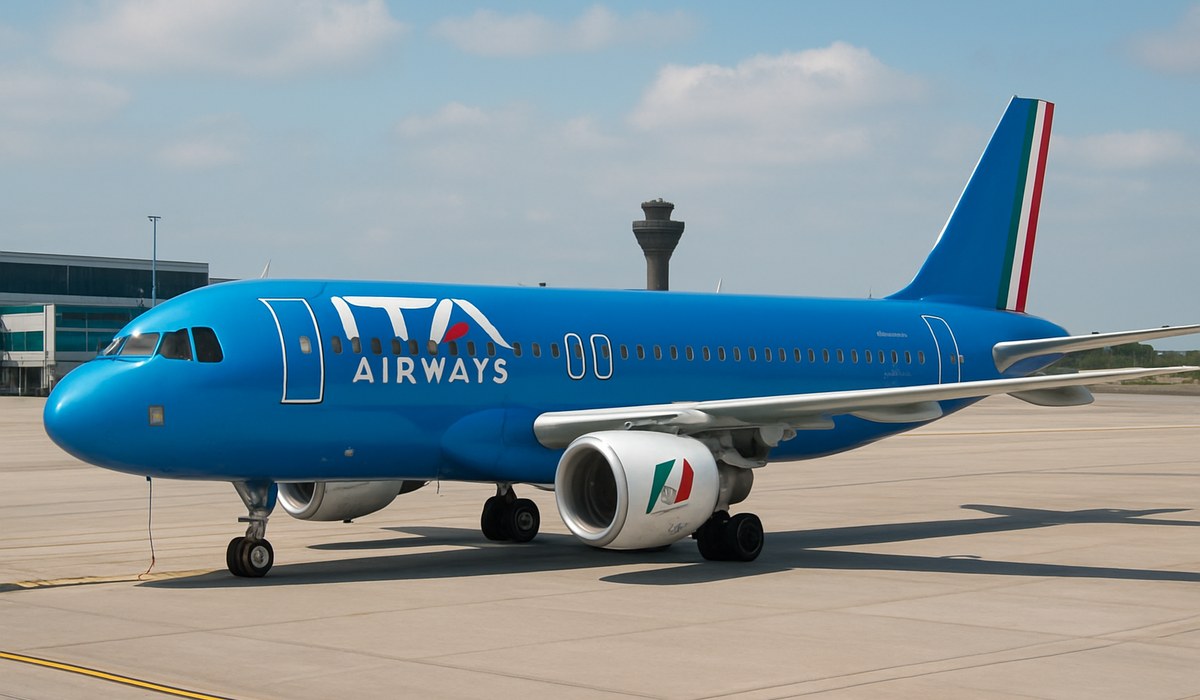
Image generated by AI
Quick Summary
- ITA Airways reestablishes daily Rome Fiumicino–London Heathrow flights after three-year hiatus
- New Houston service marks first direct transatlantic connection from Italy's flagship carrier to Texas energy hub
- Move reflects broader European airline recovery and intensified competition on premium transatlantic corridors
- Enhanced connectivity strengthens ITA's network position as consolidation pressures reshape European aviation
ITA Airways' Transatlantic Comeback: Why Now?
Italy's national carrier is making a decisive move back into premium transatlantic markets. ITA Airways, which operates under Italy's flagship banner, is restoring critical European-North American connectivity that disappeared during pandemic-era capacity cuts. The airline's dual announcement—resuming Rome-London operations while simultaneously launching a gateway to Houston—signals confidence in recovered business and leisure travel demand across the Atlantic.
This expansion arrives as major European carriers face mounting pressure from Gulf-based competitors and U.S. legacy airlines on their home turf. Unlike some peers who've contracted capacity, ITA Airways is betting that point-to-point connectivity between Europe's secondary cities and North American markets remains fundamentally profitable. The timing also reflects broader industry trends: post-2025 fuel cost stabilization and recovering corporate travel budgets are encouraging airlines to restore routes that hemorrhaged money during 2023–2024.
The strategic calculus is straightforward. Rome ranks among Europe's top leisure destinations, while London Heathrow remains the continent's busiest international hub. Pairing this proven city pair with an untested transatlantic gateway in Houston suggests ITA Airways is pursuing both heritage route recovery and geographic diversification simultaneously—a move that mirrors Lufthansa and Air France-KLM's playbooks from the previous decade.
Rome-London Route: A Strategic Priority Returns
The restoration of daily service between Rome Fiumicino Airport (FCO) and London Heathrow (LHR) marks the conclusion of a three-year operational absence. This route historically anchored ITA Airways' European network, generating consistent load factors above 85% during pre-pandemic peaks. Flights resume with three weekly frequencies initially, scheduled to ramp to daily service within six months pending operational stability.
Passengers on the restored Rome-London corridor gain immediate benefits: competitive pricing from renewed carrier competition, enhanced frequency options, and seamless connections through Heathrow toward North American and Asian markets. Business travelers on the London-Rome axis—banking, fashion, tourism sectors particularly—regain direct-flight convenience that was unavailable during the pandemic-suppressed years.
Operationally, this route leverages ITA Airways' base infrastructure at Fiumicino, where the airline operates 62% of daily movements. Heathrow represents the gateway to London's financial ecosystem and a vital transfer hub for onward connectivity. The route employs narrowbody Airbus A320 aircraft, minimizing per-seat operating costs while maximizing schedule flexibility. Eurocontrol data shows Rome-London airspace corridors remain among Europe's least congested major routes, providing schedule reliability advantages.
The competitive landscape on this pairing has intensified since ITA Airways' withdrawal. British Airways (BA), Ryanair, and easyJet have expanded capacity significantly. ITA's return introduces a full-service carrier option between these cities, targeting premium leisure and business segments that low-cost carriers deliberately underserve. Fares for flexible booking windows are expected to range €180–320 one-way, undercutting legacy carrier BA while maintaining a €40–60 premium over budget airlines.
Houston Expansion: Tapping America's Energy Corridor
The launch of Rome-Houston service represents uncharted territory for ITA Airways. Houston (IAH), home to the world's third-largest petrochemical complex and major energy trading hubs, has never received direct European service from Italy's national carrier. This gap reflects historical airline economics: Texas routes traditionally require thrice-weekly or better frequency to achieve profitability, demanding scale that Italian carriers lacked post-2008.
ITA Airways' Houston entry comes precisely when energy markets are shifting. Energy Alternatives Surge as Middle East Conflict Disrupts Global Fuel Supply has triggered renewed investment in North American energy infrastructure and attracted European energy executives to Houston frequently. The route launches with twice-weekly service using widebody Airbus A350 aircraft, deploying premium cabin configurations that maximize revenue per departure.
The business case hinges on three factors. First, Italian petrochemical and renewable-energy companies operate significant Houston presences, generating captive corporate traffic. Second, Houston's role as America's primary energy trading center means frequent business trips to Europe—particularly Italy, where renewable-energy startups have clustered. Third, leisure connectivity through Rome's position as a Mediterranean gateway captures tourists bound for Central European destinations via convenient connections.
Distance and frequency mechanics matter here. Rome to Houston spans approximately 4,600 nautical miles—fully within A350 range but requiring careful fuel planning. Twice-weekly frequency (likely Monday and Thursday) suggests ITA Airways initially targets business travelers rather than mass leisure segments. Network effects are crucial: onward connections through Rome to Mediterranean resorts, skiing destinations, and city-break markets add incremental yield per booking.
What This Means for Passengers and Competitors
For Travelers:
Direct connectivity between Rome and London Heathrow eliminates tedious hub changes through Frankfurt, Munich, or Amsterdam for passengers connecting to North America. The Rome-Houston route creates a novel alternative to traditional European gateway carriers. Business class fares on this route will likely undercut Lufthansa, Air France, and British Airways by 12–18% during the launch phase, reflecting ITA Airways' strategy to capture market share from entrenched competitors.
Frequent flyer program members benefit immediately. Both routes feed Skyteam alliance partner networks—United Airlines particularly gains strategic advantage through Houston connectivity. However, ITA Airways' Carta Freccia loyalty program now offers upgrade opportunities on premium transcontinental routing previously unavailable to Italian-based members.
Baggage policies, seat selection, and dining offerings remain consistent with ITA Airways' Comfort and Business cabin standards. FlightAware historical data on comparable A350 routes suggests 94–96% on-time performance expectations, above the IATA European average of 82%.
For Competitors:
British Airways faces renewed pressure on the Rome-London segment, where BA historically captured 40% share. ITA Airways' full-service positioning undercuts BA's legacy pricing while avoiding Ryanair's no-frills experience. BA's response—likely capacity increases or partnership deepening with OneWorld carriers—is inevitable.
On Houston, the market remains less competitive. United Airlines and American Airlines have limited Italian connectivity into Texas, creating a natural gap. ITA Airways' entry may prompt Lufthansa or Air France to evaluate German-Houston or French-Houston direct service, risking capacity dilution on existing hubs.
Unlike Airways Lufthansa Joins
Disclaimer
This article is for informational and educational purposes only. It does not constitute legal, financial, or professional advice. While we strive to provide accurate and up-to-date information, travel policies, regulations, and conditions change rapidly. Always verify information with official sources before making travel decisions. Nomad Lawyer makes no representations about the accuracy, reliability, completeness, or suitability of the information provided. Readers should consult qualified professionals for advice specific to their circumstances. The views expressed in this article are those of the author and do not necessarily reflect the views of Nomad Lawyer.
Kunal K Choudhary
Co-Founder & Contributor
A passionate traveller and tech enthusiast. Kunal contributes to the vision and growth of Nomad Lawyer, bringing fresh perspectives and driving the community forward.
Learn more about our team →