
Vietnam National Railway Group Restructuring to Accelerate High-Speed Rail Expansion by 2035
Vietnam has officially transitioned the Vietnam Railways Corporation into the Vietnam National Railway Group (VNR) to spearhead high-speed rail development and modernize national transport connectivity through 2035.

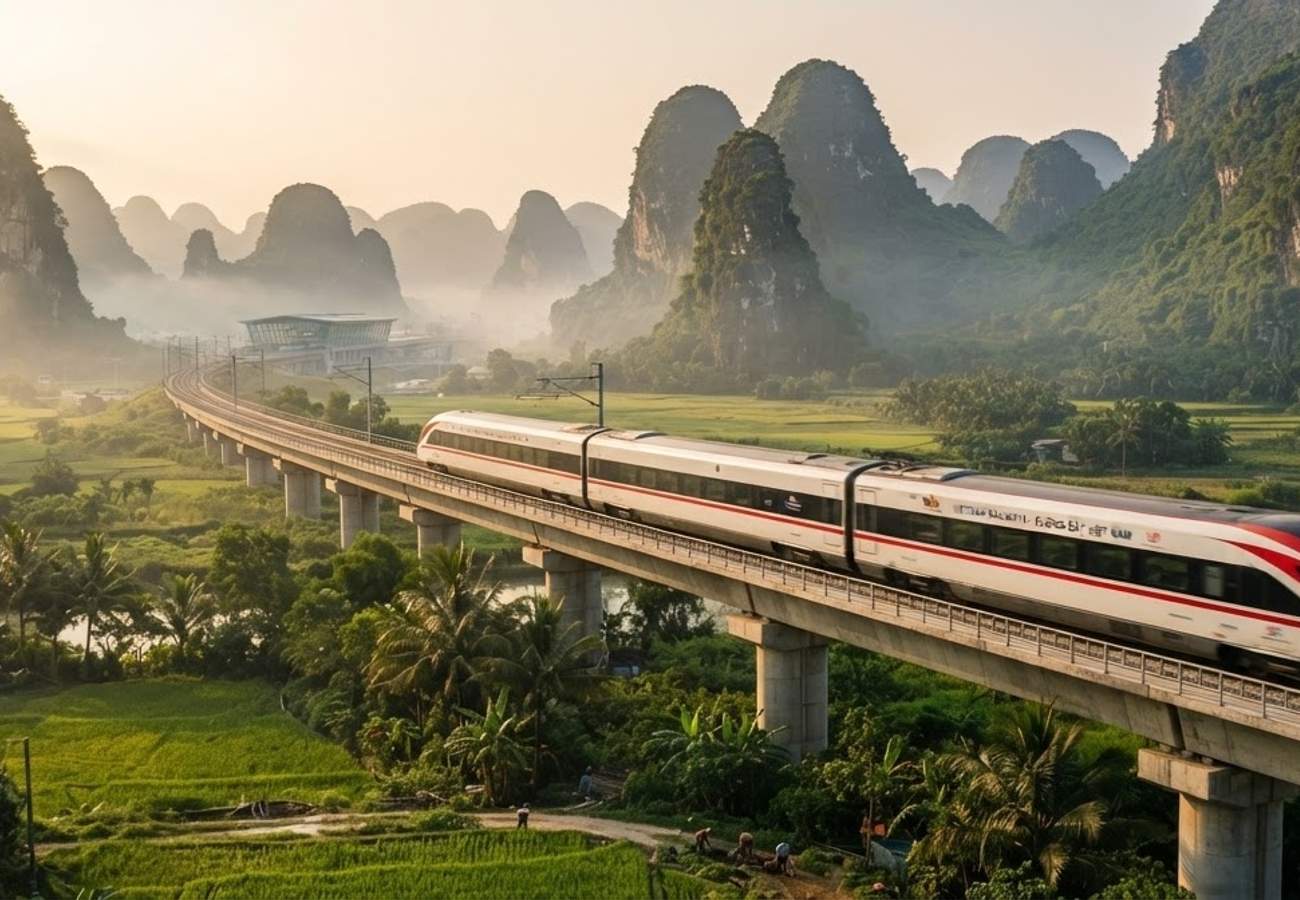
Image generated by AI
Vietnam has officially transitioned its state railway entity into a multi-sector powerhouse to anchor the development of a high-speed rail network. This structural pivot aims to move the country beyond traditional rail operations toward a sophisticated, technology-driven transport ecosystem by 2035.
Strategic Pivot to Vietnam National Railway Group
On August 11, 2026, the Vietnam Railways Corporation officially transitioned into the Vietnam National Railway Group (VNR). This change, formalized by the Hanoi Department of Finance via a new enterprise registration certificate, represents a fundamental shift in how the nation manages its tracks, trains, and transit technology.
Rather than a simple rebranding, this is a comprehensive organizational overhaul. VNR now operates as a state-owned single-member limited liability company. This new legal framework allows the entity to function as a diversified enterprise capable of handling the immense financial and technical demands of modern railway construction and maintenance.
The new group inherits all prior obligations, contracts, and rights from the former corporation, ensuring a seamless transition of current operations while expanding its legal authority to pursue aggressive growth.
Expanding the Railway Value Chain
The restructuring significantly broadens the scope of VNR’s operations. The group has expanded its business portfolio to cover 110 different sectors, moving far beyond the traditional role of a train operator.
The organization has identified five core business pillars:
- Railway Transport: Enhancing the movement of passengers and freight.
- Construction: Building the foundations for future high-speed lines.
- Maintenance: Ensuring the longevity and safety of existing and new assets.
- Industry: Developing the technical components required for rail.
- Services: Improving the end-to-end passenger and commercial experience.
By integrating these sectors, VNR can manage the entire lifecycle of a railway project—from initial design and construction to daily operation and long-term upkeep.
Roadmap to High-Speed Rail and 2035 Vision
This restructuring is the operational engine behind Prime Minister Decision No. 498/QD-TTg. This mandate outlines a strict development timeline for the 2026–2030 period, with a strategic horizon extending to 2035.
The primary objective is to transform Vietnam's geography—a long, narrow corridor—into a competitive advantage. By establishing a high-speed network, the government aims to synchronize north-south connectivity, reducing travel times and boosting regional economic integration.
Strategic Development Priorities
To achieve this, VNR is focusing on several critical capabilities:
- Technological Mastery: Gradually gaining autonomy over strategic railway technologies to reduce reliance on foreign imports.
- Infrastructure Management: Acting as a primary investor for state-funded projects and managing the commercial exploitation of railway assets.
- Competitive Scaling: Improving the efficiency of the domestic rail industry to compete with air and road transport.
- Asset Optimization: Developing frameworks for the fixed-term leasing of infrastructure exploitation rights.
Implications for Tourism and Regional Mobility
For the international traveler and the digital nomad, the shift to a "Group" model signals a future of increased accessibility. While current schedules remain unchanged, the long-term goal is to make rail the preferred method for multi-city itineraries.
Improved rail connectivity is expected to decentralize tourism. By making regions outside the primary hubs of Hanoi and Ho Chi Minh City more accessible, the government hopes to distribute tourism revenue more evenly across the provinces. This shift supports longer domestic stays and encourages visitors to explore the country's interior via a more comfortable, modern rail experience.
Digital Transformation and Governance Standards
A critical component of the VNR evolution is the integration of digital governance. The group has committed to a rigorous digital transformation roadmap to be completed by 2030.
VNR intends to implement OECD corporate governance principles through digital platforms. This move is designed to increase transparency, improve operational efficiency, and utilize science and innovation to manage complex rail networks. This digital layer will be essential for managing high-speed rail, where precision timing and automated safety systems are non-negotiable.
Operational Summary of the VNR Model
The following table outlines the specific changes in the operating model following the August 2026 restructuring.
| Feature | Former Model (Corporation) | New Model (National Railway Group) |
|---|---|---|
| Legal Structure | State Railway Corporation | State-owned Single-member LLC |
| Business Scope | Traditional rail operations | Expanded portfolio (110 sectors) |
| Core Focus | Transport and basic maintenance | Transport, Construction, Industry, and Services |
| Strategic Role | Service provider | Central organization for sector development |
| Governance Goal | Standard state management | OECD corporate governance principles by 2030 |
| Long-term Vision | Domestic connectivity | Central role in multimodal logistics by 2035 |
Key Takeaways
- Official Launch: The Vietnam National Railway Group (VNR) became official on August 11, 2026.
- Diversification: The entity now covers 110 business sectors to manage the full rail value chain.
- High-Speed Goal: The restructure is the foundation for high-speed rail expansion between 2026 and 2035.
- Digital Shift: VNR aims for full OECD governance and digital operational mastery by 2030.
- Tourism Impact: Future improvements will likely make remote regions more accessible to international tourists.
FAQ
Will this restructuring change my current train tickets or schedules? No. The transition is a strategic organizational reform. Current passenger services and schedules remain unaffected.
What is the main goal of the 2035 vision? The goal is for VNR to become a leading economic group capable of operating a modern national high-speed network and serving as a hub for international rail transport and multimodal logistics.
How does this affect the construction of new lines? VNR now has the authority and structure to act as a primary investor and manager for railway construction, renovation, and upgrading projects using state budget funds.
Vietnam's rail evolution marks a decisive step toward transforming the nation's transit backbone into a high-speed, digitally integrated network.
Related Travel Guides
Disclaimer
This article is for informational and educational purposes only. It does not constitute legal, financial, or professional advice. While we strive to provide accurate and up-to-date information, travel policies, regulations, and conditions change rapidly. Always verify information with official sources before making travel decisions. Nomad Lawyer makes no representations about the accuracy, reliability, completeness, or suitability of the information provided. Readers should consult qualified professionals for advice specific to their circumstances. The views expressed in this article are those of the author and do not necessarily reflect the views of Nomad Lawyer.
Raushan Kumar
Founder & Lead Developer
Full-stack developer with 11+ years of experience and a passionate traveller. Raushan built Nomad Lawyer from the ground up with a vision to create the best travel and law experience on the web.
Learn more about our team →