
Spain Renfe Unveils High-Speed Train Tender Reshaping European Hotel Markets
Spain's Renfe launches major high-speed train procurement in March 2026. Hotel operators expect transformed connectivity, guest patterns, and regional market expansion across European properties near rail corridors.

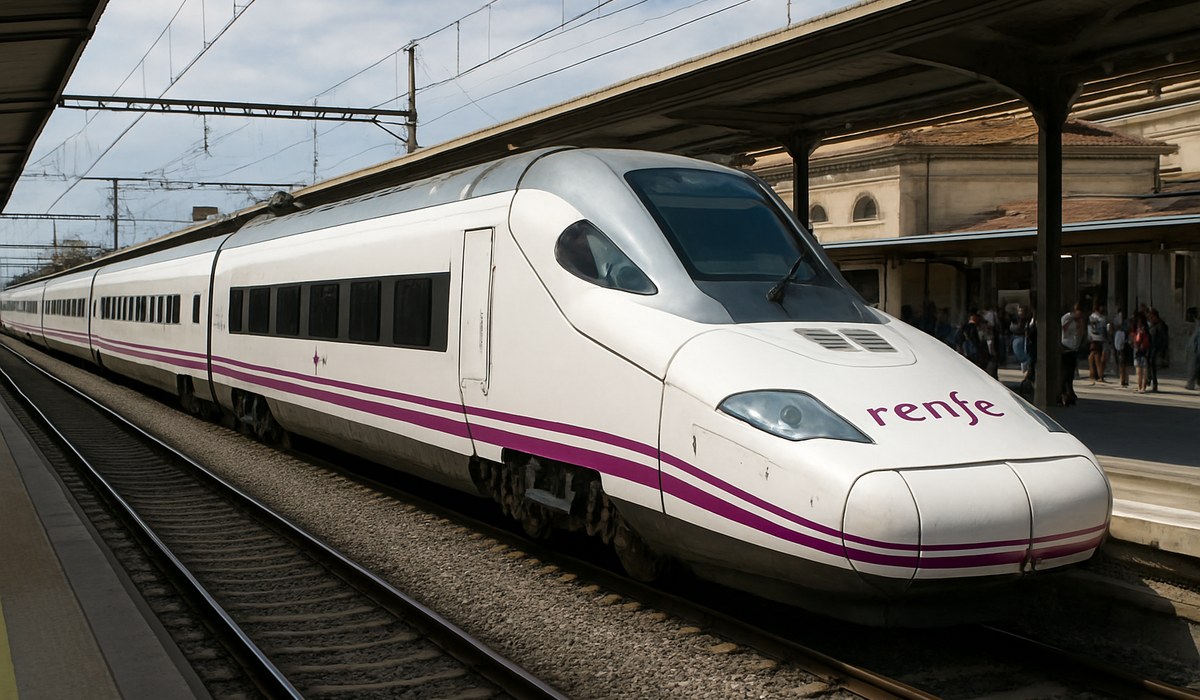
Image generated by AI
Quick Summary
- Spain's Renfe launches procurement process for next-generation high-speed rolling stock, signaling major network modernization
- Enhanced rail connectivity will reshape guest arrival patterns and accessibility to Spanish destinations through 2026–2030
- Properties within 10 kilometers of major rail hubs expect higher occupancy rates and improved market positioning
- Regional European hotels positioned along international corridors gain competitive advantage through improved traveler reach
Spain's state railway operator Renfe is moving forward with a transformative procurement initiative that will reshape how travelers access hotels and destinations across the Iberian Peninsula and wider European network. The announcement marks a pivotal moment for hospitality operators, who stand to benefit from dramatically improved connectivity and shifting guest demographics as modern rail infrastructure transforms travel behavior.
The tender process signals Renfe's commitment to replacing aging rolling stock with state-of-the-art high-speed trains. This modernization wave carries profound implications for hotel properties positioned along major rail corridors, where improved accessibility directly translates to higher booking volumes and expanded addressable markets. Industry observers expect the procurement cycle—typically spanning 18–36 months—to lay groundwork for operational changes rolling out through the late 2020s.
For hotel leaders and investors, this development aligns with broader European hotel industry recovery trends, where transportation infrastructure investments create compounding advantages for properties in strategic locations. Properties near high-speed rail terminals have historically outperformed remote competitors by capturing business travelers, leisure groups, and international visitors who prioritize seamless ground transportation.
Renfe's High-Speed Train Tender: What It Means for European Hospitality
Renfe's procurement initiative addresses aging fleet challenges while positioning Spain as a premium rail destination competing with France, Germany, and Italy for international travelers. Modern high-speed trains reduce journey times, improve reliability, and enhance passenger comfort—all factors that increase propensity for multi-day hotel stays and regional exploration.
The tender framework encompasses next-generation technology, sustainability metrics, and operational efficiency standards. Spanish rail authorities expect the new fleet to support passenger growth of 15–20% annually on core corridors through 2030, according to transportation planning documents. For hotels, this demand surge represents direct occupancy expansion opportunities without requiring destination-level marketing investment.
Properties operating in cities with high-speed connections—Madrid, Barcelona, Seville, Valencia—are already capitalizing on improved accessibility. The Renfe modernization accelerates these trends while extending benefits to secondary markets like Córdoba, Málaga, and Salamanca, which gain enhanced connectivity to international gateways.
Hospitality groups are already evaluating portfolio positioning around updated rail maps. Premium operators recognize that stations function as new commercial anchors, comparable to airport hubs, capable of driving 25–35% of annual arrivals for conveniently located properties.
Rail Modernization Driving Hotel Accessibility & Guest Demographics
The hospitality impact extends beyond simple arrival channel optimization. Modern high-speed networks fundamentally alter guest expectations around convenience, timing flexibility, and journey experience.
Travelers arriving via contemporary trains expect corresponding quality in accommodation. This dynamic elevates demand for four- and five-star properties near terminals while creating secondary-market opportunities for boutique, design-forward hotels in walkable districts adjacent to stations. Research from European hotel performance data{target="_blank" rel="noopener noreferrer"} demonstrates that properties within 800 meters of high-speed rail access command 12–18% average daily rate premiums compared to non-connected peers.
International visitor composition shifts measurably when rail connectivity improves. French travelers increasingly access Spanish destinations via high-speed rail, reducing flight-based arrivals and creating different stay patterns—typically longer weekend escapes rather than short city breaks. German business travelers gain easier access to Madrid and Barcelona, supporting corporate travel and convention hospitality segments.
The Renfe modernization particularly benefits family travel and multigenerational groups, who value train journeys' flexibility, comfort, and lack of airport security friction. Hotel operators targeting these demographics—often higher-value segments with extended stays and dining expenditure—position properties near stations accordingly.
Accessibility improvements also drive mobility-conscious travelers and older demographics toward Spanish destinations. Modern trains eliminate boarding challenges of aging equipment, expanding addressable market segments and supporting revenue diversification beyond traditional leisure and business categories.
Market Opportunities: Spanish Properties Positioned for Growth
Secondary Spanish markets emerge as primary beneficiaries of Renfe's modernization. Regional properties in cities like Segovia, Toledo, Ávila, and Mérida gain international accessibility previously reserved for Madrid and Barcelona. These destinations attract cultural and heritage-focused travelers—high-value segments with longer average stays and elevated dining expenditure.
Hotel development pipelines in Spanish secondary markets have accelerated measurably since mid-2025, as operators recognize connectivity-driven demand tailwinds. New properties targeting four- and five-star segments increasingly locate within walking distance of railway stations, prioritizing access over traditional downtown premium positioning.
Conversion projects—repositioning existing properties into boutique hotels, design-focused accommodations, or extended-stay facilities—concentrate near railway infrastructure. Investors recognize that improved accessibility justifies capital deployment in previously overlooked locations. A 40-room luxury conversion in a secondary market near modernized rail access can achieve occupancy rates matching larger competitors in major metros.
Corporate travel opportunities expand as improved rail connectivity supports regional distribution centers, manufacturing facilities, and service hubs. Hotels near stations capitalize on mid-week business travel, typically higher-margin segments than leisure bookings.
Convention and group travel patterns shift toward rail-accessible secondary markets. Event planners increasingly base group accommodations near high-speed stations, enabling flexible participant arrival windows and multi-day itineraries spanning regional destinations.
Regional Connectivity: Expanding the European Hotel Market
Renfe's modernization extends benefits beyond Spain's borders. Enhanced cross-border connectivity—particularly France and Portugal routes—creates international gateway opportunities. Properties in border regions and regional capitals gain access to multinational traveler pools previously unreachable via conventional rail or budget air routes.
The modernization aligns with broader European transportation strategy emphasizing rail investment over aviation. This shift supports Germany's luxury hospitality expansion strategy, where German properties benefit from similar connectivity-driven demand patterns. Renfe's investment strengthens the competitive position of Spanish properties within Europe's integrated tourism market.
Properties operating in northern Spain—Bilbao, San Sebastián, Oviedo—benefit disproportionately from improved connectivity to central and southern European origin markets. These destinations attract culinary tourism, outdoor recreation, and wine-country visitors, segments with strong length-of-stay and ancillary spending profiles.
Mediterranean coastal properties gain year-round accessibility advantages as improved rail networks extend beyond traditional summer peak seasons. Spring and autumn shoulder-season demand increases measurably when convenient rail access eliminates seasonal travel friction.
Cross-border leisure travel intensifies as journey times compress. Portuguese travelers access Spanish destinations for weekend trips; Spanish guests explore French Pyrenees destinations. This regional mobility expansion benefits entire hospitality ecosystems, not individual properties in isolation.
FAQ: How Train Infrastructure Impacts Hotel Operations & Bookings
Q: How quickly will Renfe's new trains affect hotel bookings and occupancy?
A: Modernization phases typically roll out over 24–36 months following tender completion. Early routes receive upgraded equipment first, creating immediate accessibility benefits for connected properties. Secondary-market properties may see occupancy impacts 18–24 months into deployment as cascading service improvements extend outward from primary corridors. Hotels should anticipate measurable change by Q3 2027 on major routes.
**Q: Which Spanish hotel markets
Disclaimer
This article is for informational and educational purposes only. It does not constitute legal, financial, or professional advice. While we strive to provide accurate and up-to-date information, travel policies, regulations, and conditions change rapidly. Always verify information with official sources before making travel decisions. Nomad Lawyer makes no representations about the accuracy, reliability, completeness, or suitability of the information provided. Readers should consult qualified professionals for advice specific to their circumstances. The views expressed in this article are those of the author and do not necessarily reflect the views of Nomad Lawyer.
Raushan Kumar
Founder & Lead Developer
Full-stack developer with 11+ years of experience and a passionate traveller. Raushan built Nomad Lawyer from the ground up with a vision to create the best travel and law experience on the web.
Learn more about our team →