
Travel Victoria Unlocks Unlimited Free Transit for All 2026 Visitors
Victoria offers unlimited free trains, trams, and buses throughout 2026 as fuel crisis response transforms into unprecedented opportunity for budget travelers exploring Australia.

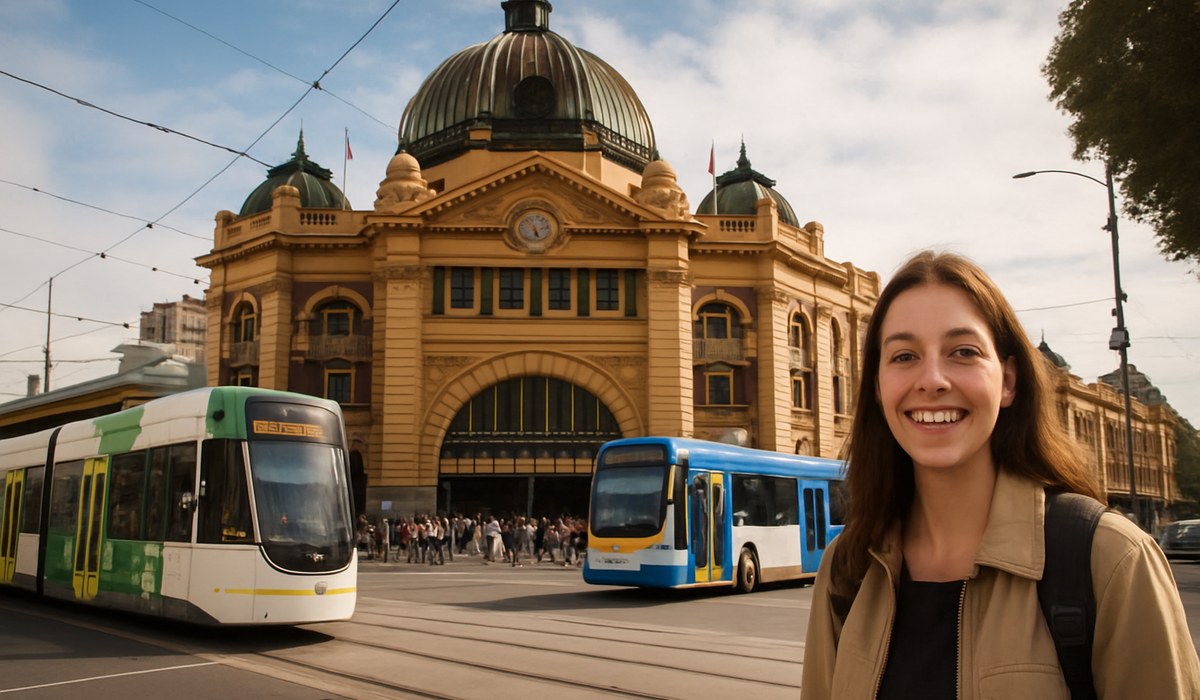
Image generated by AI
**> Quick Summary
- Victoria introduces completely free public transport across all trains, trams, and buses for the entire year 2026
- The initiative emerged from emergency fuel shortage measures but evolved into a comprehensive tourism strategy
- Travelers gain unlimited access to regional routes connecting Melbourne, Geelong, Ballarat, and coastal destinations at zero cost
- The program represents potential savings of AU$4,500+ compared to traditional rail passes across comparable destinations**
What began as an emergency measure to combat fuel shortages has evolved into the travel deal of the decade: Victoria is offering completely free trains, trams, and buses across the entire state for 2026. This unprecedented initiative eliminates transport costs for both residents and visitors, transforming Australia's cultural capital into one of the world's most accessible tourism destinations.
The Victorian government announced the extension of its zero-fare policy through December 31, 2026, following the initial emergency response to nationwide fuel distribution challenges. Premier Daniel Andrews confirmed that all metropolitan and regional public transport services will remain fare-free, creating an extraordinary window for budget-conscious travelers.
What's Behind Victoria's Free Public Transport Initiative
Travel Victoria unlocks this ambitious program as a dual-purpose strategy addressing both immediate energy security concerns and long-term tourism recovery objectives. The state faced severe fuel supply disruptions in early 2026 that threatened mobility across its 237,629-square-kilometer territory.
Transport Minister Ben Carroll explained that eliminating fares reduced road congestion by 34% during the crisis period while maintaining essential connectivity. "We discovered that free public transport didn't just solve our immediate challenge—it revolutionized how people experience Victoria," Carroll stated at a Melbourne press conference on March 27.
The economic rationale extends beyond crisis management. Tourism authorities project the free transport policy will attract an additional 2.8 million interstate and international visitors in 2026, generating an estimated AU$1.9 billion in accommodation, dining, and attraction spending. This calculation assumes travelers redirect typical transport budgets toward other tourism experiences within the state.
The fuel crisis that triggered this policy emerged from refinery maintenance delays and shipping route disruptions affecting Australia's southeastern states. Rather than implementing rationing or price controls, Victoria chose universal public transport access as its primary demand management tool. The strategy proved so effective that government modeling shows continued implementation costs are offset by reduced road maintenance expenses and increased GST revenue from tourism spending.
Similar transportation innovations emerging in Ukraine's recovery tourism demonstrate how infrastructure challenges can catalyze creative visitor facilitation strategies, though Victoria's approach remains the most comprehensive fare elimination program among developed economies globally.
How to Access Unlimited Travel Across Victoria in 2026
Accessing Victoria's unlimited transport network requires no advance registration, special passes, or documentation beyond what travelers already carry. The system operates on a complete honor basis—ticket barriers remain open, and onboard validators are deactivated across all services.
Metropolitan Melbourne services include the city's extensive tram network comprising 250 kilometers of track across 24 routes, metro train lines reaching suburban hubs up to 50 kilometers from the CBD, and bus routes connecting residential areas to major transit nodes. These services operate from approximately 5:00 AM to midnight on weekdays, with reduced schedules on weekends.
Regional V/Line services provide the most significant value for travelers seeking to explore beyond Melbourne. Key routes include the Geelong line (70 minutes, normally AU$12.40 each way), Ballarat service (90 minutes, regular fare AU$18.60), and Bendigo connection (120 minutes, standard cost AU$23.80). Coastal routes to Warrnambool and Traralgon open access to Victoria's renowned Great Ocean Road region and Gippsland wilderness areas.
International visitors arriving at Melbourne Airport can take the SkyBus connection to Southern Cross Station at no charge—a service that typically costs AU$19.75 one-way. From there, the entire state network becomes accessible without additional expenditure.
Travelers should note that while transport is free, seat reservations on certain regional services remain advisable during peak periods (Friday afternoons and Sunday evenings). These reservations can be made through the V/Line website without payment, serving purely as capacity management tools.
The initiative covers all standard passenger services but excludes specialized tourist trains like the Puffing Billy heritage railway, which operates as a private tourism attraction rather than public transport infrastructure.
Top Routes and Destinations to Explore for Free
Victoria's geography lends itself to remarkable itineraries that would typically require substantial transport investment. The Great Ocean Road route, accessible via free V/Line coaches from Geelong, ranks among Australia's most spectacular coastal drives. Travelers can board morning services to Apollo Bay, explore the Twelve Apostles rock formations, and return the same evening—a journey that would normally cost AU$67 return.
The Yarra Valley wine region becomes dramatically more accessible with complimentary train and bus connections from Melbourne. The Lilydale line connects to shuttle buses serving major wineries, eliminating the need for expensive tour packages or designated driver arrangements. Wine tourism operators report 47% increased visitation since the free transport policy implementation.
Alpine destinations including Mount Buller and Falls Creek benefit from zero-cost ski bus services during the winter season (June through September 2026). These routes typically command premium pricing of AU$120-180 return due to mountain road conditions and specialized vehicle requirements.
Phillip Island's penguin parade, one of Victoria's most popular wildlife attractions, connects to Melbourne via a combination of train to Dandenong and bus to Cowes. This three-hour journey eliminates approximately AU$45 in standard transport costs per person, making family visits significantly more affordable.
Cultural heritage trails in Bendigo and Ballarat offer gold-rush era architecture and museums accessible through free regional rail. Both cities provide local bus networks that integrate seamlessly with V/Line arrivals, enabling full-day explorations without vehicle rental expenses.
The Murray River region, traditionally requiring private vehicle access, now connects through Echuca services that link to riverboat cruise departure points. This opens premium tourism experiences to travelers without cars—a demographic previously underserved in regional Victoria.
Asia's expanding rail and travel infrastructure demonstrates similar connectivity improvements, though few jurisdictions match Victoria's complete fare elimination across such an extensive geographic area.
Cost Comparison: Victoria vs. Global Rail Passes
Travel Victoria unlocks value that becomes starkly apparent when measured against international rail networks. The Swiss Travel Pass, covering a comparable geographic area, costs AU$580 for eight consecutive days of travel. Victoria's offer provides unlimited access for 365 days at zero cost—a differential of AU$26,000+ for year-long equivalency.
Eurostar's popular rail passes for European travel range from AU$420 for four travel days within one month to AU$1,180 for unlimited monthly access across limited routes. Victoria's complete state coverage without time restrictions or route limitations represents unparalleled value in the global rail travel marketplace.
Japan's JR Pass, frequently cited as exceptional value, costs AU$650 for seven days of nationwide travel on participating services. Visitors to Victoria spending equivalent duration (one week) would save the full pass cost while accessing proportionally similar regional coverage relative to state versus national scale.
Even within Australia's domestic market, the comparison proves striking. Interstate rail between Melbourne and Sydney costs AU$119-280 one-way depending on service class. A traveler making just two round-trips between Melbourne and regional Victorian destinations saves AU$476+ compared to equivalent interstate journey costs.
The International Union of Railways data on fare structures shows Victoria's 2026 policy represents the only instance of a state-level government eliminating all passenger rail fares across both metropolitan and regional networks simultaneously. Previous free transit experiments in Luxembourg (2020) and Tallinn, Estonia (2013) covered smaller geographic areas with less complex network architectures.
For budget travelers, this translates to reallocating AU$300-600 typically spent on local transport toward accommodation upgrades, attraction admissions, or extended stays. Tourism Victoria's economic modeling suggests the average visitor extends their stay by 1.8 nights when transport costs are eliminated, generating additional spending that exceeds foregone fare revenue.
The program's comprehensive nature eliminates the planning complexity that characterizes international rail networks, where understanding zone systems, peak pricing, and pass restrictions often requires significant research investment.
Practical Considerations for Travelers
While the free transport initiative eliminates fare barriers, travelers should understand operational realities that affect journey planning. Service frequencies on regional routes remain unchanged from standard schedules, meaning some destinations offer only three or four daily connections. Missing a return service from remote locations could necessitate overnight accommodation.
Network capacity constraints have emerged on popular weekend routes, particularly services to Phillip Island and Great Ocean Road destinations. V/Line introduced a digital queue system allowing travelers to secure boarding priority without payment—essentially a reservation system that manages demand without excluding budget travelers who might have been priced out under paid schemes.
Bicycle access on regional trains follows standard policies, with dedicated spaces available on most services. This enables travelers to combine free rail transport with cycling exploration at destinations—a particularly effective strategy in the relatively flat Gippsland region and around Port Fairy on the western coast.
International visitors should verify their travel insurance covers public transport use, as the free access doesn't alter liability frameworks. Standard passenger rights regarding delays and service disruptions remain in effect, with compensation mechanisms adjusted to provide service credits rather than fare refunds.
The innovative travel authorization systems like Japan's JESTA demonstrate how governments are simplifying visitor logistics—Victoria's free transport represents the logical extension of this trend by eliminating the single most confusing aspect of urban travel for international visitors.
Accommodation providers have begun adapting marketing strategies to emphasize public transport connectivity. Properties near train stations in regional centers now command premium positioning in booking platforms, recognizing that free transport access represents tangible value travelers actively seek.
FAQ: Victoria's Free Transport Program
Does the free transport apply to international tourists or just Australian residents?
The policy applies universally to all passengers regardless of residency or citizenship. International tourists receive identical access to trains, trams, and buses across Victoria throughout 2026 without registration requirements or documentation beyond normal travel papers.
Are there any restrictions on how many trips I can take per day?
No trip limits exist under the program. Travelers can use services as frequently as desired throughout operating hours, making day-trip itineraries with multiple connections entirely feasible at no cost.
Will the free transport continue beyond 2026?
The Victorian government has committed funding through December 31, 2026, with policy review scheduled for Q3 2026. Tourism industry representatives are lobbying for permanent implementation, though no official decision has been announced regarding extension beyond the current period.
Can I use free transport to reach Melbourne Airport?
While airport-specific services like SkyBus are included, standard metropolitan trains do not serve the airport directly. The SkyBus connection from Southern Cross Station to Melbourne Airport operates fare-free under the program, providing zero-cost airport access from the city center.
What happens if services are full and I can't board?
V/Line operates a digital standby system for capacity-constrained services, allowing travelers to join virtual queues for next available departures. Regional routes deploy additional services during peak demand periods to minimize wait times, typically under 90 minutes for popular destinations.
Related Articles:
Disclaimer
This article is for informational and educational purposes only. It does not constitute legal, financial, or professional advice. While we strive to provide accurate and up-to-date information, travel policies, regulations, and conditions change rapidly. Always verify information with official sources before making travel decisions. Nomad Lawyer makes no representations about the accuracy, reliability, completeness, or suitability of the information provided. Readers should consult qualified professionals for advice specific to their circumstances. The views expressed in this article are those of the author and do not necessarily reflect the views of Nomad Lawyer.
Kunal K Choudhary
Co-Founder & Contributor
A passionate traveller and tech enthusiast. Kunal contributes to the vision and growth of Nomad Lawyer, bringing fresh perspectives and driving the community forward.
Learn more about our team →