
Ryanair Leads Airline Rush: Ukraine Tourism Boom Plans for 2026
Ryanair, Wizz Air, and legacy carriers prepare rapid Ukraine service restoration as European airlines position for tourism surge from Poland, Germany, and UK markets in 2026.

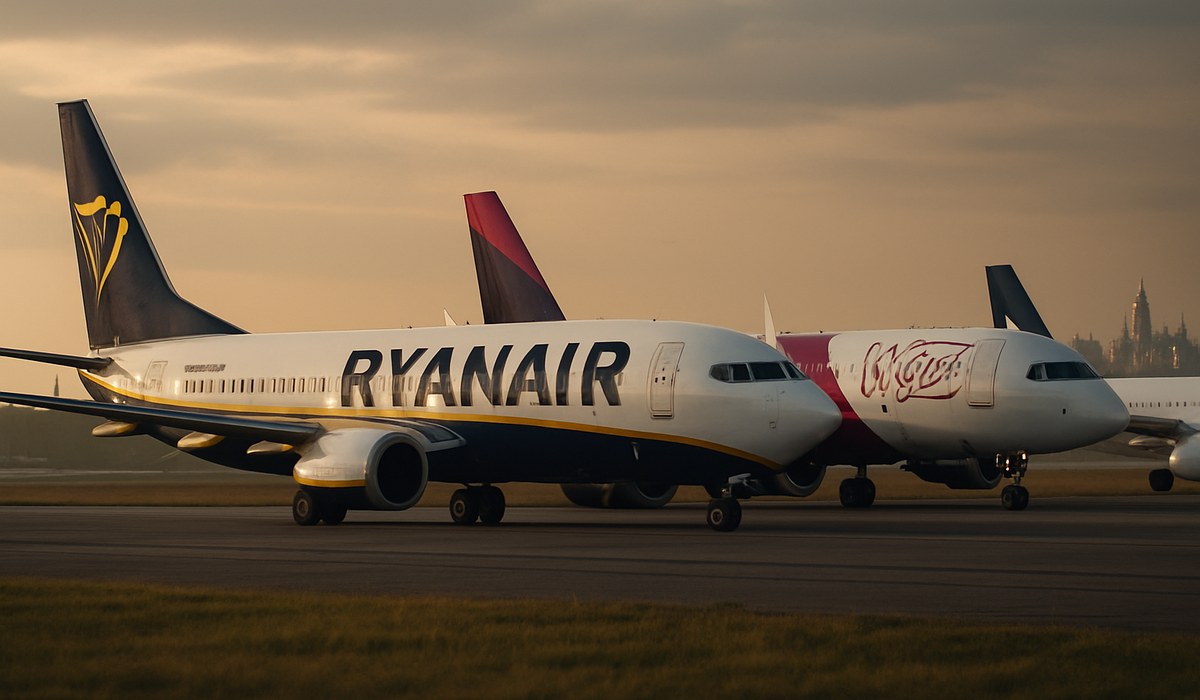
Image generated by AI
Ryanair has joined a competitive rush of European and Gulf carriers preparing detailed service plans for Ukraine's anticipated airspace reopening, positioning the low-cost giant alongside Wizz Air and EasyJet to capture tourism demand from Poland, Hungary, Germany, and the United Kingdom once civilian flights resume.
Ryanair and Low-Cost Rivals Build Ukraine Capacity Plans
Ryanair leads airline preparations for Ukraine's future tourism market by drafting plans to base multiple aircraft in the country and scale up operations within weeks of a formal safety clearance. The Irish carrier's strategy mirrors aggressive positioning by Budapest-based Wizz Air, which has outlined plans to launch approximately 30 routes in the initial weeks following airspace reopening and expects to transport several million passengers annually into Kyiv, Lviv, and Odesa. EasyJet, which had no Ukraine presence before February 2022, is evaluating market entry once political settlements and aviation safety approvals are secured, according to European business intelligence. This coordinated rush by Europe's three largest budget carriers reflects confidence that pent-up demand from neighboring markets will produce immediate yield opportunities when civilian flight operations restart.
Legacy Network Carriers Plot Parallel Ukraine Return Routes
Lufthansa Group, Turkish Airlines, airBaltic, and Qatar Airways have all advanced internal planning for Ukraine route resumption, targeting hub connectivity into Kyiv's main airports and secondary cities. Turkish Airlines' extensive network across the Black Sea region positions the carrier to restore Odesa links quickly, while Lufthansa's German hubs in Frankfurt, Munich, and Berlin are central to planners modeling nonstop service to Kyiv and Lviv. Qatar Airways has explored long-haul feed opportunities through Doha, aiming to connect Ukraine with Gulf business travel and Asian transfer traffic once insurance and regulatory frameworks permit scheduled operations. AirBaltic's proximity to Ukraine and existing Baltic network infrastructure make Riga a logical gateway for restoring European connections to western Ukrainian cities, with industry reports suggesting the Latvian carrier views early market entry as strategically valuable.
Poland, Germany, UK Markets Drive Anticipated Tourism Demand Spike
Aviation analysts project that Poland and Hungary will generate the first wave of leisure traffic once Ukrainian airspace reopens, building on sustained rail and road connections that have maintained family, business, and humanitarian travel throughout the conflict. German and British visitors, historically among Ukraine's highest-spending city tourists, are expected to follow as safety perceptions improve and direct flights resume from London, Berlin, Frankfurt, and Munich. Before February 2022, Kyiv attracted substantial weekend city-break traffic, Lviv served as a cultural tourism hub for heritage-focused travelers, and Odesa drew Black Sea summer visitors from across Europe. European tourism data indicates that short-haul city destinations recover faster than beach resorts in post-conflict environments when air connectivity is quickly restored, giving Ukrainian hotels strong incentive to prepare for rapid occupancy shifts once flight schedules are published.
Kyiv, Lviv, Odesa Hotel Sectors Prepare for International Guest Return
Hotel operators in Ukraine's three largest cities have adapted to irregular demand patterns since 2022, but industry commentary suggests properties are now quietly planning for sharp market-mix changes once international flights resume. Kyiv's hotel sector, which previously balanced corporate travelers, conference delegates, and leisure tourists, expects restored low-cost and full-service airline schedules to revive international events, exhibitions, and business meetings that support midscale and upscale properties. Lviv's boutique and heritage hotels view air link restoration as the critical milestone for recovering pre-war occupancy levels, with regional tourism bodies reporting strong anticipated demand from Poland, Germany, and Austria for cultural weekend visits. Odesa faces unique challenges, as widespread international beach tourism remains difficult to sustain via rail and road alone; aviation planning that connects the Black Sea port city to Turkish, Gulf, and central European hubs through carriers like Turkish Airlines and Qatar Airways would support both coastal resort properties and downtown business hotels.
Safety Certification and War Risk Insurance Remain Critical Gatekeepers
Despite growing airline enthusiasm, European aviation safety regulators continue to mandate robust, independently verified security conditions before permitting civilian operations, including air defense coverage, military activity deconfliction protocols, and comprehensive airport protection systems. Insurance availability represents a parallel constraint, as carriers cannot deploy aircraft or crew into Ukrainian territory without commercially viable war risk coverage at acceptable premium rates. Industry specialists note that government-backed insurance schemes or multilateral reinsurance pools may be necessary to bridge the gap between current risk assessments and airline operational requirements, similar to mechanisms deployed in other post-conflict aviation markets. Timeline uncertainty remains high, with regulatory decisions, airspace safety validation, and insurance market readiness all functioning as interdependent pacing factors that will ultimately determine when Ryanair, Wizz Air, and network carriers can execute their prepared Ukraine service plans.
| Planning Element | Key Details |
|---|---|
| Lead Airlines | Ryanair, Wizz Air, EasyJet, Lufthansa, Turkish Airlines, Qatar Airways, airBaltic |
| Target Cities | Kyiv (primary hub), Lviv (cultural gateway), Odesa (Black Sea access) |
| Source Markets | Poland, Hungary, Germany, United Kingdom, Turkey, Gulf states |
| Wizz Air Initial Plans | ~30 routes in first weeks, multi-million annual passenger target |
| Ryanair Strategy | Multiple based aircraft, rapid capacity ramp within weeks of clearance |
| Primary Constraints | Airspace safety certification, war risk insurance availability, regulatory approvals |
What This Means for Travelers
-
Monitor airline announcements closely — carriers like Ryanair and Wizz Air are likely to release route schedules within days of receiving formal safety clearances, creating narrow booking windows for early flights.
-
Expect initial service concentration in Kyiv and Lviv from Poland, Hungary, and Germany, with Odesa routes lagging until coastal security assessments are finalized.
-
Purchase comprehensive travel insurance that explicitly covers schedule disruptions, as early post-reopening operations may face unpredictable regulatory or operational changes.
-
Prepare for premium pricing during initial months as airlines test demand elasticity and insurance costs remain elevated compared to pre-2022 rates.
-
Follow official guidance from the U.S. Department of State, UK Foreign Office, and European aviation authorities regarding travel advisories before booking Ukraine itineraries.
Frequently Asked Questions
How quickly will Ryanair and other airlines start Ukraine flights after airspace reopening? Ryanair leads airline planning with strategies to deploy aircraft within weeks of receiving formal safety clearances and insurance approvals. Wizz Air has outlined plans for approximately 30 routes in the initial operational phase, while network carriers like Lufthansa and Turkish Airlines are expected to restore hub connections on similar timelines, dependent on regulatory green lights from European aviation authorities and commercial war risk insurance availability.
Which cities will receive the first international flights when Ukraine airspace reopens? Kyiv will likely receive priority service from Ryanair, Wizz Air, EasyJet, and legacy carriers due to its status as the capital and largest aviation market. Lviv is expected to follow quickly with connections from Poland, Germany, and central Europe, while Odesa's restart depends on additional Black Sea coastal security validations and may trail by several weeks or months after initial openings.
What source markets will drive Ukraine tourism demand in 2026? Poland and Hungary are projected to generate first-wave leisure traffic due to proximity and sustained ground connections, followed by Germany and the United Kingdom, whose travelers were historically high-spending city tourists in Kyiv, Lviv, and Odesa before February 2022. Turkish and Gulf markets represent additional growth potential through network carrier connections via Istanbul and Doha.
What regulatory approvals must airlines receive before resuming Ukraine flights? European carriers require formal safety certifications from aviation regulators confirming adequate air defense systems, military activity deconfliction protocols, and airport protection measures. Airlines also need commercially viable war risk insurance coverage, which may require government-backed schemes or multilateral reinsurance pools to bridge gaps between current risk assessments and operational requirements for passenger service.
Related Travel Guides
Eastern Europe Travel: Post-Conflict Destination Updates 2026
Budget Airline Expansion Plans: Central and Eastern Europe 2026
Disclaimer
This article is for informational and educational purposes only. It does not constitute legal, financial, or professional advice. While we strive to provide accurate and up-to-date information, travel policies, regulations, and conditions change rapidly. Always verify information with official sources before making travel decisions. Nomad Lawyer makes no representations about the accuracy, reliability, completeness, or suitability of the information provided. Readers should consult qualified professionals for advice specific to their circumstances. The views expressed in this article are those of the author and do not necessarily reflect the views of Nomad Lawyer.
Raushan Kumar
Founder & Lead Developer
Full-stack developer with 11+ years of experience and a passionate traveller. Raushan built Nomad Lawyer from the ground up with a vision to create the best travel and law experience on the web.
Learn more about our team →