
Travel Victoria Unlocks Free Transit: Tour Australia's State Without Fares in 2026
Victoria eliminates all public transit fares in 2026 amid fuel crisis—trains, trams, and buses now free for unlimited travel across Australia's second-largest state.

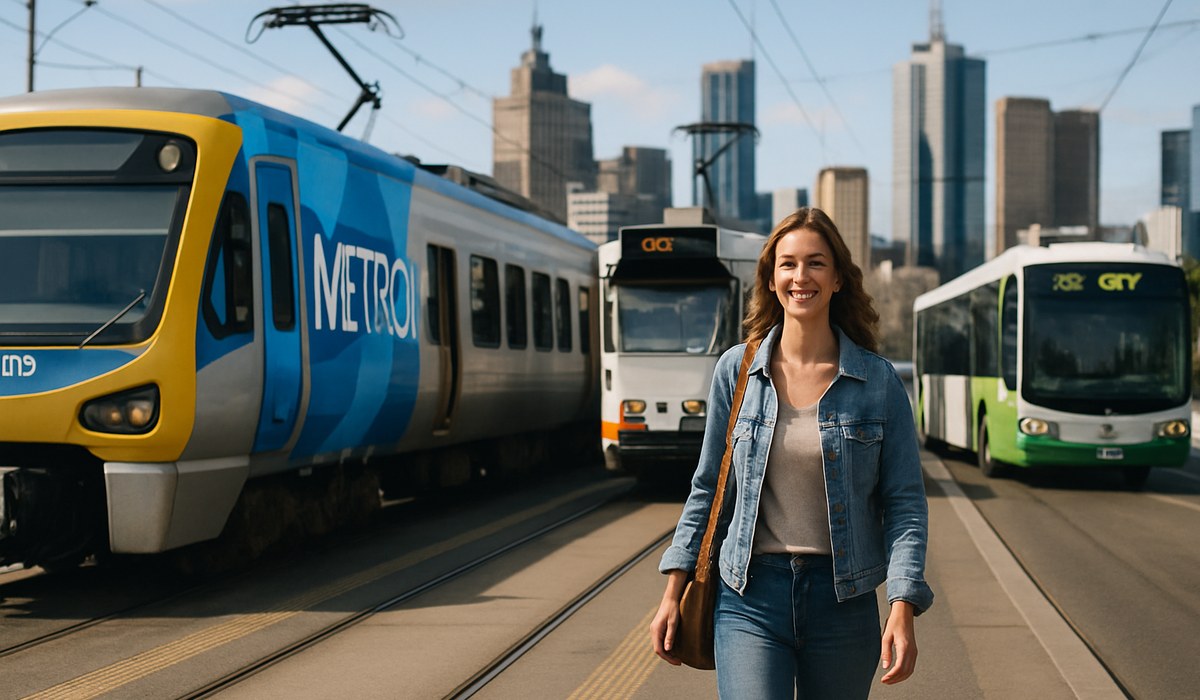
Image generated by AI
**> Quick Summary
• Victoria state government suspends all fares for trains, trams, and buses across metropolitan and regional networks indefinitely starting March 28, 2026 • The emergency measure responds to nationwide fuel supply constraints driving petrol prices above AU$2.80 per liter in major cities • Travelers gain unrestricted access to Melbourne's extensive tram network, V/Line regional rail corridors, and intercity coach services at zero cost • The initiative positions Victoria as Australia's most accessible destination for overland exploration as flight disruptions affecting routes through major hubs continue reshaping March 2026 itineraries**
While global fuel prices force travelers to reconsider road trips, one Australian state is doing the opposite—eliminating all fares for trains, trams, and buses to turn a crisis into the tourism opportunity of the decade. Victoria's unprecedented free public transit initiative during a fuel crisis offers travelers a blueprint for exploring Australia without transportation costs in 2026.
The Australian state has abolished ticketing requirements across its entire Public Transport Victoria network as petroleum supply disruptions send motorists scrambling for alternatives. What started as an emergency relief measure for commuters now represents the most significant fare-free transit experiment in the Southern Hemisphere—and international visitors arriving with valid passports can ride without restriction.
What's Behind Victoria's Free Transit Initiative
Victoria state officials confirmed the fare suspension took effect at 12:01 AM local time on March 28, citing humanitarian and economic grounds. Transport Minister Sarah Chen announced the temporary policy would remain until fuel supply chains stabilize, with no fixed end date established.
"We're removing financial barriers to mobility while our refineries negotiate new import contracts," Chen stated during a Friday briefing in Melbourne's Parliament House. "Every Victorian and visitor can access trains, trams, and buses regardless of payment capacity."
The decision follows three consecutive weeks of fuel price escalation across southeastern Australia. Retail petrol hit AU$2.87 per liter in metropolitan Melbourne on March 27—a 41% increase since January 2026. Regional Victoria towns reported pump prices exceeding AU$3.15 per liter, with some remote areas facing complete temporary shortages.
Public Transport Victoria operates Australia's fifth-busiest transit network, carrying approximately 1.3 million passengers daily under normal conditions. The system encompasses 218 metropolitan train stations, 493 kilometers of tram track (the world's largest urban tram network), and 380 bus routes spanning from the NSW border to South Australia.
The fare suspension applies universally. No myki smartcard taps required. No ticket validations checked. Inspectors have been reassigned to crowd management and passenger assistance duties instead of enforcement. The state government estimates the policy will cost AU$47 million per week in foregone revenue, offset partially by reduced fuel tax collections.
Broader travel disruptions reshaping March 2026 itineraries have already pushed overland alternatives into the spotlight. Victoria's zero-fare model accelerates this shift dramatically.
How to Maximize Free Rail Travel Across Victoria
Victoria's regional rail corridors connect Melbourne with coastal resort towns, wine regions, and alpine destinations—all now accessible without transport budgets. V/Line services reach 63 stations across the state, with key tourist routes resuming full weekday schedules under the fare-free program.
The Geelong line links Melbourne's Southern Cross Station to the Great Ocean Road gateway in 64 minutes. Standard service runs every 20-30 minutes throughout daylight hours, with no advance booking required. Travelers simply board and occupy available seating.
Bendigo services offer hourly connections to Victoria's gold rush heritage precinct, covering 153 kilometers in 90 minutes. The route passes through Castlemaine and Kyneton—two Victorian-era towns with preserved architecture and weekend farmers markets. V/Line confirmed all regional services maintain full bar car operations despite the fare suspension.
The Gippsland line provides the longest uninterrupted free rail journey in Australia: 268 kilometers from Melbourne to Bairnsdale through eucalyptus forests and coastal dairy country. Three daily services operate in each direction, with major stops at Traralgon (162km) and Sale (217km). The final 51 kilometers parallel Ninety Mile Beach, offering ocean views from south-facing windows.
For travelers prioritizing flexibility, Melbourne's Zone 1 and Zone 2 metropolitan rail network covers 998 kilometers of track reaching outer suburbs like Frankston (beachside), Lilydale (Yarra Valley wine access point), and Sunbury (historic precinct). All 16 metropolitan lines now operate as an unlimited free-travel zone larger than Singapore's entire MRT system.
The tram advantage becomes clear in Melbourne's CBD and inner suburbs. Route 96 runs 24.4 kilometers from East Brunswick through the central grid to St Kilda Beach—Australia's longest urban tram line now costing exactly nothing. Route 35 (City Circle) loops through prime tourist zones including Docklands, Federation Square, and the Arts Precinct at 12-minute intervals, specifically designed for first-time visitors.
Smart travelers can chain journeys without penalty. A sample day itinerary: morning train to Ballarat (105km, 75 minutes), afternoon exploration of Sovereign Hill gold museum, evening return train, then tram to South Melbourne Market for dinner—total transportation cost zero across 210 kilometers.
Unlike Amtrak's unlimited rail passes which require advance reservations and blackout periods, Victoria's system imposes no scheduling restrictions. Travelers board any service with available capacity.
Comparing Victoria's Model to Global Rail Pass Programs
Victoria's fare-free transit eliminates the economic friction that typically constrains budget travelers. The model differs fundamentally from discounted pass programs offered by international rail networks in Europe and Asia.
Switzerland's Half Fare Card reduces ticket prices 50% for CHF 120 annually—still requiring payment at every journey. Japan Rail Pass provides unlimited travel at ¥29,650 for seven days (approximately AU$335), limited to tourists holding temporary visitor status. Eurail Global Pass costs €315 for four travel days within one month, with mandatory seat reservations on premium services.
Victoria's approach removes purchase friction entirely. No upfront investment. No eligibility restrictions. No supplement fees for express trains. The system operates closer to Estonia's Tallinn model—free public transit for all registered residents—but extends universally to short-term visitors without documentation requirements.
This accessibility aligns with emerging preferences among value-conscious travelers. Recent data shows Southeast Asian business travelers are prioritizing value over premium amenities when selecting destinations and services in 2026.
The fuel crisis context adds a unique dimension. Most fare-free transit programs worldwide launch as environmental initiatives or equity policies. Victoria's emergency implementation demonstrates how supply disruptions can accidentally create tourism advantages—travelers gain unprecedented access precisely when traditional car-based touring becomes economically prohibitive.
German cities including Augsburg and Tübingen tested fare-free transit in 2024-2025 but reverted to paid systems after six months citing unsustainable subsidy levels. Victoria's government has structured the policy explicitly as temporary relief rather than permanent reform, avoiding long-term fiscal commitments while the fuel situation remains volatile.
Planning Your 2026 Victoria Itinerary on Public Transit
Designing transit-dependent itineraries requires understanding network geography and service frequency outside Melbourne. V/Line regional routes operate hub-and-spoke patterns radiating from Southern Cross Station, with limited cross-regional connections.
The Great Ocean Road represents Victoria's most visited tourist corridor but remains partially car-dependent. Travelers can use free rail to Geelong, then connect to V/Line bus Route 60 serving Apollo Bay and the Twelve Apostles lookout points. Three daily services run during peak season, requiring advance seat reservations despite zero cost (capacity management only).
Wine enthusiasts gain direct access to multiple regions. The Seymour line serves Mitchelton Wines and Tahbilk Winery (both offering cellar door tastings within 2km of stations). Ballarat and Bendigo lines provide gateways to central Victorian wine producers in the Macedon Ranges. Geelong rail connects to Bellarine Peninsula wineries via local bus Route 75.
Alpine access operates seasonally. Falls Creek and Mount Hotham ski resorts require transfer to coach services from Albury (V/Line train terminates there, 326km from Melbourne). During summer months, the same routes serve hiking access points in Alpine National Park. Bright township connects via Wangaratta station transfer.
Melbourne's cultural precinct sits within a 15-minute tram radius of Flinders Street Station. The free City Circle tram passes the National Gallery of Victoria, Melbourne Museum, and State Library of Victoria at ground level. Route 19 reaches Prahran Market and Chapel Street's retail district. Route 86 serves Fitzroy's Brunswick Street dining corridor.
Accommodation planning should consider tram route proximity. Hotels within 400 meters of Routes 1, 3, 5, 6, 16, 64, 67, or 72 provide direct access to both metropolitan attractions and Southern Cross Station for regional departures. The Parkville and Carlton neighborhoods offer university-adjacent short-term rentals with exceptional tram connectivity.
Practical constraints exist. Regional trains run reduced schedules on Sundays. Buses serving remote coastal areas may operate only two services daily. Popular tourist routes see crowding during Victorian school holiday periods (early April, late June, late September). Travelers should download the PTV mobile app for real-time capacity alerts and service updates.
The zero-cost framework transforms multi-day exploration economics. A hypothetical five-day itinerary—Melbourne (2 nights), Ballarat (1 night), Geelong Great Ocean Road access (1 night), return Melbourne (1 night)—would typically cost AU$180-240 in rail and tram fares alone. Under the current policy: AU$0.
FAQ: Victoria's Free Public Transportation for Tourists
Do international tourists qualify for free transit in Victoria?
Yes. The fare suspension applies universally with no residency or documentation checks. International visitors can board all PTV services without payment from arrival through departure.
How long will Victoria keep public transit free?
The state government has not announced an end date. Officials stated the policy continues "until fuel supply stabilization allows safe return to normal pricing structures." Current projections suggest minimum eight weeks, potentially extending through mid-2026.
Can I travel from Melbourne to Sydney using free transit?
No. Victoria's free transit ends at state borders. NSW TrainLink services from Albury to Sydney require standard fare payment. Melbourne to Albury remains free on V/Line.
Are there capacity restrictions on free trains and trams?
Services operate first-come, first-served with standard capacity limits. Popular tourist routes may reach capacity during peak hours. V/Line recommends arriving 15 minutes before scheduled departures for regional services.
Does free transit include airport connections?
Partially. SkyBus to Melbourne Airport remains a private service requiring separate payment (AU$22 one-way). Free options exist via Route 901 bus to Broadmeadows, then metropolitan train, adding 40 minutes travel time.
Related Articles:
Flight Disruptions Continue Affecting Doha Hub Connections in March 2026
Weekly Travel Outlook: Managing March 2026 Transportation Challenges
Southeast Asia Business Travel Shifts Toward Value-Focused Services
Disclaimer
This article is for informational and educational purposes only. It does not constitute legal, financial, or professional advice. While we strive to provide accurate and up-to-date information, travel policies, regulations, and conditions change rapidly. Always verify information with official sources before making travel decisions. Nomad Lawyer makes no representations about the accuracy, reliability, completeness, or suitability of the information provided. Readers should consult qualified professionals for advice specific to their circumstances. The views expressed in this article are those of the author and do not necessarily reflect the views of Nomad Lawyer.
Kunal K Choudhary
Co-Founder & Contributor
A passionate traveller and tech enthusiast. Kunal contributes to the vision and growth of Nomad Lawyer, bringing fresh perspectives and driving the community forward.
Learn more about our team →