
Travel Victoria Unlocks Free Transit: Australia's 2026 Mobility Shift
Victoria eliminates public transport fares in 2026, making trains, trams, and buses free. A game-changing policy affecting millions of travelers and reshaping Australia's mobility landscape.

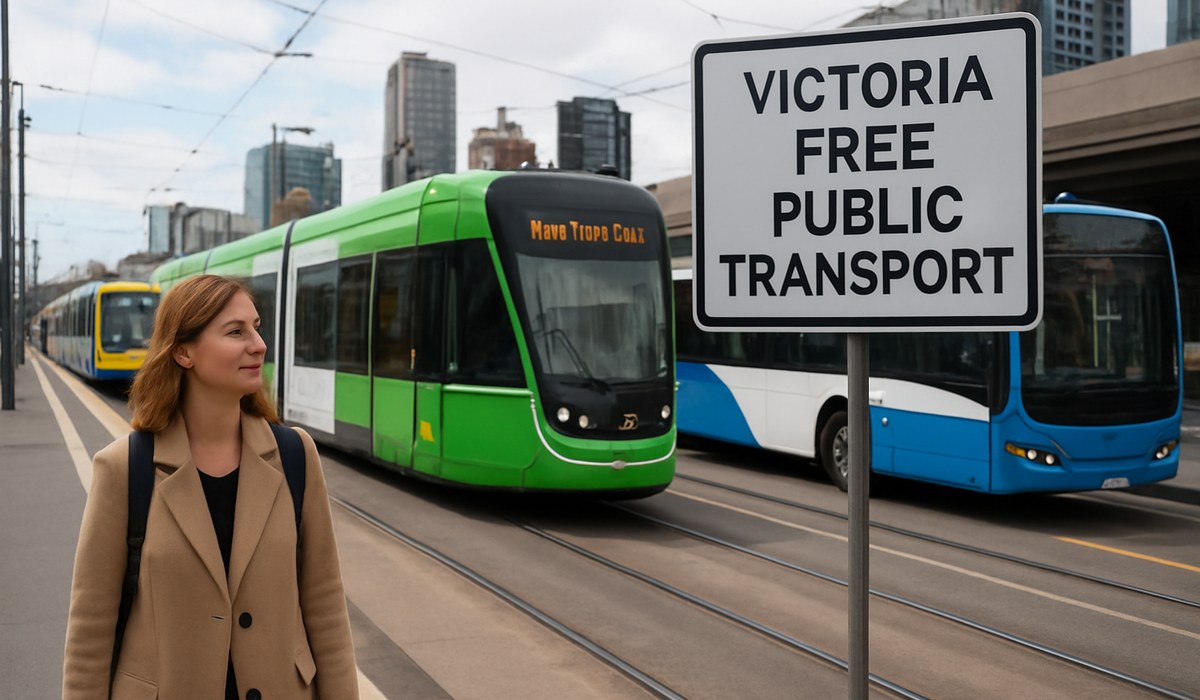
Image generated by AI
**> Quick Summary
- Victoria's government has eliminated all passenger fares on trains, trams, and buses effective 2026
- The policy affects Melbourne's metropolitan network and regional routes across the state
- Free transit aims to reduce congestion, support sustainability, and boost tourism accessibility
- The move positions Australia as a leader in innovative public mobility funding models**
Victoria's Free Transit Revolution: What Changed in 2026
Australia's southeastern state of Victoria just made headlines with a bold transport policy shift: passengers no longer pay to ride trains, trams, or buses anywhere in the state. Effective March 2026, the elimination of all public transit fares represents one of the world's most ambitious fare-free transport initiatives.
The Victorian government's decision affects the sprawling Melbourne metropolitan area—home to over 5 million residents—plus regional rail corridors extending across the state. Tram networks covering 245 kilometers now operate without passenger revenue requirements. Train services spanning metropolitan and intercity routes function identically. Bus fleets, which previously charged zone-based fares, have transitioned to unrestricted boarding.
Unlike isolated trial programs in other cities, Victoria's system is permanent and comprehensive. Transport Minister claims this restructure will "democratize mobility" while addressing infrastructure strain. The policy applies to all operators: Metro Trains Melbourne, Yarra Trams, and regional bus franchises now coordinate under a unified free-access framework.
Officials estimate 400 million annual passenger journeys previously requiring tickets will now proceed without payment friction. Commuters no longer need to purchase myki cards—Victoria's smart fare system—or worry about daily or weekly pass calculations. Tourists face no entry barriers to exploring the state's transport-dependent attractions.
Why Cities Are Ditching Fares: The Global Sustainability Movement
Victoria's decision reflects a broader international shift toward treating public mobility as essential infrastructure rather than a revenue-generating service. Cities worldwide have experimented with fare-free models, but most limited pilots to specific routes or demographics.
The European approach offers instructive precedent. Luxembourg eliminated fares nationally in 2020. Several German cities—Karlsruhe, Tübingen, and others—operate free or heavily subsidized systems. France's Amiens maintains fare-free trams. Yet these remain exceptions; Europe's dominant model still depends on passenger fares and government subsidies combined.
According to the International Union of Railways, global rail operators generate approximately 40% of operating revenue from fares, with the remainder split between government funding and commercial services. Moving toward complete fare elimination requires radical restructuring of financial models.
Victoria's transition tackles this through redirected fuel excise revenues and congestion-relief cost savings. When drivers shift to public transit, road maintenance expenses decline while transit networks absorb increased capacity demand. The state government bet that long-term infrastructure savings and economic growth from improved mobility justify initial revenue replacement.
Sustainability calculations support the policy's logic. Each transit passenger removing a personal vehicle from roads reduces emissions by an average of 4.5 kilograms monthly. Victoria's transport ministry projects 25–30 million tons of annual carbon reduction within five years if modal shift targets materialize.
International rail bodies monitoring Victoria's experiment signal broader implications. If the model sustains operationally and financially, expect similar proposals in high-income cities facing climate commitments and congestion crises.
Economic Impact on Tourism and Regional Travel
Free public transit transforms destination economics. For Melbourne and regional Victoria, elimination of transport barriers immediately increases accessibility for budget-conscious travelers, international visitors unfamiliar with local payment systems, and day-trippers exploring multiple locations.
Tourism operators report early booking surges for 2026 itineraries. Hotels, restaurants, and attractions benefit from expanded visitor reach when transit costs vanish from travel budgets. Visitors previously hesitant to use public transport—concerned about navigating unfamiliar payment methods—now access attractions independently.
Regional economies particularly gain. Towns along regional rail corridors see increased tourist penetration. Provincial attractions in the Dandenong Ranges, Great Ocean Road adjacent areas, and Yarra Valley wine regions become more spontaneously visitable. Transit accessibility typically correlates with per-capita visitor spending across destination categories.
The hospitality sector's response proves instructive. As discussed in our companion coverage on Hotel European Industry Defies 2026 Challenges—Luxury Leads Recovery, accommodation providers globally benefit from increased visitor accessibility through improved infrastructure. Victoria's free transit joins similar sustainability infrastructure investments reshaping tourism competitiveness.
Business travel patterns also shift. Corporate clients, government delegations, and conference attendees face reduced ground transportation friction. Melbourne's convention center sees improved attendance projections as transport simplification reduces logistical complexity for interstate and international participants.
State revenue projections account for increased GST collection from expanded consumer spending, hospitality sector growth, and business activity concentration in previously underutilized regions. Transport officials model net fiscal positive outcomes within seven years despite fare elimination's immediate revenue impact.
How Other Nations Are Responding to the Model
Australia's Victoria occupies elevated global status in transport policy circles following this 2026 announcement. Government delegations from Canada, New Zealand, and Nordic nations have scheduled study missions to understand implementation mechanics and financial sustainability.
New Zealand's Auckland Council considers partial free-transit zones, potentially extending to regional buses. Canadian cities including Vancouver and Toronto weigh congestion pricing combined with free transit as alternative revenue sources. The concept gains particular traction in jurisdictions facing fuel-related supply pressures and carbon reduction mandates.
European operators observe cautiously. While Eurostar and regional rail operators across the continent maintain fare-based revenue models, advocacy groups increasingly pressure governments to subsidize cross-border accessibility. Victoria's model demonstrates that comprehensive fare elimination operates operationally—the remaining question becomes whether other democracies politically accept the necessary tax restructuring.
American transit agencies show particular interest. Cities perpetually struggling with operational funding gaps see Victoria's approach as potential solution template. However, U.S. political economy makes wholesale fare elimination unlikely absent major federal policy shifts.
Singapore and Hong Kong, despite world-leading transit systems, maintain fare structures as core revenue mechanisms. Their transport authorities study Victoria's approach, recognizing potential adaptation for specific populations or route categories rather than system-wide elimination.
The innovation also attracts attention from sustainable infrastructure advocates globally. As documented in our analysis of Travel Luxury Ambition: How Celebrity-Backed EVs Shape Europe's Premium Destinations, destination competitiveness increasingly hinges on integrated sustainability infrastructure. Free transit becomes another tool for jurisdictions competing for affluent, environmentally-conscious travelers.
FAQ: Planning Your Free Melbourne Adventure in 2026
Q: Do I need tickets or payment cards to board trains, trams, and buses in Victoria? A: No. All services operate completely fare-free. Simply board at designated doors without scanning cards or purchasing tickets. Operators will gradually retire myki requirements, though cards remain valid for other state services.
Q: Are regional trains and buses included in the free-transit policy? A: Yes. The policy covers metropolitan and regional services statewide. V/Line regional trains connecting provincial cities operate identically to Melbourne metro services—entirely fare-free.
Q: Will crowding increase on popular routes? A: Transit authorities have implemented staggered service frequency increases on high-demand corridors. Off-peak capacity remains available, and commuters increasingly spread across previously underutilized
Disclaimer
This article is for informational and educational purposes only. It does not constitute legal, financial, or professional advice. While we strive to provide accurate and up-to-date information, travel policies, regulations, and conditions change rapidly. Always verify information with official sources before making travel decisions. Nomad Lawyer makes no representations about the accuracy, reliability, completeness, or suitability of the information provided. Readers should consult qualified professionals for advice specific to their circumstances. The views expressed in this article are those of the author and do not necessarily reflect the views of Nomad Lawyer.
Kunal K Choudhary
Co-Founder & Contributor
A passionate traveller and tech enthusiast. Kunal contributes to the vision and growth of Nomad Lawyer, bringing fresh perspectives and driving the community forward.
Learn more about our team →