
USA Travel Alert as FAA Outage Disrupts Six Airports and Triggers Major Flight Delays
USA Travel Alert as FAA Outage Disrupts Six Airports and Triggers Major Flight Delays

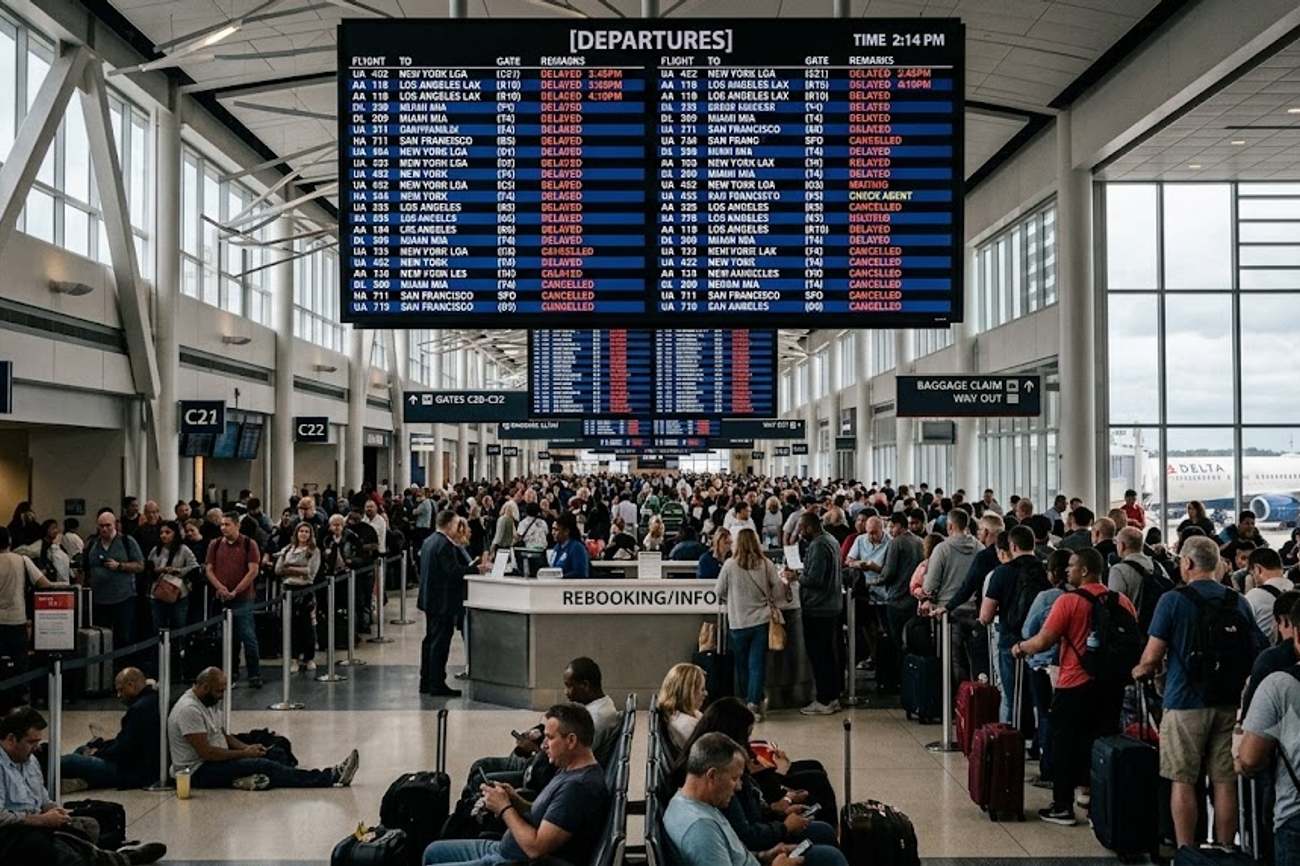
Image generated by AI
The failure of the Philadelphia Terminal Radar Approach Control (TRACON) communication systems paralyzed six major Northeast hubs, illustrating a fragile dependency on aging infrastructure that mirrors the 2023 FAA NOTAM outage which grounded domestic flights nationwide. While the current disruption was regional, the concentration of impact at gateways like John F. Kennedy International Airport and Newark Liberty International Airport demonstrates that a single technical point of failure in the Northeast corridor can trigger a systemic ripple effect across the entire North American airspace.
The Northeast Corridor Paralysis in Numbers
The recent technical failure within the Federal Aviation Administration (FAA) systems did not merely cause delays; it effectively severed the primary aviation arteries of the United States' most economically dense region. The ground stops were concentrated across six specific airports: Newark Liberty International Airport, Philadelphia International Airport, John F. Kennedy International Airport, LaGuardia Airport, Teterboro Airport, and Westchester County Airport.
To understand the scale of this disruption, one must look at the operational density of these hubs. Newark Liberty and Philadelphia International serve as primary anchors for United Airlines and American Airlines, respectively. When communication systems at the Philadelphia TRACON facility fail, the result is a total cessation of arrivals and departures—a "ground stop"—which prevents aircraft from even taking off from their origin cities if their destination is within the affected airspace.
This incident highlights a critical vulnerability: the reliance on centralized communication hubs. According to data trends monitored by IATA, the global aviation industry is seeing a sharp increase in passenger volumes, yet the infrastructure managing that traffic is often struggling to keep pace. In the Northeast, where air traffic is among the most congested in the world, the margin for error is non-existent. A failure in a single TRACON facility creates a bottleneck that affects not only the six listed airports but every flight routed through the Northeast corridor, including those bound for Washington D.C. or Boston.
Systemic Fragility: Regional vs. National Benchmarks
The impact of the Philadelphia TRACON failure can be analyzed by comparing the regional concentration of the outage against historical national disruptions. While a national outage (like the NOTAM failure) affects the entire U.S. fleet, a regional TRACON failure creates "cluster congestion," where thousands of passengers are trapped in a specific geographic zone, overwhelming local hotel and transport infrastructure.
The following table compares the operational roles of the affected airports to illustrate why this specific group of six airports represents a catastrophic failure point for U.S. travel.
| Airport | Primary Carrier Hub | Traffic Profile | Impact Level |
|---|---|---|---|
| John F. Kennedy (JFK) | Multi-carrier | Global International Gateway | Critical |
| Newark Liberty (EWR) | United Airlines | High-volume Domestic/Intl | Critical |
| Philadelphia (PHL) | American Airlines | Major East Coast Hub | High |
| LaGuardia (LGA) | Multi-carrier | High-density Short-haul | High |
| Teterboro (TEB) | Private/Corporate | Executive/Business Travel | Moderate |
| Westchester County (HPN) | Regional | Commuter/Niche | Moderate |
When comparing this event to regional benchmarks, the disruption is more severe than a typical weather-related delay. Weather delays are predictable and phased; technical failures at the TRACON level are binary—the system is either functional or it is not. This creates a "hard stop" in operations, leading to a backlog of aircraft that can take 24 to 48 hours to clear, even after the technical issue is resolved. Data from OAG suggests that recovery times for technical outages are often longer than for weather events because they require system-wide resets and manual verification of flight paths.
What This Means for Travelers
For the individual traveler, the data suggests that the risk of "single-point-of-failure" disruptions is increasing as passenger demand outstrips infrastructure upgrades. If you are routing through the Northeast corridor—specifically JFK, EWR, or PHL—the following data-backed strategies are essential:
- The 4-Hour Buffer Rule: Because the Northeast corridor is so interconnected, a ground stop at Newark often leads to delays at LaGuardia and JFK within 90 minutes. When traveling through these hubs, ensure your connecting flight has a minimum of 4 hours of layover time.
- Diversification of Hubs: If your final destination is New York City, consider booking into airports outside the immediate TRACON zone if a technical alert is issued. While the six affected airports are the primary gateways, utilizing alternative regional hubs can mitigate the risk of being trapped in a ground stop.
- Digital Redundancy: During FAA outages, airline apps often crash due to a surge in traffic. Travelers should maintain direct SMS alerts from their carriers and monitor the FAA's official status pages.
- Insurance for "Technical Failure": Ensure your travel insurance explicitly covers "air traffic control delays." Many basic policies cover weather or mechanical failure of the aircraft, but not systemic infrastructure failure of the governing body (FAA).
The Trajectory of Aviation Infrastructure
The current trajectory indicates a widening gap between aircraft technology and ground-based control technology. While airlines are deploying next-generation fuel-efficient aircraft, the communication systems managing them—like those at the Philadelphia TRACON—are often decades old.
Industry movements suggest a shift toward "NextGen" aviation technology, which aims to move from ground-based radar to satellite-based tracking. However, the implementation is uneven. The recent outage serves as a case study for why the transition to satellite-based communication is no longer optional but a requirement for operational resilience. If the U.S. continues to see a 3-5% year-over-year increase in passenger traffic without a corresponding upgrade in TRACON facilities, the frequency of these "technical failures" is projected to rise.
Furthermore, the economic impact on the Northeast tourism sector is significant. When JFK and EWR are paralyzed, the disruption extends to cruise departures from Manhattan and hotel occupancy rates in Philadelphia. The interdependence of these sectors means that a technical glitch in a radar facility is, in reality, an economic shock to the regional tourism ecosystem.
FAQ: FAA Northeast Outages 2024
Will flight prices increase due to these technical failures? Generally, no. Short-term technical outages do not typically drive up ticket prices. However, if systemic failures lead to long-term capacity reductions or flight cancellations, prices for remaining seats on alternative routes may spike temporarily.
Is it safer to fly through different hubs to avoid these outages? While no hub is immune, the Northeast corridor (JFK, EWR, PHL) has the highest density of traffic and is therefore more susceptible to massive ripple effects during a TRACON failure compared to less congested regions.
Which airlines are most affected by these specific outages? United Airlines (via Newark) and American Airlines (via Philadelphia) face the highest operational risk during these events due to their hub-and-spoke reliance on these specific airports.
How can I tell if a ground stop is in effect before I leave for the airport? Check the official FAA Air Traffic Control System Command Center website or your airline's real-time flight tracker. If "Ground Stop" is listed for your destination airport, do not depart for the terminal.
The vulnerability of the Philadelphia TRACON is a stark reminder that the future of flight is only as reliable as the aging wires managing the sky.
Tags: FAA-Technical-Failure-2024, Philadelphia-TRACON-Outage, Northeast-Corridor-Aviation-Data, US-Airport-Ground-Stops, Aviation-Infrastructure-Resilience
Related Travel Guides
- Hundreds of Travelers Affected Around Asia Amid Typhoon Dujuan with 890 Cancellations and 4,632 Delays at Fukuoka, Makassar and More Airports
- Jordan Travel Reconnects With Europe As Airlines Restore Flights Boosting Tourism And Global Accessibility
- JFK and LaGuardia Flights Halted in US as FAA Outage Disrupts Northeast Travel
Disclaimer
This article is for informational and educational purposes only. It does not constitute legal, financial, or professional advice. While we strive to provide accurate and up-to-date information, travel policies, regulations, and conditions change rapidly. Always verify information with official sources before making travel decisions. Nomad Lawyer makes no representations about the accuracy, reliability, completeness, or suitability of the information provided. Readers should consult qualified professionals for advice specific to their circumstances. The views expressed in this article are those of the author and do not necessarily reflect the views of Nomad Lawyer.
Kunal K Choudhary
Co-Founder & Contributor
A passionate traveller and tech enthusiast. Kunal contributes to the vision and growth of Nomad Lawyer, bringing fresh perspectives and driving the community forward.
Learn more about our team →