
The $122B Travel Pulse: How Booking, Expedia, Airbnb, and Delta Are Reshaping American Journeys in 2026

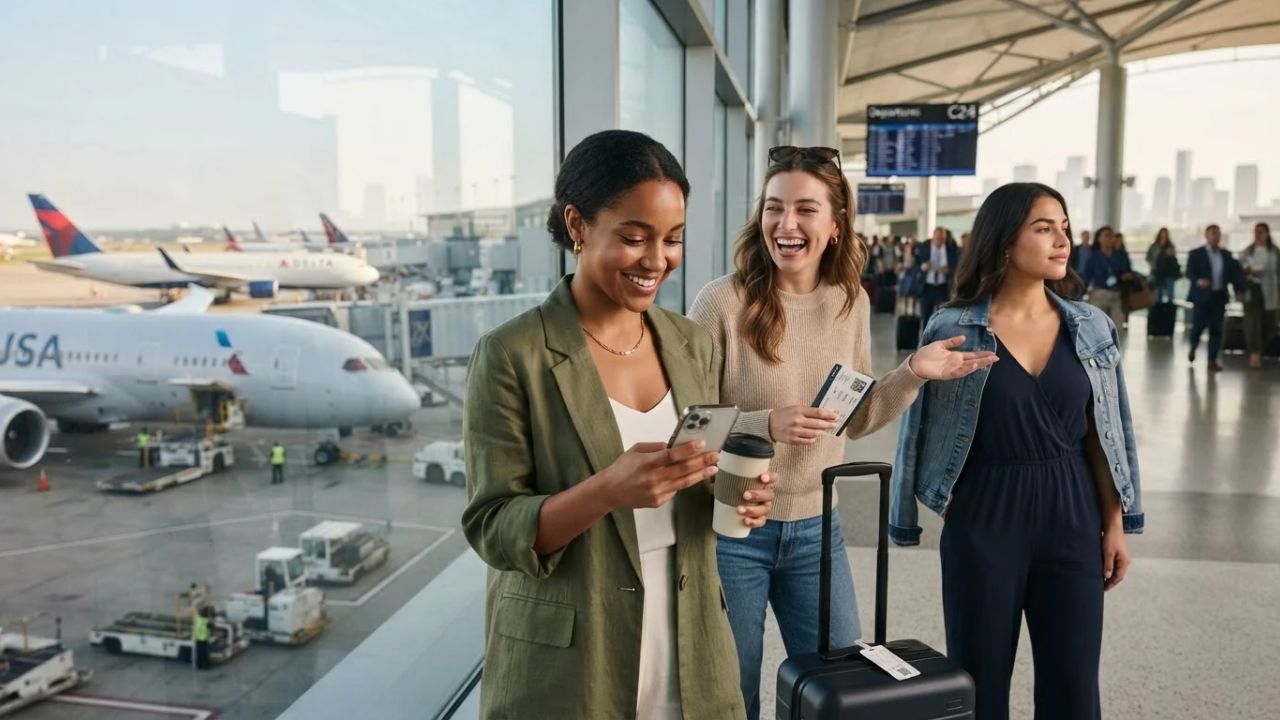
While Wall Street analysts scrutinize volatile quarterly earnings and shifting interest rates, American travelers demonstrated their unyielding appetite for discovery by pouring an astonishing $122.8 billion into travel expenditures during July 2026 alone. Yet behind this staggering topline demand reported by the U.S. Travel Association, an intense corporate divergence is unfolding: asset-light online platforms and franchised hotel networks are posting record operating profits, while legacy airlines and cruise conglomerates battle soaring aviation fuel costs and complex debt structures—fundamentally altering how travelers book flights, reserve hotel rooms, and manage vacation budgets.
Having logged thousands of miles across American flight corridors, national parks, and metropolitan centers, the transformation of the travel economy is visible at every touchpoint. Travel demand has not collapsed; rather, it has become intensely selective. As consumers navigate dynamic pricing algorithms, travelers who understand the corporate balance sheets behind booking portals, airline seats, and hotel chains can unlock substantial savings and enjoy smoother journeys across North America.
The Bifurcated Boom: Inside the Financial Giants Powering American Travel
The modern American travel economy is no longer advancing as a single, uniform market. Financial performance across major publicly traded travel corporations reveals sharply contrasting realities between software-driven booking marketplaces, franchised hotel operators, and capital-intensive transport providers.
In the digital reservation arena, Expedia Group has delivered some of the most robust operating metrics in the industry. For the second quarter of 2026, the company reported a 12% increase in gross bookings, with lodging gross bookings advancing 11%. Overall revenue expanded by 14%, driving a 23% surge in adjusted EBITDA and a 36% jump in adjusted earnings per share. Overseeing high-traffic consumer brands including Expedia, Hotels.com, and Vrbo, the company demonstrates that consumer appetite for digital travel transactions remains exceptionally strong.
Similarly, Booking Holdings—the powerhouse behind Booking.com, Priceline, and Agoda—continues to capture substantial global accommodation and experience bookings, despite experiencing notable share-price volatility during September as investors weighed consumer spending patterns against digital competition. Alongside these giants, Airbnb maintains its distinctive advantage through an asset-light marketplace model, connecting travelers directly with independent hosts and capturing leisure accommodation demand without the overhead of physical real estate ownership.
The lodging sector has proven equally resilient. Industry analytics from CoStar and STR project overall U.S. hotel revenue per available room (RevPAR) growth of approximately 4.4% for 2026, boosted significantly by summer leisure demand, business conferences, and marquee sporting events like the 2026 FIFA World Cup. Marriott International has capitalized on this momentum through its franchise and management structure, generating steady fee revenue while individual property owners absorb physical capital costs.
Hilton Worldwide Holdings mirrored this strength, recording 3.9% comparable RevPAR growth in the second quarter of 2026 while projecting full-year RevPAR expansion between 3.0% and 3.5%. With a global development pipeline exceeding 541,000 rooms, Hilton’s brand-licensing model provides predictable capital returns without the heavy debt exposure that burdens capital-heavy transport operators.
In sharp contrast, commercial aviation faces an arduous operational balancing act. While passenger volumes remain strong, carriers operate under intense margin pressure from volatile aviation fuel prices and rising unit labor costs:
- Delta Air Lines achieved a robust June-quarter performance and guided for mid-teens revenue growth in the September quarter with double-digit operating margins, yet fuel price fluctuations remain a constant hazard to profitability.
- United Airlines expanded second-quarter revenue by 16% year-over-year to reach approximately $17.7 billion with a 3.5% capacity increase, but reported sharp increases in operating unit costs.
- Southwest Airlines continues to execute a comprehensive commercial transformation to overhaul its traditional customer proposition and restore operating margins.
- American Airlines faces fierce competitive pricing across domestic trunk routes, making sustained margin expansion difficult despite its vast flight schedule.
Meanwhile, the cruise industry illustrates the stark divide between consumer bookings and financial sentiment. While Royal Caribbean Group and Carnival Corporation continue to report high booking volumes for Caribbean and Alaskan itineraries, both stocks face market caution due to heavy ship financing debt, high fuel consumption, and broader macroeconomic uncertainties.
What Makes Modern American Travel Booking Different: The Asset-Light Revolution
This financial divide has a direct, practical impact on everyday travelers. When platforms like Booking Holdings and Expedia operate as pure software intermediaries, their primary objective is transaction volume. In response, these platforms have introduced increasingly sophisticated dynamic pricing, algorithmic discounts, and bundled packages that combine rental cars, flights, and accommodations.
Simultaneously, hotel giants like Marriott and Hilton have focused on bypassing third-party booking commissions by aggressively expanding their direct loyalty programs. To incentivize direct bookings, hotel chains offer members-only discounted rates, digital room-key selection via mobile apps, and complimentary high-speed Wi-Fi.
For airline passengers, the carrier’s exposure to jet fuel prices translates directly into fare structures. To protect operating margins without raising base headline ticket prices, airlines have unbundled the travel experience, charging separate fees for seat assignments, carry-on bags, checked luggage, and priority boarding. Understanding this economic reality allows travelers to recognize that the cheapest advertised airfare on a search engine is rarely the final price paid at the departure gate.
Visitor Insider Tips
Navigating the American travel market in 2026 requires tactical booking strategies and local consumer know-how.
First, master the "search aggregator, book direct" strategy. Use platforms like Expedia, Booking.com, or Google Flights to survey schedule options and compare regional rate baselines. Once you identify your preferred flight or hotel, navigate directly to the airline or hotel group’s official website. Booking directly ensures you retain priority customer service during flight cancellations and guarantees that your hotel loyalty perks—such as complimentary room upgrades and late checkout—are fully honored.
Second, avoid booking flights on peak weekend travel banks. Airfares on domestic trunk routes peak sharply on Friday afternoons and Sunday evenings when corporate and leisure travelers compete for seats. Booking departures on Tuesdays, Wednesdays, or early Saturday mornings frequently yields fare discounts of 20% to 35% on carriers like Delta and United.
Third, navigate short-term rental regulations carefully. In major metropolitan centers like New York City, strict municipal short-term rental laws (such as Local Law 18) prohibit unhosted apartment rentals under 30 days. Booking an unregistered Airbnb in Manhattan risks last-minute host cancellations; instead, choose licensed boutique hotels in neighborhoods like Long Island City, Brooklyn, or Midtown South.
Fourth, utilize cobranded travel credit cards for airport comfort. Because airline lounge memberships have escalated in price, carrying an airline or bank travel card that offers complimentary baggage allowances and lounge passes easily pays for itself on a single cross-country journey.
Cultural and Environmental Context
The sheer volume of American domestic and international travel places enormous physical demands on the nation's environmental and cultural heritage. From the historic colonial streets of Boston to natural monuments recognized by UNESCO World Heritage—such as the Grand Canyon, Yellowstone, and Everglades National Parks—sustainable stewardship is vital.
Promoted nationally through Brand USA / Visit The USA, tourism leaders are actively advancing regional dispersal initiatives. Encouraging travelers to venture beyond over-saturated metropolitan corridors and explore state parks, historic civil rights trails, and indigenous tribal heritage lands helps distribute the $122.8 billion travel economy into rural communities while mitigating ecological strain on marquee attractions.
Concurrently, corporate sustainability has moved to the center of corporate strategy. Airlines like Delta and United are investing billions into sustainable aviation fuel (SAF) production agreements and fleet modernizations with fuel-efficient Airbus A321neo and Boeing 787 aircraft. Major hotel operators have largely phased out single-use bathroom plastics, installed smart energy-management sensors, and sourced local farm produce for hotel dining. By supporting eco-certified operators and choosing public rail transit along corridors like Amtrak’s Northeast line, travelers actively protect the diverse natural topography that makes American travel so profoundly captivating.
FAQ: Navigating US Travel and Booking in 2026
Why are US hotel and airline prices diverging in 2026? Hotels operate largely through asset-light franchise models, allowing them to raise room rates alongside inflation. Airlines face heavy direct fuel expenses and labor costs, forcing them to unbundle services and charge extra for bags and seat selection.
Is it better to book hotels through online travel agencies or direct websites? Use online travel agencies like Booking.com and Expedia to compare market prices, but book directly through the hotel’s official website to secure loyalty points, free Wi-Fi, flexible cancellation policies, and better room placement.
What is the best way to avoid high domestic airfares in the US? Fly on off-peak days (Tuesdays, Wednesdays, and Saturdays), book domestic tickets four to six weeks in advance, and fly early in the morning to minimize weather and air-traffic congestion delays.
How do municipal short-term rental regulations affect travelers in major US cities? Cities like New York strictly enforce rules banning unhosted short-term rentals under 30 days. Travelers should verify local city regulations before booking vacation rentals or choose regulated hotels to avoid abrupt cancellations.
Behind every itinerary lies a web of shared commerce, where thoughtful preparation turns the business of travel into the art of unforgettable discovery.
Related Travel Guides
Disclaimer
This article is for informational and educational purposes only. It does not constitute legal, financial, or professional advice. While we strive to provide accurate and up-to-date information, travel policies, regulations, and conditions change rapidly. Always verify information with official sources before making travel decisions. Nomad Lawyer makes no representations about the accuracy, reliability, completeness, or suitability of the information provided. Readers should consult qualified professionals for advice specific to their circumstances. The views expressed in this article are those of the author and do not necessarily reflect the views of Nomad Lawyer.
Raushan Kumar
Founder & Lead Developer
Full-stack developer with 11+ years of experience and a passionate traveller. Raushan built Nomad Lawyer from the ground up with a vision to create the best travel and law experience on the web.
Learn more about our team →