
Car-Free on the Pacific Shore: How Santa Monica’s Big Blue Bus Revolutionizes Southern California Travel

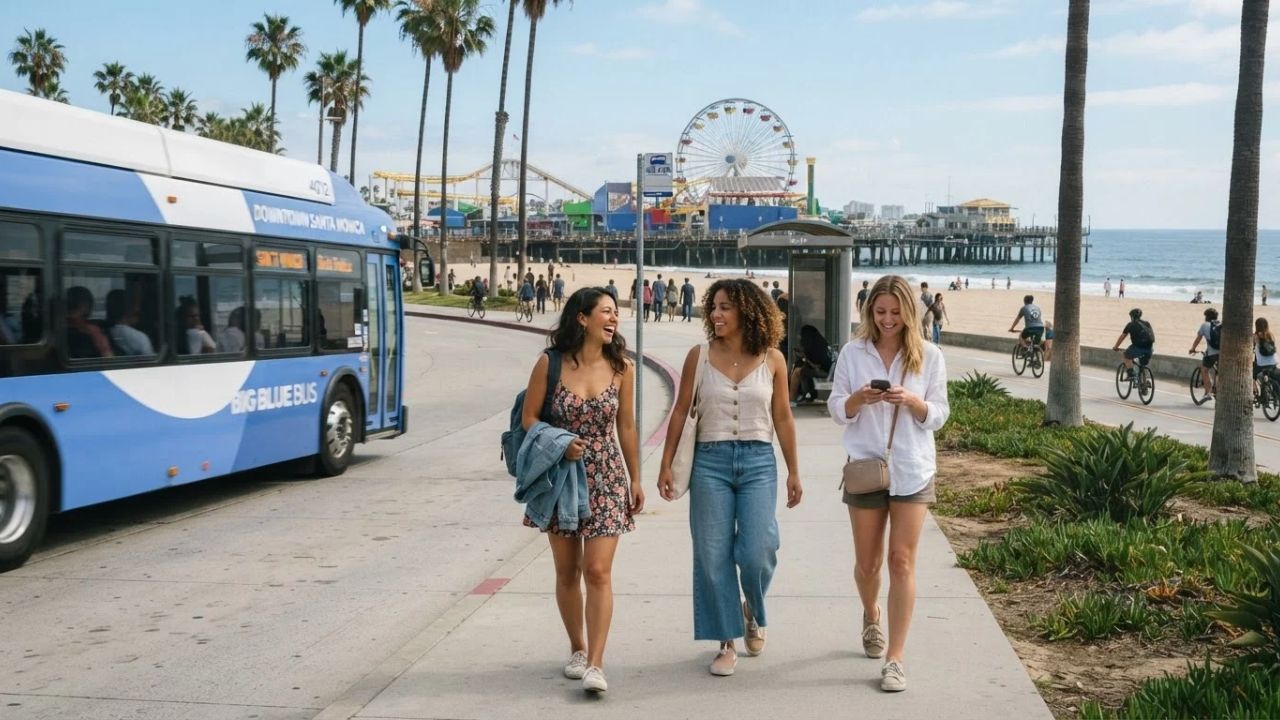
In a sprawling metropolitan basin infamous for its gridlocked eight-lane freeways and car-dependent culture, Santa Monica has pulled off an inspiring transit triumph, recording more than 10 million passenger trips aboard its municipally run Big Blue Bus network for the second consecutive year. As California’s premier beach city advances toward an ambitious zero-emission fleet by 2032, independent travelers are discovering that shedding the rental car keys unlocks a liberated, breezy oceanfront escape connecting the historic Santa Monica Pier directly to the bohemian lanes of Venice Beach and the rugged cliffs of Malibu.
For decades, the standard advice given to international travelers arriving in Southern California was simple and discouraging: rent a car or prepare to be stranded. That car-centric paradigm is rapidly dissolving along the coast. By pairing high-frequency, low-fare public bus transit with light rail connections and walkable beach promenades, Santa Monica has pioneered an effortless, sustainable template for urban coastal exploration. Instead of losing hours circling crowded parking garages or idling in bumper-to-bumper Interstate 10 traffic, transit-savvy visitors are moving fluidly between surf breaks, open-air farmers markets, and cultural landmarks.
The Transit Milestone: Inside Big Blue Bus’s Ten-Million-Ride Momentum
The achievement of recording 10 million rides for two consecutive years highlights a profound resurgence of traveler trust in public transportation across Western Los Angeles. Operated directly by the City of Santa Monica, the Big Blue Bus system serves as the circulatory backbone connecting seaside residential pockets, retail centers, and hospitality strips with the wider Los Angeles County transit network.
The system’s success lies in its direct alignment with modern leisure travel expectations. Rather than routing solely for downtown office workers, Big Blue Bus is designed around key coastal destinations. Routes funnel smoothly between the Santa Monica Pier, the scenic bluff-top gardens of Ocean Avenue, the open-air dining corridor of Third Street Promenade, and expansive sandy beaches stretching north toward Will Rogers State Beach.
A central pillar of this transit revolution is environmental sustainability. In response to regional climate goals and coastal air quality preservation, the municipal agency is actively replacing fossil-fuel vehicles with battery-electric buses and building advanced charging infrastructure. The city remains committed to achieving a 100% zero-emission bus fleet by 2032, positioning Santa Monica as an eco-conscious pioneer within California's tourism sector.
Complementing traditional fixed-route bus services, the city operates specialized inclusive mobility programs, notably Mobility On-Demand Every Day (MODE). This specialized initiative delivers curb-to-curb, on-demand transit for seniors and individuals with disabilities, ensuring that travelers of all physical capabilities can access community services, cultural venues, and beachfront attractions without barriers.
On a broader regional scale, Big Blue Bus integrates with major metropolitan transit arteries. Arriving visitors landing at Los Angeles International Airport (LAX) or boarding the light rail at Downtown Los Angeles can connect smoothly into Santa Monica via the Metro E Line, where local bus lines wait at station plazas to distribute passengers into neighboring beach communities.
What Makes Santa Monica Distinct in Southern California
Santa Monica stands apart from the vast suburban expanse of Southern California because it was planned as a compact, walkable coastal enclave. Spanning roughly eight square miles bounded by Pacific Palisades, Brentwood, and Venice, the city offers an intimate pedestrian scale that is rare in greater Los Angeles.
The geography here creates a natural amphitheater facing the Pacific Ocean. Palisades Park sits atop dramatic golden sandstone bluffs lined with towering palm trees, offering sweeping vistas of the entire crescent of Santa Monica Bay, from the jagged peaks of Malibu down to the Palos Verdes Peninsula. Below the bluffs, the wide sands of Santa Monica State Beach stretch outward to meet the rolling Pacific swells, anchored by the iconic wooden pilings of the 1909 Santa Monica Pier and its solar-powered Pacific Park Ferris wheel.
Culturally, Santa Monica bridges cosmopolitan luxury and laid-back surf heritage. Montana Avenue offers quiet tree-shaded sidewalks framed by independent bookshops, third-wave espresso bars, and artisanal bakeries. A short ride south along Main Street brings you to an artistic neighborhood of surf shapers, sustainable clothing boutiques, and outdoor craft breweries that transition naturally into the street art murals and skate culture of Venice Beach.
Visitor Insider Tips: Navigating the Coast Like a Seasoned Commuter
Exploring Santa Monica and the adjacent coastline smoothly requires local transit know-how. Supported by visitor insights from Santa Monica Travel & Tourism and regional guidance from LA Metro, mastering a few simple habits guarantees a stress-free journey.
- Tap to Ride with Contactless Simplicity: Leave paper cash behind. Download the digital TAP app onto your smartphone or use Apple Pay and Google Pay at onboard payment readers. Fares on Big Blue Bus are extraordinarily economical, costing just $1.00 for standard rides with free two-hour transfers between connecting lines. If you plan to ride both Big Blue Bus and LA Metro light rail, load a stored-value balance to pay seamlessly across both transit networks.
- Master Route 1 for the Ultimate Beach Crawl: Skip expensive rideshare surges along coastal streets. Hop aboard Big Blue Bus Route 1, which runs south along Ocean Avenue and Main Street directly into Venice Beach, terminating near the vibrant dining corridor of Abbot Kinney Boulevard. It provides the most scenic, breeze-cooled dollar ride in Southern California, delivering you directly to legendary spots like Muscle Beach and the Venice Boardwalk.
- Connect from LAX via Big Blue Bus Route 3: Arriving at LAX on a budget? Avoid predatory airport taxi queues. Board the free airport shuttle to the LAX City Bus Center, then transfer onto Big Blue Bus Route 3 or Rapid 3. The route whisks you north along Lincoln Boulevard straight into downtown Santa Monica for a fraction of the cost of private airport transfers.
- Pair Public Transit with Two-Wheeled Cruising: Combine bus travel with cycling along the Marvin Braude Bike Trail (known to locals as "The Strand"). Take the bus to the pier, rent an electric or cruiser bicycle from beachfront rental stands, and pedal the paved 22-mile car-free path that ribbons across the sand dunes all the way down to Torrance Beach.
- Dine Where Coastal Locals Eat: Bypass chain restaurants on the pier deck and head inland to Ocean Park Boulevard or Wilshire Boulevard. Savor authentic Baja-style fish tacos topped with pickled cabbage and lime crema, fresh wood-fired sourdough pizzas, or seasonal organic salads prepared with produce sourced directly from the Wednesday Downtown Santa Monica Farmers Market.
Cultural and Environmental Context: Dismantling Car Culture on the Pacific Shore
The ridership success of Big Blue Bus carries profound significance for the ecological future of Southern California. For nearly a century, the Los Angeles coastal basin has grappled with the environmental toll of automobile dominance, from ozone smogs and tire microplastics washing into storm drains to coastal gridlock on the Pacific Coast Highway that cuts residents off from their own shoreline.
By investing in clean electric mass transit, Santa Monica is proving that a premier seaside destination can thrive while reducing vehicular emissions. Transitioning to a zero-emission bus fleet by 2032 directly protects the marine air basin and the sensitive coastal wetlands of nearby Ballona Creek.
Equally vital is the social equity embedded within public transit. Programs like MODE and subsidized transit passes ensure that coastal access remains open to everyone—not just affluent homeowners or luxury hotel guests. Public buses bring service workers, college students, artists, and international budget travelers together in a shared civic space, fostering a welcoming, democratic atmosphere that honors the inclusive spirit of the California coast.
FAQ: Navigating Santa Monica Transit and Coastal Travel 2026
How much does a ride cost on the Santa Monica Big Blue Bus? Standard one-way fares are $1.00 when paying with a contactless TAP card, mobile wallet, or official transit app, including free two-hour transfers to connecting Big Blue Bus routes.
Can I travel between Santa Monica and Downtown Los Angeles without a car? Yes. The Metro E Line light rail connects Downtown Santa Monica directly to Downtown Los Angeles (7th St/Metro Center) in under 50 minutes, avoiding all freeway gridlock.
When will Big Blue Bus achieve a zero-emission fleet? The City of Santa Monica has formally committed to transitioning its entire Big Blue Bus fleet to 100% zero-emission electric buses by 2032.
What is the MODE program in Santa Monica? Mobility On-Demand Every Day (MODE) is Santa Monica's specialized accessible transit program, providing affordable curb-to-curb transportation for older adults and individuals with disabilities.
Where coastal sea breezes replace freeway tailpipes, Santa Monica proves that the finest journey is one where you sit back, leave the driving behind, and watch the Pacific roll in.
Related Travel Guides
- Beyond the Boardwalk: How Santa Monica, Pensacola, and America’s Coastal Resorts Are Reinventing Year-Round Travel
- Bypassing the Mega-Hubs: How Florida’s Gulf and Central Coasts Are Opening to Point-to-Point Travel in 2027
- Navigating the 2026 U.S. Travel Economy: How Shifts at Booking, Expedia, Airbnb, and Delta Impact Your Next Trip
Disclaimer
This article is for informational and educational purposes only. It does not constitute legal, financial, or professional advice. While we strive to provide accurate and up-to-date information, travel policies, regulations, and conditions change rapidly. Always verify information with official sources before making travel decisions. Nomad Lawyer makes no representations about the accuracy, reliability, completeness, or suitability of the information provided. Readers should consult qualified professionals for advice specific to their circumstances. The views expressed in this article are those of the author and do not necessarily reflect the views of Nomad Lawyer.
Raushan Kumar
Founder & Lead Developer
Full-stack developer with 11+ years of experience and a passionate traveller. Raushan built Nomad Lawyer from the ground up with a vision to create the best travel and law experience on the web.
Learn more about our team →