
Beyond the World Cup Whistle: What the Post-Tournament Travel Reset Means for US Visitors in 2026

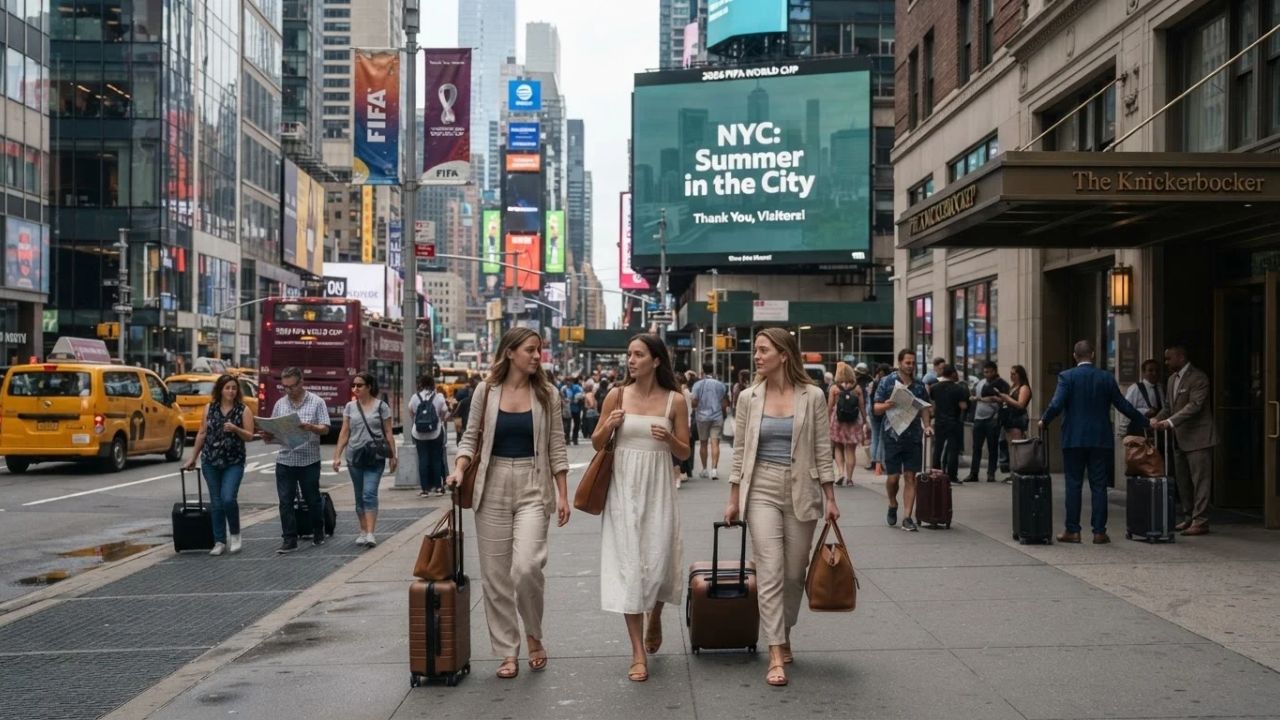
While the 2026 FIFA World Cup etched its name in sporting history with an all-time tournament attendance record of 6,810,966 fans across 104 matches, the spectacular soccer fiesta could not permanently insulate the American travel industry from broader economic friction. As the final whistle echoed on July 19, 2026, official figures from the National Travel and Tourism Office revealed that international visitor spending slipped by roughly 1% in July to $20.4 billion, falling back from June's $21 billion peak as overseas arrivals dropped 7% compared to July 2025.
Having traversed American highways from the desert canyons of the Southwest to the historic brick alleyways of Boston during both peak stadium hysteria and the quiet aftermath, the contrast is palpable. The millions of traveling supporters who flooded into 11 host cities across the United States, Mexico, and Canada have packed their flags and departed. In their wake, the United States presents a fascinating split reality: an economy powered by robust domestic vacationers, paired with an extraordinary, uncrowded window for independent international travelers seeking authentic American cultural immersion.
The Post-Tournament Reality: Dissecting America’s 2026 Travel Receipts
The scale of the 2026 World Cup between its opening match on June 11 and the championship on July 19 demonstrated the sheer gravitational pull of mega-events. According to research conducted by the U.S. Travel Association, international soccer fans anticipated spending upwards of $5,000 per person—far outstripping typical overseas visitor budgets. Furthermore, over 80% of prospective international ticket holders indicated an intention to venture beyond the primary gateway cities to explore regional attractions, national parks, and cultural corridors.
Yet data compiled by the National Travel and Tourism Office (NTTO), a division of the U.S. Department of Commerce, indicates that mega-event enthusiasm is notoriously difficult to convert into sustained international momentum. While June 2026 saw international travel and tourism spending surge past the $21 billion mark, July’s total retreated to approximately $20.4 billion. Year-to-date overseas arrivals stood 4.7% lower, while air passenger volumes softened through mid-summer.
This international deceleration, however, is far from universal. Deep geographic variations define the incoming visitor flow. While several traditional long-haul markets paused, arrivals from India surged to 132% of their 2019 pre-pandemic benchmark, while inbound travel from Mexico and Colombia comfortably exceeded historical levels.
Simultaneously, the domestic American traveler stepped in to cushion hospitality operators. Total travel expenditures within the United States climbed 5.8% year-over-year in July to reach $122.8 billion. Commercial hotel room demand expanded by 2.8%, driving an 8.2% surge in revenue per available room (RevPAR). For hoteliers in secondary markets, domestic family road trips and corporate retreats effectively filled room inventory, masking the broader dip in foreign visitor arrivals.
Looking ahead, the Department of Commerce maintains an optimistic long-range projection, forecasting total foreign arrivals to climb from 68.3 million visitors in 2025 to 70.5 million in 2026, with an ambitious target of 85.2 million annual international arrivals by 2030. Nevertheless, industry analysts emphasize that reaching these milestones requires dismantling persistent systemic hurdles: prolonged consular visa wait times, stubborn hospitality inflation, volatile aviation fuel costs, and shifting geopolitical perceptions.
What Makes America’s Post-Spectacle Travel Season Different
The departure of nearly seven million tournament spectators creates an extraordinary silver lining for independent cultural travelers. During June and early July, hotel rooms across major metro areas like New York, Los Angeles, Dallas, Miami, and San Francisco commanded astronomical surge pricing, while iconic museums and historic monuments were swamped by stadium crowds.
Today, that pressure has evaporated. The onset of the American autumn delivers crisp weather, reduced room rates, and restored serenity to the country's most celebrated heritage districts. Instead of competing with massive tour groups, visitors can wander through the quiet galleries of the Metropolitan Museum of Art in Manhattan, explore the Spanish colonial missions of San Antonio, or drive the winding roads of the Blue Ridge Parkway with unobstructed views of turning autumn foliage.
Moreover, because domestic travel tends to cluster around weekend getaways and school holiday periods, mid-week travelers enjoy unprecedented access. Boutique inns, coastal seafood shacks, and regional passenger trains operate with relaxed capacity, allowing visitors to experience genuine local hospitality that is impossible to encounter during peak tournament bottlenecks.
Visitor Insider Tips
Experiencing the United States in the post-World Cup shoulder season requires strategic planning and an understanding of regional transit realities.
First, embrace regional rail corridors rather than domestic flights. For travel between Boston, New York City, Philadelphia, and Washington, D.C., skip airport security lines and take Amtrak’s Northeast Regional or Acela high-speed services. Trains depart from city-center stations like New York Moynihan Train Hall and deliver you directly into downtown hubs in under four hours.
Second, master timed-entry requirements for protected natural monuments. If your road trip includes marquee national parks such as Rocky Mountain, Zion, or Yosemite, remember that many parks require pre-booked vehicle entry reservations during daylight hours. Secure permits weeks in advance via the official portal operated by the National Park Service.
Third, rent vehicles outside airport perimeters. Rental car concessions at major international airports routinely levy municipal airport concession recovery fees of up to 20% to 30%. Taking a quick commuter train or rideshare to a downtown rental depot can save hundreds of dollars on a two-week road trip.
Fourth, immerse yourself in seasonal culinary traditions. In New England, autumn brings freshly pressed apple cider, warm cider donuts, and wild blueberry cobblers. In the Mid-Atlantic, visit coastal Maryland for sweet blue crabs steamed with Old Bay seasoning, or travel through the Texas Hill Country to experience low-and-slow smoked brisket served on butcher paper at family-run barbecue pits.
Fifth, observe dining and tipping etiquette. When dining at full-service American restaurants, tipping your server 18% to 22% of the pre-tax total is standard custom for attentive service. Taxes are almost never included in posted retail price tags and are calculated at the cash register.
Cultural and Environmental Context
The United States encompasses a vast expanse of ecological and cultural treasures recognized globally by UNESCO World Heritage, from the ancient Puebloan cliff dwellings of Mesa Verde to the primordial biodiversity of Great Smoky Mountains National Park. Managing the physical footprint of millions of travelers requires continuous environmental vigilance.
During the World Cup, urban infrastructure absorbed unprecedented transit loads. As travel shifts outward into rural communities, national conservation initiatives supported by Visit The USA increasingly champion sustainable regional dispersal. Encouraging travelers to visit indigenous tribal heritage lands, historic state parks, and secondary towns along the Mississippi River spreads economic revenue directly to local family businesses while mitigating overcrowding at fragile wilderness sites.
Environmental stewardship also extends to transport choices. With rising electric vehicle charging corridors along legendary routes like Route 66 and the Pacific Coast Highway, road trippers can explore sweeping mountain passes and desert expanses with significantly lower carbon footprints. By respecting "Leave No Trace" wilderness principles and investing in locally owned lodging, visitors ensure that America's majestic topography endures for generations of future explorers.
FAQ: Visiting the United States in 2026
What happened to US international travel spending following the 2026 World Cup? International spending declined by approximately 1% in July 2026 to $20.4 billion after exceeding $21 billion in June, as overseas arrivals dropped 7% compared to July 2025.
Which international visitor markets are expanding most rapidly in the US? Inbound arrivals from India have reached 132% of 2019 pre-pandemic levels, while traveler numbers from Mexico and Colombia also continue to outperform pre-pandemic benchmarks.
What is the best time to visit the US in autumn 2026? Late September through November offers ideal travel conditions: comfortable temperatures, vibrant autumn foliage across northern states, lower hotel rates, and significantly smaller crowds at major landmarks.
Do international travelers need advance permits for US National Parks? Yes. Popular national parks including Yosemite, Zion, and Rocky Mountain require timed-entry vehicle reservations during peak hours. Travelers should book permits in advance on Recreation.gov.
America’s true magic begins when the grand spectacles end, and the open road invites you to discover the quiet heart of a continent.
Related Travel Guides
Disclaimer
This article is for informational and educational purposes only. It does not constitute legal, financial, or professional advice. While we strive to provide accurate and up-to-date information, travel policies, regulations, and conditions change rapidly. Always verify information with official sources before making travel decisions. Nomad Lawyer makes no representations about the accuracy, reliability, completeness, or suitability of the information provided. Readers should consult qualified professionals for advice specific to their circumstances. The views expressed in this article are those of the author and do not necessarily reflect the views of Nomad Lawyer.
Raushan Kumar
Founder & Lead Developer
Full-stack developer with 11+ years of experience and a passionate traveller. Raushan built Nomad Lawyer from the ground up with a vision to create the best travel and law experience on the web.
Learn more about our team →