
Florida and Tennessee Lead America's Most Accessible Vacation Destinations
A new analysis of 100 US holiday spots ranks the best wheelchair-accessible travel destinations, led by Pensacola Beach, Gatlinburg, and Rehoboth Beach.

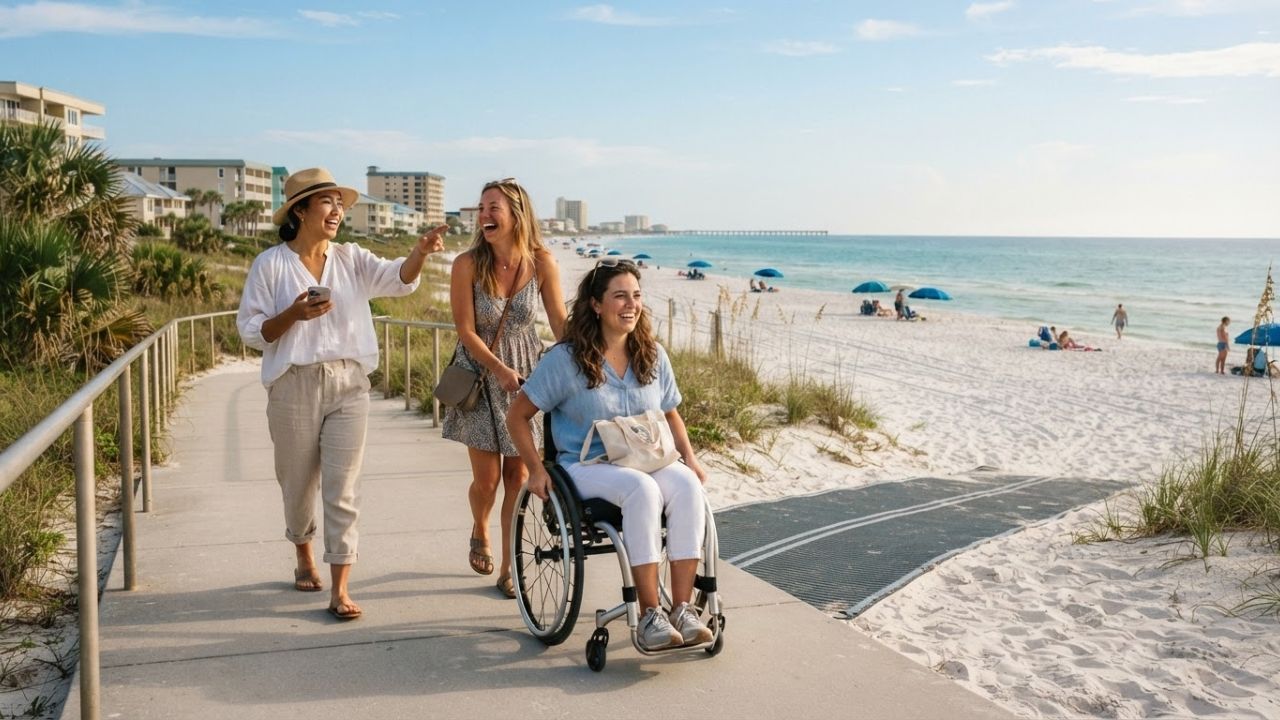
Image generated by AI
A comprehensive analysis of 100 holiday destinations across the United States has identified Florida’s Pensacola Beach as the country's top wheelchair-accessible vacation spot, scoring 91.3 out of 100. The study highlights how destinations are increasingly integrating step-free accommodations, wheelchair-friendly dining, and accessible public facilities to support travelers with mobility needs.
Pensacola Beach: Setting the Benchmark for Accessible Coastal Travel
Located on Florida's Gulf Coast, Pensacola Beach secured the number one position in the national ranking, achieving the highest overall score of 91.3. This coastal community achieved success by developing a destination-wide accessibility network rather than relying on isolated hotel rooms or attractions. The destination combines scenic coastal beauty with a thorough network of step-free facilities, public restrooms, and dining options designed to improve visitor independence.
To make the shoreline truly inclusive, local authorities have installed specialized Mobi-Mats—durable, roll-out mats that create a stable, step-free path across the soft sand directly to the water's edge. Additionally, local beach gear rental providers offer specialized floating beach wheelchairs, which allow visitors with mobility limitations to safely glide into the calm waters of the Gulf of Mexico. By ensuring that pathways and facilities are designed to welcome all visitors, the destination sets a modern standard for inclusive travel.
Step-Free Lodges and Mountain Trails in Tennessee and Delaware
Accessibility leadership is not limited to beach destinations. Tennessee’s popular mountain towns, Gatlinburg and Pigeon Forge, demonstrate that outdoor and nature-based tourism can become inclusive. Gatlinburg secured the second position with a score of 89.6, supported by its high availability of step-free holiday rentals. The destination recorded one of the strongest rates of accessible Airbnb properties, giving travelers with mobility requirements more accommodation choices when planning a mountain trip.
To assist visitors in exploring the region, the Gatlinburg Trolley system operates a fully ADA-compliant fleet, offering free, step-free transport throughout the town and connecting directly to major trailheads. Within the Great Smoky Mountains National Park, paved paths such as the Sugarlands Valley Nature Trail feature flat, step-free grading designed for manual and power wheelchairs, alongside interpretive exhibits presented in braille.
Pigeon Forge also ranked among the leading destinations, scoring 75.3. The town performed well due to its combination of accessible lodging and adapted visitor activities, proving that entertainment-focused destinations can successfully welcome diverse travelers.
Delaware's Rehoboth Beach achieved third place with a score of 75.5. The popular seaside town stood out for its high density of wheelchair-friendly hotels and restaurants, allowing visitors to navigate the boardwalk and dining venues with ease. The results highlight a growing travel trend where accessibility is built into the overall experience rather than offered as a limited service.
Historic destinations are also adapting to modern standards. Cape May in New Jersey secured the fifth position, scoring 71.4. The town demonstrates that historic preservation can successfully integrate accessibility upgrades, making its heritage streets and coastal dining available to more visitors. Other smaller communities, including Ogunquit in Maine (score: 70.5) and Bar Harbor in Maine (score: 61.1), also earned recognition for their dedicated efforts to improve visitor access.
Accessible Tropical Escapes and Coastal Art Hubs
The research also featured destinations outside the traditional mainland markets. Ka’anapali in Hawaii earned a position among the top accessible vacation spots, scoring 66.6. The tropical destination offers travelers the opportunity to enjoy a resort vacation while benefiting from step-free accommodation options and paved oceanfront pathways. In Ka’anapali, paved beach walk paths connect major oceanfront resorts like the Hyatt Regency and Westin, offering miles of smooth, scenic walking corridors suitable for wheelchair travel.
Carmel-by-the-Sea in California also ranked highly with a score of 65.9, demonstrating that scenic coastal towns can combine natural beauty, art galleries, and accessibility improvements. The city maintains accessible access ramps at Carmel Beach and provides detailed accessibility guides for historic locations, including the Carmel Mission, ensuring that heritage preservation and modern mobility go hand-in-hand.
Destination-Wide Accessibility: A Direct Support to Local Communities
The growth of accessible travel reflects changing expectations among modern travelers. Destinations are increasingly understanding that inclusivity is not only a social responsibility but also an opportunity to welcome a larger visitor base. When a community invests in ramp access, step-free entries, and accessible public transit, it benefits not only travelers but also local senior residents.
Accessible tourism ensures that family groups can stay longer and spend more at independent shops, restaurants, and regional tours. This creates a more stable, resilient year-round hospitality workforce. Successful destinations focus on the complete travel experience, including transportation, accommodation, dining, attractions, and public infrastructure.
| Top 10 Most Accessible Vacation Destinations in the United States | Score |
|---|---|
| Pensacola Beach, Florida | 91.3 |
| Gatlinburg, Tennessee | 89.6 |
| Rehoboth Beach, Delaware | 75.5 |
| Pigeon Forge, Tennessee | 75.3 |
| Cape May, New Jersey | 71.4 |
| Ogunquit, Maine | 70.5 |
| Ka’anapali, Hawaii | 66.6 |
| Carmel-by-the-Sea, California | 65.9 |
| Leavenworth, Washington | 63.9 |
| Bar Harbor, Maine | 61.1 |
Visitor Insider Guide: Wheelchair-Accessible Travel in the United States
To help travelers plan their journeys and navigate these top-rated destinations with ease, specialists recommend the following practical tips:
- Best Travel Windows: For coastal spots like Pensacola Beach or Rehoboth Beach, visit during the shoulder months of September and October. The weather remains warm, but summer crowds have cleared, making beach wheelchairs and accessible parking spaces far easier to secure. For mountain destinations like Gatlinburg, late spring offers accessible wildflower trails with fewer crowds.
- Cultural Etiquette: In the United States, ADA regulations require service animals to be allowed in all public facilities. Paved trails in national parks are designed for wheelchair access, but visitors should check trail conditions at visitor centers beforehand. Show respect by not parking in designated accessible spots without a valid placard.
- Local Dining Specialties: Try fresh crab cakes in Rehoboth Beach or steamed Gulf shrimp in Pensacola Beach. In Pigeon Forge, explore traditional southern comfort food like hot biscuits and pan-fried chicken at local family-style diners.
- Under-the-Radar Spots: In Pensacola Beach, take advantage of the free beach wheelchairs available at the Pensacola Beach Gulf Pier. In Gatlinburg, ride the step-free aerial tramway to Ober Mountain for panoramic views of the Great Smoky Mountains, or explore the fully accessible paved trail at the Sugarlands Visitor Center.
Shifting Indicators and the Future of US Tourism
The U.S. Travel Association highlights the growing importance of inclusive travel, emphasizing the need for destinations to adapt to changing demographic needs. Destinations that focus on increasing accessibility across all sectors—including public transport, trails, restrooms, and dining options—are best positioned to maintain a competitive advantage.
By building a unified accessibility ecosystem, states can ensure that travel remains a positive force for both visitors and residents. As accessible travel continues to expand, more US destinations are expected to improve facilities, helping more travelers explore, relax, and enjoy memorable holidays.
Related Travel Guides
Disclaimer
This article is for informational and educational purposes only. It does not constitute legal, financial, or professional advice. While we strive to provide accurate and up-to-date information, travel policies, regulations, and conditions change rapidly. Always verify information with official sources before making travel decisions. Nomad Lawyer makes no representations about the accuracy, reliability, completeness, or suitability of the information provided. Readers should consult qualified professionals for advice specific to their circumstances. The views expressed in this article are those of the author and do not necessarily reflect the views of Nomad Lawyer.
Raushan Kumar
Founder & Lead Developer
Full-stack developer with 11+ years of experience and a passionate traveller. Raushan built Nomad Lawyer from the ground up with a vision to create the best travel and law experience on the web.
Learn more about our team →