
Sri Lanka Strengthens Dambulla Sigiriya Tourism With New Attractions Infrastructure and Heritage Upgrades
Sri Lanka Strengthens Dambulla Sigiriya Tourism With New Attractions Infrastructure and Heritage Upgrades

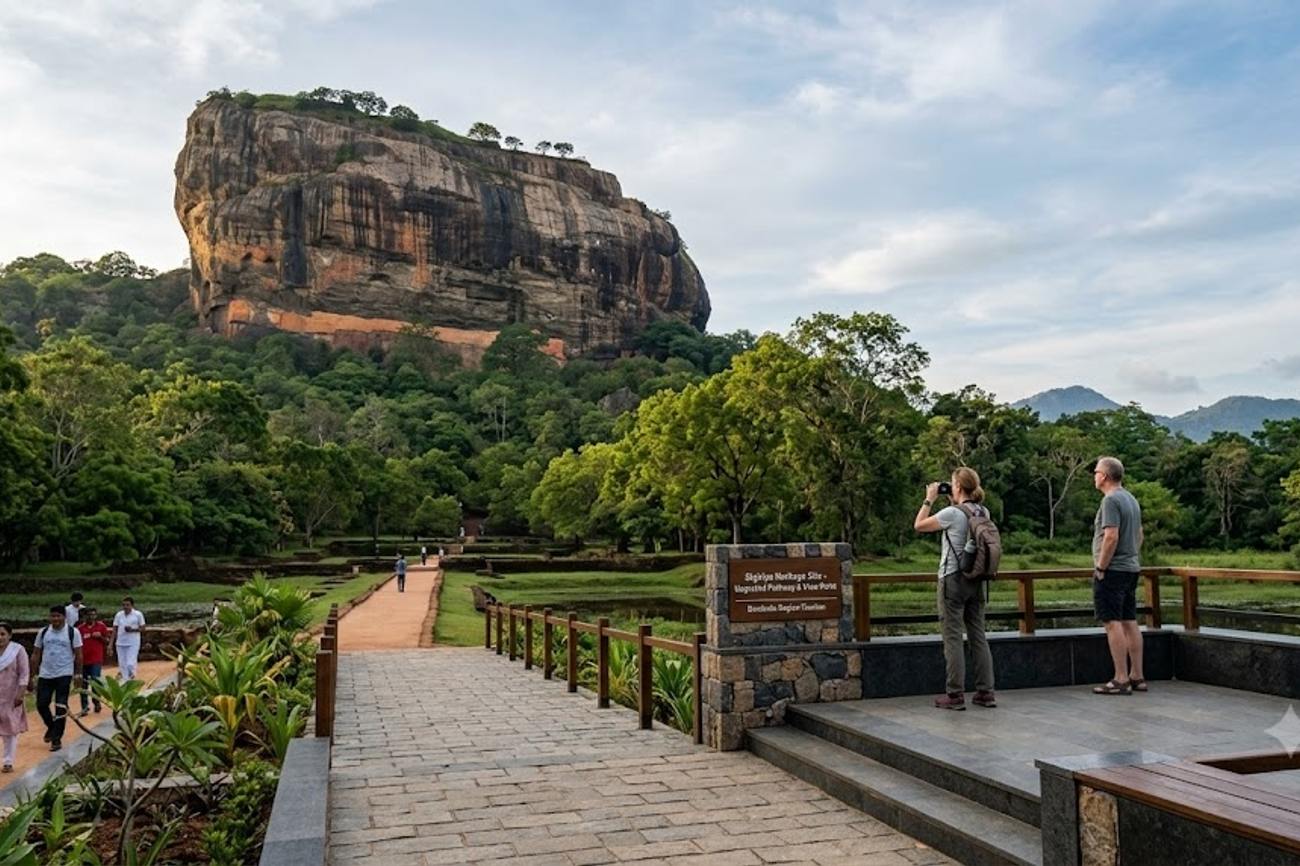
Image generated by AI
[Colombo, October 2024] — Sri Lanka is launching a massive infrastructure and conservation overhaul of the Dambulla-Sigiriya tourism corridor, funded by a USD 30 million loan from the Asian Development Bank (ADB). The initiative seeks to transform one of the nation's most critical cultural hubs into a climate-resilient, accessible destination that balances high-volume international arrivals with strict heritage preservation.
The Dambulla-Sigiriya Tourism Sector Development Project operates as a primary pillar of the broader Sustainable Tourism Sector Development Project (STSDP). While the current focus remains on the Central Province, the STSDP framework also encompasses strategic tourism expansion in Trincomalee within the Eastern Province. This multi-agency effort involves the Sri Lanka Tourism Development Authority (SLTDA) and various government bodies overseeing archaeology, forestry, and wildlife to ensure that modernization does not compromise the region's ecological or historical integrity.
The ADB Funding Trigger
The catalyst for this redevelopment is a strategic shift by the Sri Lankan government to move away from "single-site" tourism—where crowds congregate solely at the Sigiriya rock fortress—toward a distributed "destination" model. By securing USD 30 million in financing from the Asian Development Bank (ADB), the state is investing in the physical and digital infrastructure required to handle increased passenger loads while diversifying the points of interest.
The project is divided into two distinct development packages designed to address immediate logistical bottlenecks and long-term cultural exploration. The first phase focuses on "hard" infrastructure—parking, transport hubs, and museums—while the second phase emphasizes "soft" infrastructure, such as heritage trails and the conservation of lesser-known archaeological sites.
Regional Impact and Project Scope
The development is concentrated in the Central Province, specifically targeting the corridor between Dambulla and Sigiriya. The following table outlines the specific investments and timelines for the two primary development packages:
| Project Phase | Key Focus Areas | Investment Value | Timeline |
|---|---|---|---|
| Package One | Museum upgrades, Open-air theatre, Foreign tourist parking, Sigiri Wewa, New Town bus stand, Siyawasama Mawatha | Rs. 1,206 million | 18 Months |
| Package Two | Mapagala, Pidurangala, Kaludiya Pokuna, Heritage Trail (Ramakele to Thalkote) | Rs. 1,085 million | 30 Months |
The scope of these works extends beyond simple aesthetics. The rehabilitation of Siyawasama Mawatha and the New Town bus stand are intended to solve chronic local mobility issues that frequently frustrate international tourists relying on ground transport. Meanwhile, the upgrade of the foreign tourist vehicle park is a direct response to the traffic congestion that currently plagues the approach to the Sigiriya fortress.
Practical Traveler Advisory and Strategic Insights
For the modern nomad or luxury traveler, these changes translate to a significant reduction in "friction" during the visit. Currently, the Sigiriya experience is often defined by crowded entry points and limited activities once the main climb is completed.
Passenger and Visitor Impact:
- Reduced Congestion: The dedicated upgrade to the foreign tourist vehicle park means faster arrivals and less time spent in traffic queues.
- Extended Stays: The creation of an 11-kilometer Heritage Trail from Ramakele to Thalkote allows travelers to spend multiple days in the region rather than a few hours, shifting the experience from a "stop-over" to a "stay."
- Enhanced Interpretation: The upgraded museum and open-air theatre will provide better context and storytelling, reducing the reliance on unregulated third-party guides.
- Diversified Sightseeing: With the conservation of Pidurangala, Mapagala, and Kaludiya Pokuna, visitors have high-quality alternatives to the main fortress, spreading the crowds and offering a more serene experience.
The Road to Climate Resilience
A central tenet of the STSDP is the integration of climate-resilient infrastructure. Sri Lanka is recognizing that its tourism assets are vulnerable to environmental shifts. By improving the Sigiri Wewa (the historic tank), the project is not just preserving a landmark but restoring ancient water management systems that help regulate the local microclimate and prevent erosion.
The government is also prioritizing "inclusive tourism." This means that the infrastructure upgrades—such as the bus stands and public walkways—are being designed to be accessible to a wider range of demographics, including those with limited mobility. By integrating local communities into the tourism value chain, the project aims to ensure that the economic benefits of the ADB loan reach local service providers and small-scale entrepreneurs, rather than just large hotel chains.
The Sri Lankan government has launched several initiatives to enhance the tourism experience in Dambulla and Sigiriya, including the development of new attractions and infrastructure upgrades. For the most up-to-date information on travel requirements and guidelines, visitors can check the official website of the Sri Lanka Tourism Development Authority for the latest news and announcements. This move is expected to boost tourist arrivals and revenue in the region, with a focus on sustainable and responsible tourism practices.
Future Timeline and Expansion
The immediate 18-month window will see the completion of the most visible infrastructure projects, including the museum and transport hubs. Following this, the 30-month second phase will roll out the more complex conservation work and the opening of the Heritage Trail.
Once the Dambulla-Sigiriya model is proven, the government intends to apply these sustainable frameworks to the Trincomalee development plans. This suggests a nationwide shift toward "slow tourism," where the goal is to increase the average length of stay per visitor through the creation of interconnected cultural circuits.
FAQ: Dambulla Sigiriya Development 2024
Will the Sigiriya fortress be closed during construction? No. The development project focuses on the surrounding infrastructure, such as the museum, parking lots, and external heritage trails. The main attraction remains open, though visitors should expect localized construction activity in the parking and museum areas.
What is the "Heritage Trail" and how long is it? The Heritage Trail is a new walking-based tourism route stretching approximately 11 kilometers from Ramakele to Thalkote. It is designed to encourage visitors to explore the wider cultural landscape beyond the main fortress.
How does the ADB loan affect the cost of visiting these sites? The loan is used for infrastructure and conservation, not for direct ticket pricing. While the government may adjust entry fees over time to fund maintenance, the current project is focused on improving the quality of the visitor experience and facility management.
Which other regions are getting similar upgrades? Trincomalee in the Eastern Province is also included under the wider Sustainable Tourism Sector Development Project (STSDP) framework, though the current primary focus is on the Dambulla-Sigiriya corridor.
Sri Lanka is betting that by investing in the periphery of its most famous monument, it can turn a crowded landmark into a sustainable regional economy.
Related Travel Guides
- Germany Attracts More US Travellers as Cultural Experiences Luxury Stays and Heritage Tourism Drive Demand
- Vietnam's Côn Đảo Archipelago Unveils 2030 Eco-Tourism Master Plan Featuring 5.5km Cable Car System and 90,000 Visitor Cap
- Vietnam and China Launch 2026–2027 Tourism Cooperation Year at Hanoi's Ho Guom Opera House Mid-Autumn Festival
Disclaimer
This article is for informational and educational purposes only. It does not constitute legal, financial, or professional advice. While we strive to provide accurate and up-to-date information, travel policies, regulations, and conditions change rapidly. Always verify information with official sources before making travel decisions. Nomad Lawyer makes no representations about the accuracy, reliability, completeness, or suitability of the information provided. Readers should consult qualified professionals for advice specific to their circumstances. The views expressed in this article are those of the author and do not necessarily reflect the views of Nomad Lawyer.
Raushan Kumar
Founder & Lead Developer
Full-stack developer with 11+ years of experience and a passionate traveller. Raushan built Nomad Lawyer from the ground up with a vision to create the best travel and law experience on the web.
Learn more about our team →