
US Leads Mexico and More Markets as Bogotá Expands Its Powerful 2026 Tourism and Aviation Network: All Details
Bogotá projects over 15.3 million tourists in 2026 as El Dorado handles 11.2 million air passengers, driven by strong US and Latin American travel markets.

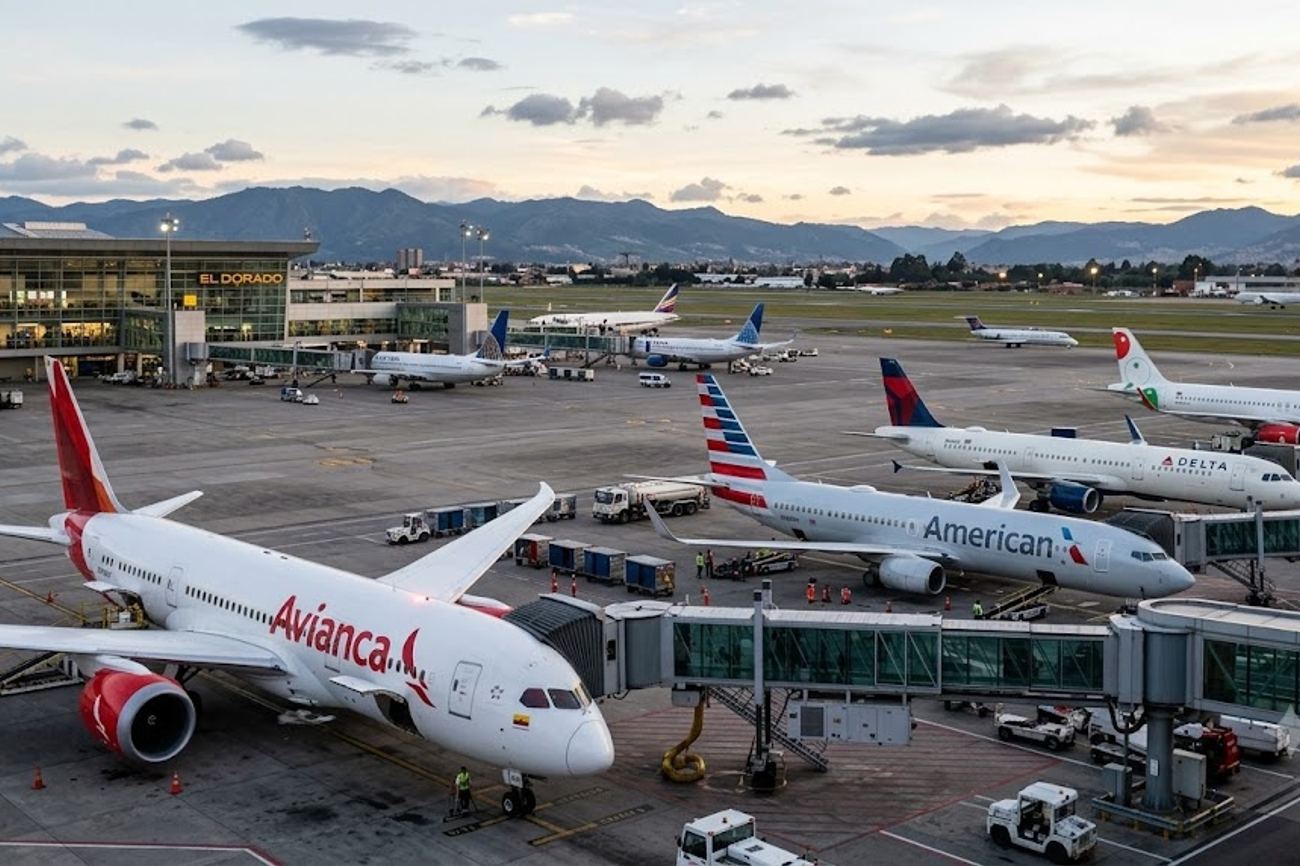
Image generated by AI
While international travelers often envision Bogotá merely as an Andean transit runway to Caribbean beaches or coffee haciendas, 54 per cent of the 1,039,025 foreign arrivals crossing El Dorado in the first seven months of 2026 arrived specifically for urban leisure. The high-altitude Colombian capital is projecting an unprecedented full-year influx exceeding 15.3 million total travelers in 2026—an 8.7 per cent leap over 2024 and a 4.5 per cent expansion against 2025—fueling an urban renaissance anchored by culinary breakthroughs, heritage arts, and an expanding hemispheric aviation corridor. Even with foreign arrivals moderating by 5.1 per cent compared to 2025, the city’s ability to capture high-intent leisure travelers highlights a permanent pivot from a temporary stopover hub to an essential South American cultural capital.
The Andean Hub: Aviation Scale and Inbound Corridors
The physical engine behind Bogotá’s transformation is El Dorado International Airport, which operates as one of the most efficient aviation hubs in the Americas. Between January and June 2026, the facility handled 89,707 flights, marking a 5.5 per cent year-on-year increase, while moving 11.2 million air passengers at an impressive average aircraft occupancy rate of 79.3 per cent. The expansion accelerates through the third quarter, with 43,507 scheduled flights and more than 7.3 million available seats projected between July and September—a 3.6 per cent bump in flight volume and a 4.5 per cent increase in seat capacity designed to support major international conventions, arts biennales, and dry-season travel.
The international visitor base illustrates remarkable geographic balance across the Americas and Western Europe:
- Regional Neighbors: Venezuela leads overall inbound traffic with 16.9 per cent of foreign arrivals, followed by Ecuador at 5.2 per cent, Peru at 4.0 per cent, Argentina at 3.2 per cent, and Panama at 3.2 per cent.
- North American Momentum: The United States represents the largest long-haul market at 14.0 per cent, followed closely by Mexico at 10.0 per cent, together driving strong demand for luxury boutique hotels and gastronomic tours.
- European and Southern Cone Corridors: Spain contributes 5.8 per cent and France accounts for 3.4 per cent, while Brazil represents 5.3 per cent, creating a cosmopolitan visitor blend that insulates the capital from single-market downturns.
With the five leading international source markets generating 53 per cent of all foreign arrivals, Bogotá has built a resilient, multi-tiered travel economy promoted actively through Colombia Travel.
What Makes Bogotá Different
Perched on an expansive Andean plateau 2,640 meters above sea level, Bogotá defies conventional tropical stereotypes. Cradled beneath the verdant eastern peaks of Monserrate and Guadalupe, the capital is characterized by crisp mountain air, dramatic cloud shifts, and a dynamic clash between centuries-old Spanish colonial foundations and daring modernist architecture.
The city’s soul resides in its distinct micro-districts. In La Candelaria, narrow cobblestone streets are lined with vibrant colonial mansions adorned with wrought-iron balconies and evocative political street murals, housing world-renowned institutions like the Museo del Oro and the Botero Museum. In contrast, districts like Quinta Camacho showcase Tudor-style English brick manors converted into independent publishing houses, design ateliers, and artisan coffee roasters.
Further north, the gastronomic corridor of the Zona G and the open-air plazas of Usaquén present an extraordinary culinary culture. Contemporary Colombian chefs celebrate ancestral biodiverse ingredients—from Amazonian fruits and high-altitude root vegetables to Pacific coast seafood—reinterpreting traditional recipes into world-class tasting menus. For deeper regional context, exploring how the capital's heritage links to the wider UNESCO World Heritage Centre catalog reveals Bogotá’s historical role as the administrative and cultural heart of northern South America.
Visitor Insider Tips
Experiencing the true rhythm of Bogotá like a resident Rolo requires understanding high-altitude urban habits, local idioms, and transport navigation.
- Altitude Acclimatization and Timing: At 2,640 meters, the thin Andean air can quickly tire unacclimatized travelers. Dedicate your first 24 hours to gentle strolls, drink plenty of water or local coca tea, and save steep climbs up Monserrate until your second or third morning. Plan indoor museum visits in La Candelaria for the morning, as afternoon Andean downpours frequently roll over the mountains around 2:30 PM.
- Mastering the Circulatory System: While ride-hailing applications are widely used and inexpensive, mastering the red buses of the TransMilenio rapid transit system gives you direct access across the city's central corridors. Purchase a rechargeable TuLlave card at any station, and always keep your daypack positioned on your chest during peak commuting hours. On Sundays, do not miss the world-famous Ciclovía, when over 120 kilometers of major city avenues are completely closed to automobiles, allowing millions of cyclists, runners, and walkers to take over the streets.
- Local Etiquette and Street Savvy: The golden rule of Bogotá urban safety is summarized in the local proverb no dar papaya—do not present tempting opportunities by flashing expensive jewelry, high-end camera equipment, or smartphones on quiet street corners. Politeness is an art form here; always begin conversations with a courteous "Buenos días" or "¿Cómo está?" before requesting directions or asking for prices.
- Authentic Culinary Encounters: Skip tourist-heavy chain restaurants and head to the historic Plaza de Mercado de Paloquemao. Hire a local fruit guide to sample exotic varieties like lulo, maracuyá, guanábana, and uchuva before sitting down for an authentic bowl of ajiaco santafereño—a hearty chicken and potato soup cooked with native guasca herbs, served with sweet corn, capers, fresh avocado, and heavy cream. In the afternoon, partake in the traditional ritual of chocolate con queso, dipping salted farmhouse cheese into steaming mugs of spiced hot chocolate alongside warm baked almojábanas.
- Base Neighborhood Recommendations: For an elegant, walkable stay filled with boutique hotels and leafy parks, base yourself in Quinta Camacho, Chapinero Alto, or Usaquén. These neighborhoods offer peaceful cobblestone side streets, vibrant specialty coffee shops, and easy walking access to the city's finest independent dining corridors.
Cultural and Environmental Context
Bogotá’s march toward welcoming 15.3 million annual visitors brings urgent cultural and ecological considerations. The sprawling urban plateau is physically bounded by delicate páramo ecosystems, notably Chingaza and Sumapaz—the largest high-altitude wetland on earth. These fragile alpine moorlands function as natural giant sponges, filtering and supplying over 80 per cent of the capital's municipal drinking water.
Rapid tourism and urban expansion place immense pressure on these sensitive mountain watersheds. Responsible travelers are increasingly seeking low-impact excursions led by certified national park naturalists who teach visitors how urban water security depends directly on protecting frailejón plants in the high Andes.
Socially, the distribution of traveler capital remains paramount. Rather than confining tourism spending to international hotel chains in the affluent northern districts, municipal initiatives are empowering community-led heritage routes in peripheral barrios like Las Cruces and San Cristóbal. Supporting independent fruit vendors in neighborhood markets, purchasing handicrafts directly from indigenous artisans, and dining in family-run neighborhood fondas guarantees that Bogotá’s tourism revival strengthens community identity and preserves the vibrant cultural fabric that makes this Andean capital extraordinary.
FAQ: Visiting Bogotá 2026
What is the best time of year to visit Bogotá? December through March and July through August offer the driest, sunniest conditions. However, Andean weather is famously fickle, so always carry a compact umbrella and dress in versatile layers.
How do I travel safely from El Dorado Airport to central Bogotá? Take an authorized yellow taxi from the official airport taxi rank outside arrivals, or request a ride through trusted mobile apps to avoid unmetered street cabs.
What should travelers do to manage the high altitude? Stay hydrated, avoid heavy meals and alcohol on your first day, take resting breaks when climbing inclines, and allow 24 hours to adapt to the 2,640-meter elevation.
Is Bogotá safe for independent and solo travelers? Yes, stick to established neighborhoods like Quinta Camacho, Chapinero, and Usaquén, avoid walking alone in deserted areas at night, and follow the local guideline of no dar papaya.
High above the clouds, Bogotá captures the imagination through its restless Andean creativity, golden antiquities, and warm, generous mountain spirit.
Related Travel Guides
Disclaimer
This article is for informational and educational purposes only. It does not constitute legal, financial, or professional advice. While we strive to provide accurate and up-to-date information, travel policies, regulations, and conditions change rapidly. Always verify information with official sources before making travel decisions. Nomad Lawyer makes no representations about the accuracy, reliability, completeness, or suitability of the information provided. Readers should consult qualified professionals for advice specific to their circumstances. The views expressed in this article are those of the author and do not necessarily reflect the views of Nomad Lawyer.
Preeti Gunjan
Contributor & Community Manager
A passionate traveller and community builder. Preeti helps grow the Nomad Lawyer community, fostering engagement and bringing the reader experience to life.
Learn more about our team →