
Canada Travel Rebounds as US Trips Rise for Fifth Month With Cross-Border Tourism Recovery
Canadian travel to the US records its fifth consecutive month of recovery with 2.57 million return trips in August 2026, driven by automotive cross-border road travel.

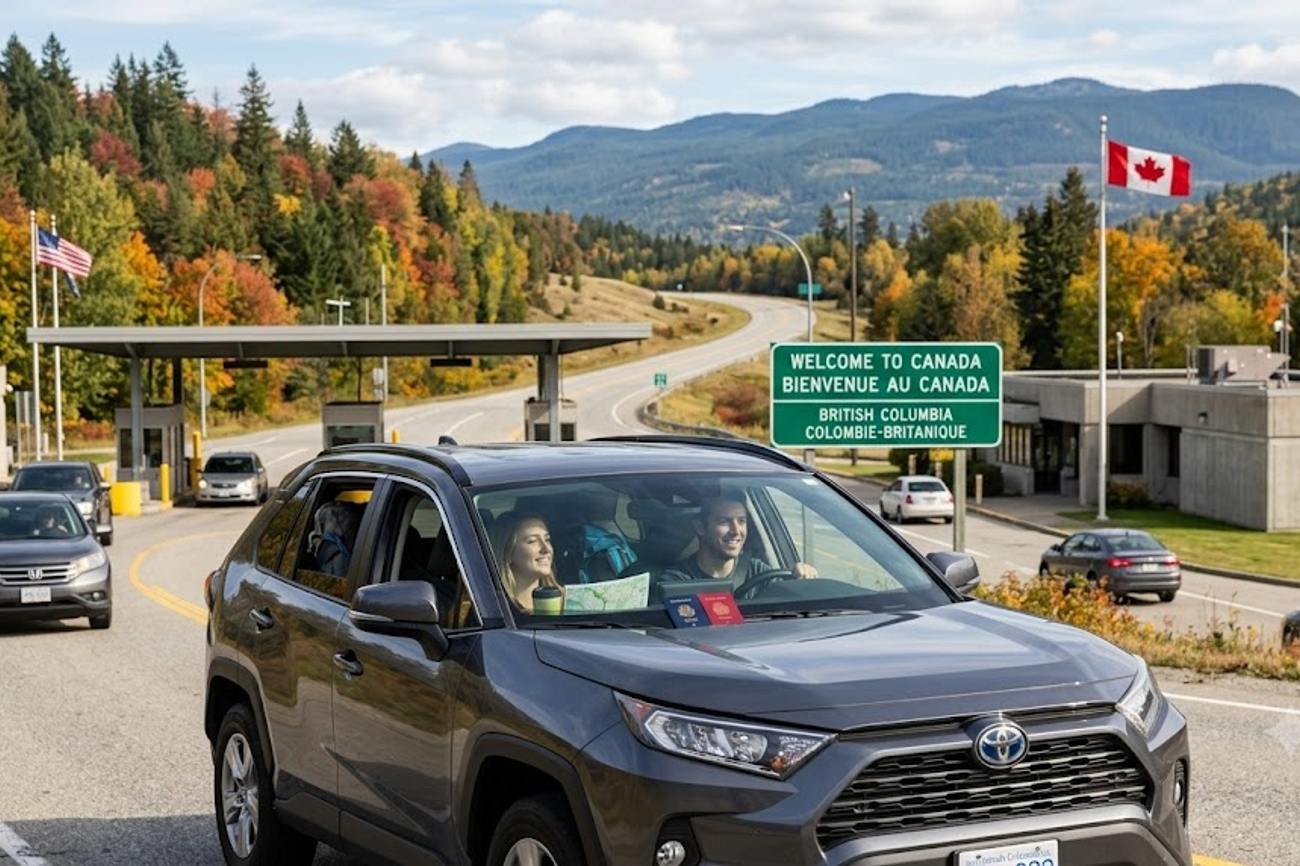
Image generated with AI
Even as Canadian journeys into the United States logged their fifth straight month of recovery with 2,574,637 return trips in August 2026, automotive crossings remain a startling 27.4 per cent below 2024 levels. Official data released by Statistics Canada reveals that while cross-border mobility grew by 8.8 per cent year-over-year, the rhythm of North American travel has fundamentally shifted. Rather than embarking on spontaneous spending sprees, Canadian travelers are adopting deliberate, calculated travel habits that prioritize short-haul road adventures, family visits, and regional discoveries across the northern borderlands.
The Rebound Across the 49th Parallel
The August milestone of 2.57 million return trips demonstrates sustained upward momentum along the world’s longest shared international frontier. After a challenging start to the year—when Canadian trips to the United States dropped by 10.6 per cent and traveler spending plunged by 13.6 per cent during the first quarter as holidaymakers pivoted toward Europe, Asia, Mexico, and the Caribbean—the late summer period affirmed the enduring draw of American destinations promoted through Brand USA.
The recovery unfolds along two distinct speeds:
- Automotive Crossings: Road-based return trips rose 9.9 per cent year-over-year in August, cementing driving as the primary vehicle for cross-border movement. Families from Ontario, British Columbia, and Quebec live within a morning’s drive of neighboring states, making road trips a practical way to manage household travel budgets.
- Air Travel Connections: Commercial flights logged a more measured 3.6 per cent annual rise, reflecting disciplined carrier capacity. While long-distance flights connect northern cities to Florida (Orlando, Miami, and Tampa), California, Arizona, Nevada, and Hawaii, air returns still sit 22.7 per cent below August 2024 benchmarks.
The contrast with 2024 figures illustrates that recovery is a structural reset rather than a simple return to past habits. Canadian voyagers are spending more time researching regional itineraries, selecting off-peak travel windows, and exploring secondary border corridors rather than flocking only to crowded urban theme parks and mega-malls.
What Makes the Canada-US Border Corridor Different
The Canada-US borderland is not a single homogenous line, but a collection of distinct cultural and ecological regions shaped by shared geography. In the Pacific Northwest, travelers crossing from British Columbia into Washington state navigate the temperate rainforests and coastal waters of the Salish Sea, connecting Vancouver to the Cascade mountains and Puget Sound. Further east, the prairie crossings between Alberta or Saskatchewan and Montana provide open big-sky horizons leading into Glacier National Park.
Along the Great Lakes and the Saint Lawrence River, Ontario and Quebec share deep historical ties with New York, Michigan, and Maine. Here, international boundaries slice through historic canal towns, the Thousand Islands archipelago, and agricultural valleys. Crossing from Niagara into western New York or driving from Montreal down into Vermont and the Adirondacks feels less like entering a foreign country and more like entering a sibling region with shared culinary and outdoor heritage.
As autumn transitions into winter, the southward flow takes on an iconic seasonal character: the snowbird migration. Hundreds of thousands of Canadian retirees prepare their annual overland journeys down the eastern seaboard or through the desert southwest toward the warm climates of Florida, Arizona, and Southern California, turning highway corridors into extended mobile communities.
Visitor Insider Tips
Navigating the border efficiently requires insider knowledge of crossing logistics, port operations, and regional detours.
- Border Crossing Timing Hacks: High-volume commercial crossings like the Peace Bridge (Fort Erie to Buffalo), the Queenston-Lewiston Bridge, and the Peace Arch (Surrey to Blaine) experience multi-hour queues on Friday afternoons and Sunday evenings. To breeze through immigration, aim for early morning crossings between 6:30 AM and 8:00 AM, or cross late in the evening after 8:30 PM. Utilize real-time wait-time tracking provided by the Canada Border Services Agency before selecting your bridge.
- Secondary Port Alternatives: When primary highway ports are congested, divert to quieter secondary crossings. In southern Ontario, the Whirlpool Rapids Bridge offers exclusive access for registered NEXUS pass holders, while the Ogdensburg-Prescott Bridge along the St. Lawrence River provides a peaceful crossing with minimal waits. In Quebec, rural crossings like Stanstead into Derby Line, Vermont, offer scenic country drives through the Eastern Townships.
- Currency and Exemption Logistics: Given fluctuating exchange rates, plan major purchases around official personal exemption thresholds. Trips under 24 hours provide zero duty-free exemptions, while stays between 24 and 48 hours allow up to CAD 200 worth of goods tax-free. Stays exceeding 48 hours grant a generous CAD 800 exemption per traveler. Use credit cards with zero foreign transaction fees to avoid inflated bank conversion rates at American gas pumps and diners.
- Regional Flavors and Highway Stops: Skip highway rest stop fast food and explore regional culinary traditions just across the frontier. In western New York, pull into historic roadside taverns for authentic crispy Buffalo wings seasoned with Frank's RedHot and melted butter. In Washington state, stop along the Chuckanut Drive scenic bypass for freshly shucked Pacific oysters overlooking Samish Bay, paired with crisp local craft cider.
Cultural and Environmental Context
The international boundary between Canada and the United States threads through delicate shared biomes: the Great Lakes basin, the St. Lawrence River watershed, and the Pacific coastal temperate forests. Managing 2.57 million monthly crossings demands intense biosecurity and environmental stewardship to prevent the cross-border introduction of invasive plant species, agricultural pests, and wildlife diseases like chronic wasting disease.
Borderland economies are deeply interdependent. Small communities along both sides of the frontier—from Niagara Falls and Plattsburgh to Bellingham and Port Huron—depend directly on cross-border retail, dining, and seasonal leisure spending. When exchange rate swings or policy shifts depress Canadian visits, small-town family businesses on the American side feel immediate fiscal strain.
Conversely, the steady return of Canadian road travelers injects vital revenue into independent state park campgrounds, community farm stands, and regional heritage sites. This cross-border dynamic reinforces a unique cultural kinship: two sovereign nations bound by shared watersheds, interlinked indigenous ancestral territories, and a long-standing tradition of open neighborly travel.
FAQ: Canada-US Travel 2026
What travel documents do Canadian citizens need to drive into the US? Canadian travelers require a valid Canadian passport, a NEXUS card, an Enhanced Driver’s License (where available), or a FAST card to enter the United States by land.
When is the best time to cross the land border without delays? Cross early in the morning between 6:30 AM and 8:00 AM, or late in the evening after 8:30 PM on weekdays, avoiding peak Friday afternoon and Sunday holiday traffic.
What are the personal duty-free exemption limits when returning to Canada? After an absence of 24 to 48 hours, Canadians can bring back up to CAD 200 of goods tax-free. For trips exceeding 48 hours, the exemption rises to CAD 800.
Why is road travel rebounding faster than air travel between the two nations? Driving provides families with flexible scheduling, lower per-person travel costs, and direct access to nearby border states like New York, Washington, Michigan, and Maine.
The quiet roads linking our northern communities remind us that the strongest international bridges are built on shared geography and neighborly connection.
Related Travel Guides
Disclaimer
This article is for informational and educational purposes only. It does not constitute legal, financial, or professional advice. While we strive to provide accurate and up-to-date information, travel policies, regulations, and conditions change rapidly. Always verify information with official sources before making travel decisions. Nomad Lawyer makes no representations about the accuracy, reliability, completeness, or suitability of the information provided. Readers should consult qualified professionals for advice specific to their circumstances. The views expressed in this article are those of the author and do not necessarily reflect the views of Nomad Lawyer.
Preeti Gunjan
Contributor & Community Manager
A passionate traveller and community builder. Preeti helps grow the Nomad Lawyer community, fostering engagement and bringing the reader experience to life.
Learn more about our team →