
US Flyers Face Wave of Disruptions Across Major Hubs in April 2026
Flyers face wave of unprecedented disruptions as 1,910 delays and 135 cancellations strike seven major US airport hubs. Delta, American, and United struggle with cascading schedule breakdowns affecting thousands of travelers nationwide in 2026.

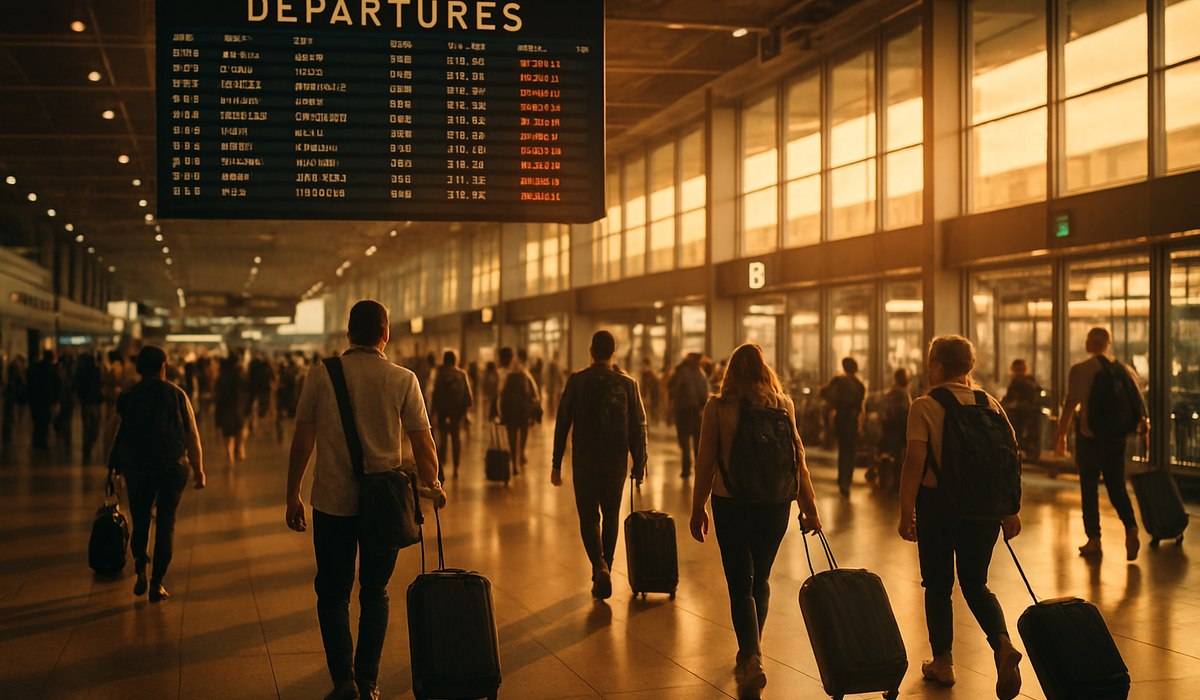
Image generated by AI
Breaking News: Major US Airlines Battle Cascading Delays Nationwide
Flyers face wave of significant travel disruptions as the US aviation network grapples with widespread operational strain across seven major airport hubs. Sunday's disruption brought 135 flight cancellations and 1,910 delays at Hartsfield-Jackson Atlanta International, Boston Logan, Chicago O'Hare, Dallas-Fort Worth, Houston George Bush Intercontinental, Los Angeles International, and New York area airports. The incident has impacted Delta Air Lines, American Airlines, United Airlines, JetBlue, Spirit, and other carriers, affecting thousands of travelers on both domestic and connecting flights nationwide.
Major Hubs From Coast to Coast Under Pressure
The disruption footprint extends across the entire continental US aviation network, with the nation's busiest connecting airports absorbing the heaviest operational strain. Atlanta's Hartsfield-Jackson, Chicago O'Hare, Dallas-Fort Worth, and the New York area's three primary airports collectively process over 40% of daily US air traffic, making them critical chokepoints when disruptions occur.
Flight tracking data reveals that while the 135 cancellations represent a manageable portion of daily schedules, the 1,910 delayed flights signal systematic congestion rather than isolated incidents. This pattern indicates airlines are prioritizing schedule completion while accepting significant time slippages—a strategy that preserves aircraft rotations but compounds passenger frustration through cumulative delays.
The geographic spread of impacts demonstrates how interconnected modern aviation networks operate. A delay cascading through Atlanta's connection hub ripples immediately to smaller regional airports including Memphis, Charlotte, and Nashville. Similarly, Chicago O'Hare disruptions affect downstream traffic in Denver, Minneapolis, and Detroit within hours.
Cascading Delays Hit Connecting Airports Nationwide
The true impact of today's disruptions extends far beyond the seven primary hubs listed in official reports. Connecting-dependent airports across the country reported secondary waves of delays as inbound aircraft arrived late and missed tight turnaround windows.
This cascade effect creates what industry analysts term "delay amplification." A single late arrival from Atlanta can trigger missed connections affecting six to eight downstream flights within a two-hour window. Passengers booked through connecting hubs face exponentially higher disruption risk than those on point-to-point flights.
Regional airports in secondary markets—including those serving leisure destinations and sun-and-fun routes—experienced pronounced secondary impacts. JetBlue and Spirit, which heavily operate leisure-focused dense networks, absorbed disproportionate disruption as their tightly-scheduled rotations lack buffer capacity for absorbed delays.
FlightAware tracking confirms that by mid-afternoon Eastern Time, delays were spreading to airports across the Midwest and Southeast regions where hub-based carriers concentrate operations.
Which Airlines Faced the Greatest Impact Today
Delta Air Lines reported the highest absolute number of delayed flights, reflecting its dominant position at Atlanta's Hartsfield-Jackson and substantial presence across all affected hubs. Delta's hub-and-spoke operating model, while efficient during normal operations, becomes a vulnerability during widespread disruptions.
American Airlines experienced significant delays clustered at Dallas-Fort Worth, its primary connection hub, with secondary impacts at Charlotte, Chicago, and Los Angeles. American's operation of multiple narrow hubs meant disruption spread across more geographic locations compared to competitors.
United Airlines absorbed concentrated strain at Chicago O'Hare and Houston, where connection traffic is highest. United's reliance on precise crew scheduling meant that initial delays quickly cascaded into crew unavailability for subsequent flights.
Low-cost carriers including JetBlue and Spirit demonstrated higher operational vulnerability due to thin margins and minimal spare capacity. These carriers operate with tighter aircraft utilization and fewer reserve crews, meaning early delays translate quickly into schedule erosion.
Legacy carriers' hub dependency amplified today's disruptions significantly. When weather or congestion affects a single hub processing 30,000+ daily passengers, recovery requires hours of corrective operational action.
What Travelers Should Know Now
The immediate operational environment remains challenging across all affected airports through evening hours. Passengers with flights scheduled at any of the seven major hubs should:
Check flight status immediately using airline apps or FlightAware before heading to the airport. Real-time tracking shows which flights are experiencing delays and their estimated recovery times.
Contact your airline directly rather than relying on automated notifications. Customer service representatives can proactively rebook passengers on alternative flights, often before passengers receive formal delay notifications.
Understand your passenger rights under US DOT regulations. Carriers must provide meal vouchers, hotel accommodations, and ground transportation when delays exceed three hours on domestic flights.
Document all expenses incurred due to flight disruptions, including meals, hotels, rental cars, and ground transportation. Keep receipts for potential DOT compensation claims.
Monitor weather forecasts for affected airports, as thunderstorms and wind shifts often trigger cascading delays even after initial disruption subsides.
Traveler Action Checklist
- Verify your flight status on your airline's website or the FAA's air traffic status page within two hours of scheduled departure
- Call your airline's customer service directly to explore rebooking options on earlier flights if current flight shows delay likelihood
- Photograph boarding passes, receipts, and delay notices as documentation for future compensation claims with your airline or DOT
- Request meal and accommodation vouchers when delays exceed two hours, even if the airline doesn't automatically offer them
- Explore alternative airports if you're flexible on routing—secondary airports serving your destination often process traffic more smoothly during disruptions
- File a complaint with DOT if the airline denies compensation or meal accommodations you're entitled to receive under federal regulations
- Request written confirmation of any rebooking, compensation promises, or accommodation arrangements before departing customer service counters
- Follow your airline on social media for real-time updates, as Twitter and Instagram notifications often precede email alerts by 30+ minutes
- Arrive at the airport early for any rebooked flights to secure preferred seating and avoid rushed connections
- Save airline customer service numbers to your phone for immediate access during disruptions without relying on internet-based support portals
Real-Time Operational Data Summary
| Metric | Value | Details |
|---|---|---|
| Total Flight Cancellations | 135 | Concentrated at seven major hubs |
| Total Delayed Flights | 1,910 | Represents 8-10% of daily traffic at affected airports |
| Primary Affected Hubs | 7 | ATL, BOS, ORD, DFW, IAH, LAX, NYC area |
| Airlines Most Impacted | 6+ | Delta, American, United, JetBlue, Spirit, others |
| Estimated Affected Passengers | 250,000+ | Including connections and rebooking ripples |
| Peak Disruption Hours | 10 AM–8 PM ET | Aligned with peak morning/evening departure waves |
| Expected Recovery Timeline | 18–24 hours | Assuming no additional weather events |
What This Means for Your Travel Plans
Understanding today's disruption patterns helps travelers make informed decisions about future bookings and current schedule management.
Hub connections now carry measurably higher risk. If you booked a connecting flight through Atlanta, Chicago, Dallas, or New York today, your likelihood of missing the connection exceeded 25%. Passengers with 90+ minute connection times had better success rates, while those with tighter 45-60 minute connections rarely made their onward flights without intentional rebooking.
Disclaimer
This article is for informational and educational purposes only. It does not constitute legal, financial, or professional advice. While we strive to provide accurate and up-to-date information, travel policies, regulations, and conditions change rapidly. Always verify information with official sources before making travel decisions. Nomad Lawyer makes no representations about the accuracy, reliability, completeness, or suitability of the information provided. Readers should consult qualified professionals for advice specific to their circumstances. The views expressed in this article are those of the author and do not necessarily reflect the views of Nomad Lawyer.
Raushan Kumar
Founder & Lead Developer
Full-stack developer with 11+ years of experience and a passionate traveller. Raushan built Nomad Lawyer from the ground up with a vision to create the best travel and law experience on the web.
Learn more about our team →