
Hundreds Stranded Fresh: Wave of Delays Hits European Flight Network
Hundreds of passengers face cascading delays across Europe in April 2026 as Amsterdam Schiphol and German hubs buckle under operational pressures and impending strike action.

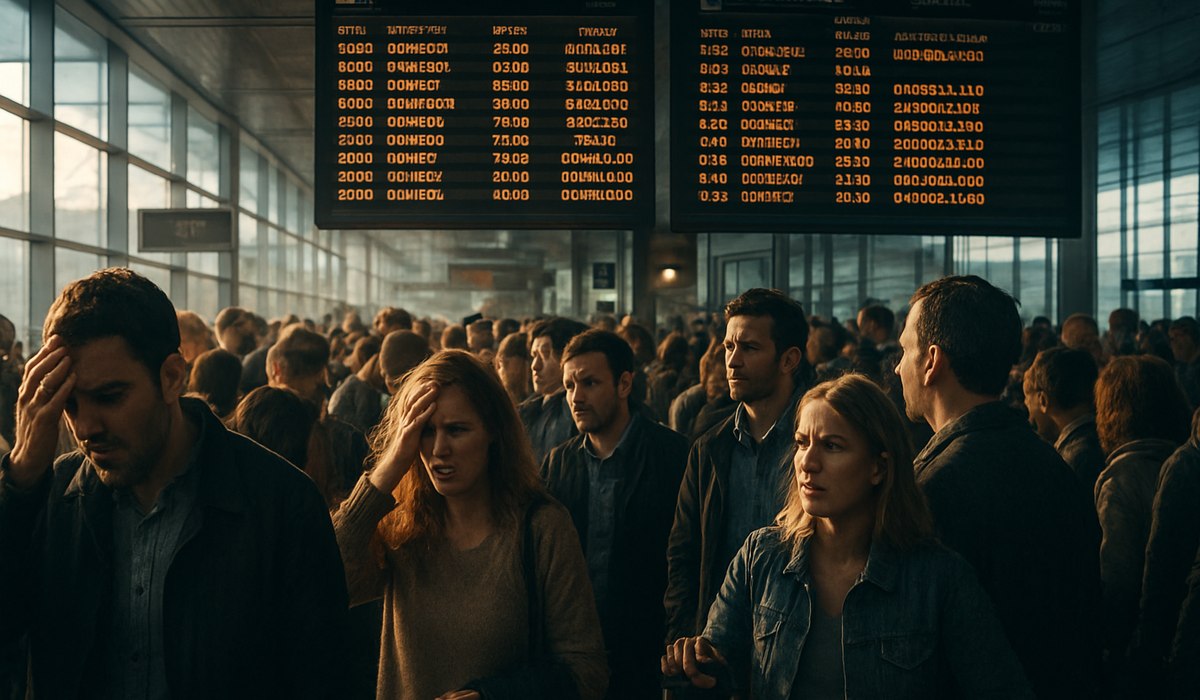
Image generated by AI
Cascading Disruptions Leave Hundreds Stranded Across European Hubs
Amsterdam Schiphol and German aviation centers buckled under operational strain this week as hundreds stranded passengers faced cascading delays and cancellations spanning April 9–10, 2026. The fresh wave of disruptions rippled across northern and central Europe, snarling connections between Mediterranean routes, Middle East services, and long-haul departures. Multiple tracking systems confirmed that Schiphol registered among the continent's highest disruption levels, with over a dozen flights canceled outright and dozens more operating substantially behind schedule. Simultaneously, impending labor action at major German carriers threatened to deepen the chaos at Frankfurt and Munich hubs, affecting thousands of travelers whose itineraries depended on seamless European transfers.
Amsterdam Schiphol: The Hardest-Hit Hub
Amsterdam Schiphol experienced one of its most disruptive operational days in early 2026 on April 9, with operational bottlenecks triggering a cluster of cancellations and extended delays. Hundreds of passengers remained stranded in terminal waiting areas after missing critical connections, particularly on services linking northern European cities with Mediterranean and Middle East gateways. Real-time flight tracking data visible on FlightAware showed Schiphol's disruption intensity exceeded most continental peers, reflecting a combination of scheduling conflicts, crew unavailability, and aircraft rotation constraints. The knock-on effect extended to feeder services supplying long-haul departures, forcing unexpected itinerary changes for passengers who never physically visited the Netherlands but relied on Dutch hub connections. Winter weather patterns and infrastructure constraints across northwestern Europe throughout early 2026 had already stretched Schiphol's resilience; each new delay spike compounded these pressures, leaving airlines with minimal spare capacity when schedules began to deteriorate.
Ripple Effects on Continental Connections
The disruptions at Schiphol created a domino effect across Europe's interconnected network, with secondary airports experiencing cascading delays as feeder flights arrived late or were canceled entirely. Passengers booked on connections through the Dutch hub faced extended layovers, overnight accommodation searches, and uncertainty about reaching final destinations. Airlines operating tight aircraft and crew rotations—already stretched by weather events and maintenance requirements—found themselves unable to recover from initial delays. Regional services from smaller European cities feeding into Schiphol suffered disproportionately, as carriers prioritized larger revenue-generating flights over regional services. This fragility in Europe's air travel architecture revealed how swiftly localized disruption can amplify across borders, affecting travelers with no direct connection to the primary hub experiencing problems.
Germany's Labor Action Compounds Chaos
April 10, 2026 brought a scheduled round of cabin crew labor action at a major German carrier, threatening substantial capacity reductions at Frankfurt and Munich—two of Europe's most critical transfer hubs. Industry advisories and airline statements indicated that thousands of passengers faced potential cancellations and delays in a single day, extending impacts far beyond Germany's borders. Feeder flights from smaller European cities risked cancellation or late arrival, leaving connecting passengers stranded. Long-haul sectors faced departures with empty seats or unexpected schedule changes as airlines managed constrained capacity. Recent European labor disputes highlighted industrial action as a recurring disruption driver, with strike days consistently reducing network capacity and complicating airline planning. Under European Union and United Kingdom air passenger rights regulations, strike-related disruptions on eligible flights can trigger compensation and care provisions, even when labor disputes originate outside travelers' control.
Weather and Operational Constraints Narrow Recovery Options
The fresh wave of delays unfolded against a backdrop of volatile weather patterns and supply-chain pressures already straining European aviation. Recent windstorms across northwestern Europe prompted carriers to cancel flights and divert aircraft away from severe weather zones, reducing available capacity. Simultaneously, rising fuel costs and supply constraints on jet fuel markets prompted several airlines to trim schedules strategically, leaving minimal operational flexibility. Analytics from aviation tracking services indicated that capacity reductions and cautious scheduling approaches left little slack to absorb sudden demand spikes or weather-related interruptions. For grounded passengers, these invisible pressures manifested as crowded customer service desks, constantly changing departure boards, and last-minute gate reassignments. Travel analysts warned that overlapping weather vulnerabilities, fuel cost pressures, and labor tensions had shifted European aviation into a structurally fragile operating environment where isolated disruptions cascade rapidly across the continent.
| Metric | Details |
|---|---|
| Primary Hub Affected | Amsterdam Schiphol Airport (AMS) |
| Secondary Hubs Impacted | Frankfurt (FRA), Munich (MUC) |
| Cancellations at Schiphol | 12+ flights on April 9, 2026 |
| Affected Routes | Northern Europe to Mediterranean and Middle East |
| Hundreds Stranded Fresh | Multiple terminals, overnight stays required |
| Scheduled Labor Action | April 10, 2026 at major German carrier |
| Projected Impact | Thousands of passengers across European network |
| Rights Framework | EU/UK air passenger compensation rules apply |
| Real-Time Tracking | FlightAware live data |
What This Means for Travelers
Passengers affected by cascading European delays in April 2026 should take immediate, documented action to protect their rights and well-being:
-
Document Everything: Retain all boarding passes, booking confirmations, and timestamped photographs of departure boards and delays. These records support compensation claims under EU/UK air passenger rights frameworks.
-
Request Written Confirmation: Ask airlines for written statements confirming cancellations, delays exceeding three hours, and the reason for disruption (strike, weather, technical). This documentation is essential for compensation claims.
-
Claim Eligible Compensation: Passengers on EU or UK flights meeting specific delay thresholds may qualify for compensation ranging from €250–€600, even if labor disputes trigger disruptions. Visit US DOT Air Consumer Protection for guidance.
-
Monitor Real-Time Data: Use FlightAware and airline apps to track schedule changes continuously. Early awareness of cancellations allows rebooking on alternative routes before seats fill.
-
Demand Care and Assistance: Airlines must provide meals, accommodation, and communication facilities for eligible delays. Record all expenses and obtain receipts for reimbursement claims.
-
Know Your Rights: Under EU Regulation 261/2004 and UK air passenger rights, strike-related disruptions on many flights still qualify for compensation and care, contrary to common misconceptions.
Frequently Asked Questions
Q: Am I eligible for compensation if my flight was canceled due to a strike?
A: Yes, under EU Regulation 261/2004 and UK air passenger rights, strike-related cancellations and long delays typically trigger compensation eligibility (€250–€600) and mandatory airline care, even though labor action is technically outside the airline's operational control. Verify your specific eligibility with your airline or a passenger rights organization.
Q: How can I track real-time flight disruptions across European hubs?
A: FlightAware provides live tracking of departures, arrivals, delays, and cancellations across European airports including Schiphol, Frankfurt, and Munich. Airline apps also show schedule changes, but FlightAware aggregates data across carriers for comprehensive situational awareness.
Q: What documentation do I need to claim compensation for April 2026 delays?
A: Retain your original booking confirmation, boarding pass, photographic evidence of delay boards showing actual arrival times, receipts for meals and accommodation, and any written statements from the airline confirming the disruption reason. These materials form the basis of compensation claims.
Q: Are smaller European airports less affected by hub disruptions?
A:
Disclaimer
This article is for informational and educational purposes only. It does not constitute legal, financial, or professional advice. While we strive to provide accurate and up-to-date information, travel policies, regulations, and conditions change rapidly. Always verify information with official sources before making travel decisions. Nomad Lawyer makes no representations about the accuracy, reliability, completeness, or suitability of the information provided. Readers should consult qualified professionals for advice specific to their circumstances. The views expressed in this article are those of the author and do not necessarily reflect the views of Nomad Lawyer.
Preeti Gunjan
Contributor & Community Manager
A passionate traveller and community builder. Preeti helps grow the Nomad Lawyer community, fostering engagement and bringing the reader experience to life.
Learn more about our team →