
Thousands of Passengers Stranded Across the United States as Atlanta, Chicago, Dallas, New York, San Francisco, Newark and More Record 3,052 Flight Delays and 109 Cancellations Impacting Delta, American, Southwest, SkyWest, United and Others
United States aviation networks face widespread disruption on April 19 with 3,052 delays and 109 cancellations across major hubs like Dallas, Chicago, and Atlanta.

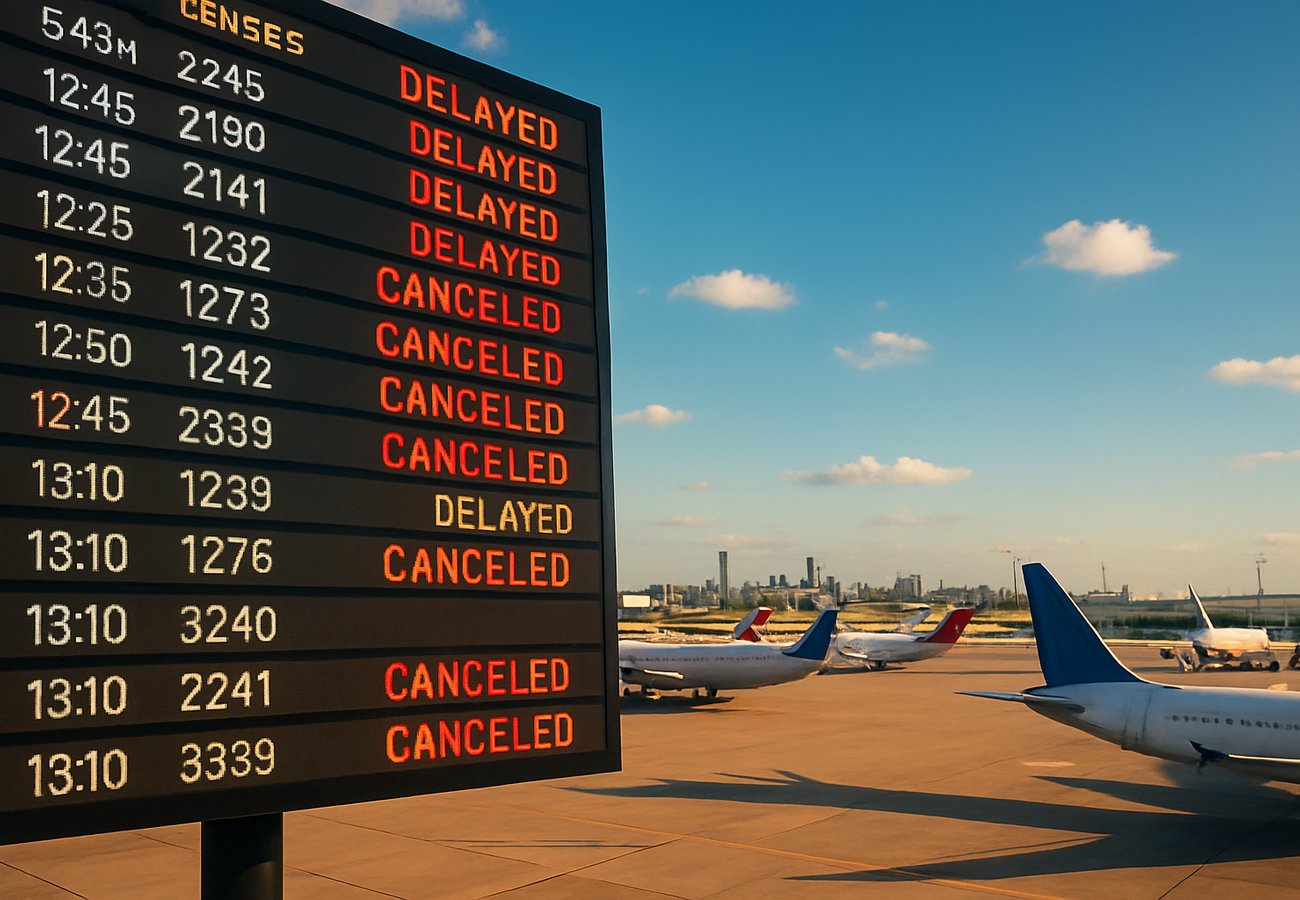
Image generated by AI
Published on April 19, 2026
United States aviation networks are facing widespread disruption today, leaving thousands of passengers stranded after a total of 3,052 flight delays and 109 cancellations were recorded nationwide. The operational strain has impacted major hubs including Dallas, Chicago, Atlanta, Detroit, New York, San Francisco, and Newark, affecting both domestic and connecting flights across the country.
Nationwide Flight Disruption Grips Major US Airports
The latest data highlights a significant imbalance between delays and cancellations, pointing toward heavy congestion and operational bottlenecks rather than a full-scale shutdown. Key airports across the United States are experiencing cascading delays, creating ripple effects throughout airline networks.
According to aggregated aviation data sources such as FlightAware, disruptions are concentrated at major transit hubs where high traffic volumes amplify even minor operational setbacks.
Key Data Highlights Across the United States
- Total delays: 3,052
- Total cancellations: 109
- Most delays recorded at: Dallas/Fort Worth International Airport (708 delays, 7 cancellations)
- Highest cancellations: Chicago O’Hare International Airport (45 cancellations)
- Top airline delays: American Airlines (658 delays)
- Highest airline cancellations: SkyWest Airlines (36 cancellations)
- Major cities impacted: Dallas, Chicago, Atlanta, Detroit, New York, San Francisco, Newark
Most Affected Airports Across the US
Dallas/Fort Worth International Airport
Dallas/Fort Worth recorded the highest number of delays nationwide at 708, along with 7 cancellations, making it the most impacted airport in terms of delayed operations.
Chicago O’Hare International Airport
Chicago O’Hare reported 320 delays and 45 cancellations, the highest cancellation count among all airports, signaling severe operational disruption.
Hartsfield-Jackson Atlanta International Airport
Atlanta experienced 136 delays and 9 cancellations, reflecting steady but notable strain at one of the busiest aviation hubs globally.
Detroit Metropolitan Wayne County Airport
Detroit recorded 80 delays and 11 cancellations, with cancellations relatively high compared to its delay volume.
John F. Kennedy International Airport
New York JFK handled 108 delays and 4 cancellations, indicating moderate disruption across key international and domestic routes.
San Francisco International Airport
San Francisco mirrored JFK’s performance with 108 delays and 4 cancellations, highlighting congestion across West Coast operations.
Newark Liberty International Airport
Newark reported 64 delays and 3 cancellations, contributing to broader congestion across the New York metropolitan airspace.
Airlines Most Affected by Delays and Cancellations
American Airlines
American Airlines recorded the highest delays at 658, along with 5 cancellations, reflecting widespread operational slowdown.
Southwest Airlines
Southwest Airlines reported 407 delays and 4 cancellations, making it one of the most impacted carriers in delay volume.
SkyWest Airlines
SkyWest Airlines experienced 294 delays and 36 cancellations, the highest cancellation count among all airlines, heavily impacting regional connectivity.
United Airlines
United Airlines saw 215 delays and 23 cancellations, placing it among the most affected major carriers.
Delta Air Lines
Delta Air Lines recorded 239 delays and 7 cancellations, indicating moderate but widespread disruption.
Republic Airways
Republic Airways logged 172 delays and 5 cancellations, contributing to regional network strain.
Envoy Air
Envoy Air reported 170 delays and 7 cancellations, reflecting pressure within feeder operations.
Endeavor Air
Endeavor Air recorded 133 delays and 4 cancellations, adding to disruption within regional aviation networks.
Other Airlines
Additional disruptions were recorded by:
- Alaska Airlines (54 delays, 1 cancellation)
- Frontier Airlines (37 delays, 1 cancellation)
Passenger Impact: Delays Disrupt Travel Plans Nationwide
For passengers, the impact has been immediate and widespread:
- Missed connections across major hubs
- Extended travel times due to cascading delays
- Limited availability of rebooking options
- Increased costs for accommodation and last-minute travel
- Long queues and customer service delays
Given the central role of hubs like Dallas and Chicago, even minor disruptions have triggered nationwide ripple effects.
What Impacted Passengers Should Do
Travelers navigating the disruption are advised to:
- Check flight status via airline apps or platforms like FlightAware
- Arrive early at airports to manage unexpected changes
- Contact airlines promptly for rebooking or compensation
- Keep essential items in carry-on baggage
- Monitor weather and air traffic updates
- Consider alternate routes or nearby airports
Industry Analysis: Why Delays Are Outpacing Cancellations
The significantly higher number of delays compared to cancellations indicates that the US aviation system is dealing with network congestion rather than systemic shutdowns.
Key contributing factors may include:
- High passenger traffic across major hubs
- Air traffic control congestion
- Aircraft rotation delays
- Crew scheduling constraints
- Localized weather disruptions
Airports like Chicago O’Hare and Dallas/Fort Worth demonstrate how localized issues can escalate into nationwide disruption.
Overview of USA Flight Disruptions
On April 19, the United States recorded 3,052 delays and 109 cancellations, with disruption heavily concentrated at major hubs such as Dallas/Fort Worth, Chicago O’Hare, Atlanta, and New York airports including JFK and Newark.
Major airlines including American Airlines, Southwest Airlines, United Airlines, Delta Air Lines, and SkyWest Airlines accounted for a significant portion of disruptions, while regional carriers such as Republic Airways and Envoy Air further contributed to operational strain.
Across cities like Dallas, Chicago, Atlanta, New York, San Francisco, and Newark, the aviation system experienced cascading delays, reinforcing how interconnected airline networks amplify disruption.
Author’s Observation
All data has been compiled from aviation tracking sources including FlightAware and airport reports, and remains subject to real-time updates. Airlines continuously adjust schedules to prioritize passenger safety and operational efficiency.
Passengers are strongly encouraged to:
- Stay updated with real-time alerts
- Review airline rebooking policies
- Maintain flexibility in travel plans
Key Takeaways
- 3,052 delays and 109 cancellations recorded across the US
- Dallas/Fort Worth leads in delays (708)
- Chicago O’Hare records highest cancellations (45)
- American Airlines leads in delays (658)
- SkyWest Airlines leads in cancellations (36)
- Major hubs across the US face widespread disruption
- Delays dominate, indicating congestion-driven disruption
Related Travel Guides
- us-aviation-chaos-flight-delays-cancellations-april-18-2026
- arajet-historic-growth-colombia-argentina-us-market-april-2026
- nba-europe-supersonic-flights-luxury-tourism-expansion-2026
Source: Data compiled from airports and FlightAware
Disclaimer
This article is for informational and educational purposes only. It does not constitute legal, financial, or professional advice. While we strive to provide accurate and up-to-date information, travel policies, regulations, and conditions change rapidly. Always verify information with official sources before making travel decisions. Nomad Lawyer makes no representations about the accuracy, reliability, completeness, or suitability of the information provided. Readers should consult qualified professionals for advice specific to their circumstances. The views expressed in this article are those of the author and do not necessarily reflect the views of Nomad Lawyer.
Raushan Kumar
Founder & Lead Developer
Full-stack developer with 11+ years of experience and a passionate traveller. Raushan built Nomad Lawyer from the ground up with a vision to create the best travel and law experience on the web.
Learn more about our team →