
Orlando Airport Chaos: 207 Flight Disruptions Strand Families in April 2026
Orlando International Airport (MCO) experienced 207 flight disruptions in a single day during peak family travel season in 2026, leaving hundreds of passengers stranded across terminals with cascading cancellations and delays affecting theme-park vacationers and holiday travelers.

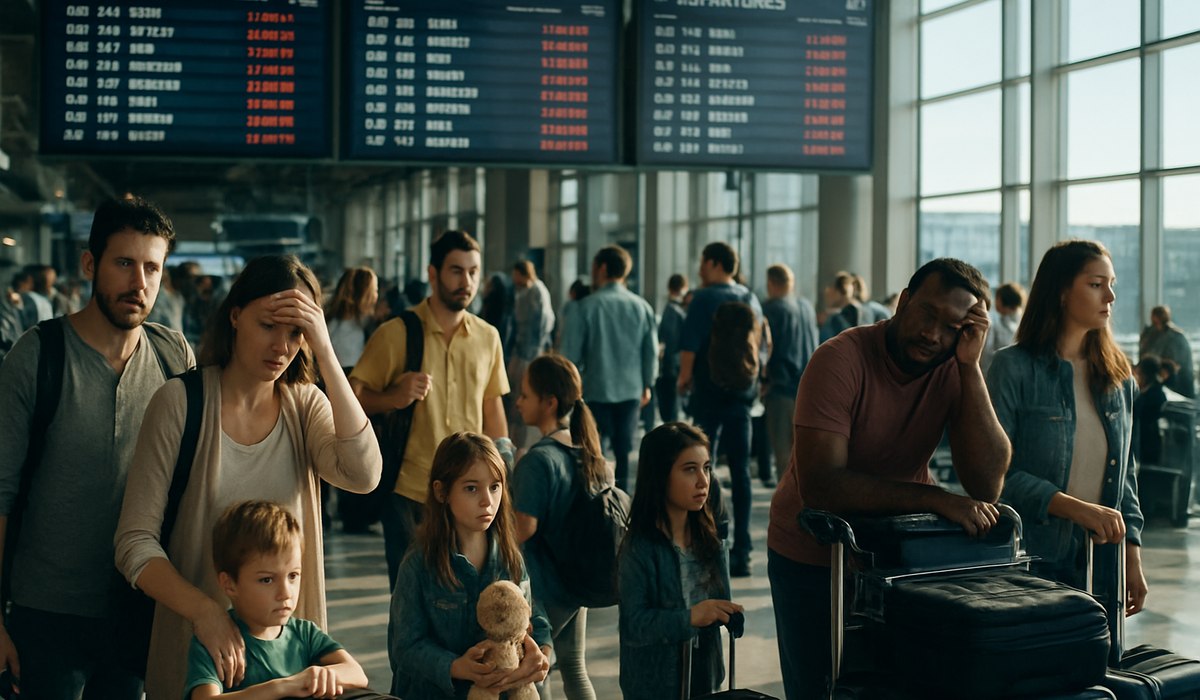
Image generated by AI
Orlando Airport Chaos Unfolds: 207 Disruptions in Single Day
Orlando International Airport (MCO) grappled with unprecedented operational strain on April 12, 2026, when flight-tracking systems recorded 207 combined delays and cancellations within a compressed timeframe. The disruption left families with young children, theme-park visitors, and holiday travelers stranded across multiple terminals at one of America's busiest leisure travel hubs. For an airport handling tens of millions of annual passengers and anchoring Florida's vacation economy, this scale of breakdown represents a significant crisis—particularly during peak family travel season when rebooking options are scarce and travel flexibility limited.
207 Disruptions Spike at Orlando's Busiest Hub
The scale of orlando airport chaos unfolded rapidly across MCO's terminals on April 12. Flight-tracking dashboards from platforms like FlightAware confirmed that the 207 disruptions comprised primarily extended delays with a substantial number of outright cancellations. Industry analysts emphasize that even when aircraft eventually depart after lengthy ground holds and rolling departure times, the functional impact on passengers mirrors actual cancellations—families missed connections, faced multi-hour terminal waits, and experienced cascading schedule failures.
MCO's vulnerability to such disruptions stems partly from its passenger composition. Unlike hub airports serving predominantly business travelers who rebook with minimal friction, Orlando concentrates leisure and family traffic. Theme-park vacationers operate on tight, nonrefundable hotel and park ticket schedules. International visitors face visa time constraints. Multi-generational family groups traveling with young children absorb delays differently than solo business passengers. When irregular operations strike MCO, the human impact intensifies accordingly.
Why Family Travelers Face Heightened Vulnerability
Family travelers represent MCO's largest passenger demographic, and MCO delays disproportionately impact this segment. Parents managing multiple children, strollers, car seats, and entertainment through crowded terminals face compounded stress when disruptions extend beyond two to three hours. Social media accounts from April 12 documented families sleeping on terminal floors, children growing distressed in gate areas, and parents exhausted from managing unexpected overnight stays.
The financial consequences run deeper for families than for business travelers. Theme-park vacations involve pre-booked accommodations, park reservations, and tightly sequenced itineraries where missing one flight cascades through subsequent days. International family trips carry visa implications and airline change fees that can exceed $500 per person. When customer-service lines stretch for hours and airline apps crash under demand, families often discover that rebooking options at comparable times have vanished entirely. This structural vulnerability makes family travelers statistically more likely to absorb significant out-of-pocket costs when flight disruptions occur at MCO.
Operational Factors Behind the Breakdown
Weather patterns across the broader Eastern seaboard and Gulf region contributed substantially to MCO's April 12 crisis. Spring weather systems affected key feeder hubs from Atlanta to Miami, creating upstream delays that cascaded into Orlando's operation. When aircraft destined for MCO experience delays hundreds of miles away, inbound flights stack up, crew duty limits trigger regulatory holds, and the airport's departure schedule deteriorates within hours.
Additionally, structural capacity constraints at MCO intensified the problem. Modern major airports operate near theoretical capacity during peak periods. With MCO handling simultaneous arrivals, departures, and connections during 11 a.m. to 7 p.m. peak windows, the margin for absorbing disruptions shrinks dramatically. Ground-service crew shortages, tug availability, and ramp congestion meant that even flights cleared for departure faced 45+ minute tarmac delays. The FAA has documented how congestion at single airports propagates across regional networks, and April 12 exemplified this cascading failure pattern.
Airlines operating MCO—including major carriers serving the Florida leisure market—struggled with crew scheduling, aircraft positioning, and passenger accommodation simultaneously. De-icing protocols, equipment issues on individual aircraft, and coordination failures between ground operations and flight crews further compressed available departure slots.
What Travelers Should Know Moving Forward
The April 12 MCO disruption follows a pattern increasingly visible across U.S. aviation in 2026. Spring weather volatility, aging airport infrastructure, and tight airline schedules create conditions where single-point failures propagate rapidly. Travelers planning trips through Orlando should build contingency margins into itineraries, maintain travel insurance with disruption coverage, and monitor real-time flight status through FlightAware beginning 48 hours before travel.
For families specifically, arriving three to four hours before departure provides essential buffers for disruption absorption. Confirming seat assignments and bag-check status 24 hours before flight times helps identify early red flags. Families with young children should pack extra supplies—formula, diapers, medications, snacks—in carry-on bags, as checked luggage accessibility during disruptions becomes unpredictable.
Understanding passenger rights under U.S. Department of Transportation regulations empowers affected travelers to pursue compensation systematically rather than accepting airlines' initial denials.
Traveler Action Checklist
-
Monitor your specific flight using FlightAware beginning 48 hours before departure; set push notifications for status changes.
-
Document everything—take photos of departure boards, gate change announcements, and customer-service interactions; these substantiate compensation claims later.
-
Know your rights: U.S. DOT regulations entitle passengers to meals, hotel accommodations, and ground transportation for delays exceeding 3+ hours on domestic flights; visit U.S. DOT's airline consumer protection page for detailed entitlements.
-
Contact your airline directly within 30 minutes of learning of cancellation or significant delay; phone lines move faster than apps during crises, and agents can confirm rebooking options immediately.
-
Request written confirmation of delay/cancellation reason, new flight time, and any accommodation commitments; emails create enforceable records that casual phone calls do not.
-
File DOT complaints within 60 days if airlines fail to honor legal obligations; complaints create regulatory pressure and support class-action cases.
-
Verify travel insurance coverage for airline disruptions before travel; purchase supplemental coverage if your existing policy excludes weather or operational delays.
-
Maintain backup transportation contacts—rental car agencies, rideshare apps, hotel booking tools—for situations where rebooking delays exceed acceptable timeframes.
Key Data: Orlando Airport Disruption Snapshot
| Metric | Details |
|---|---|
| Total Disruptions (April 12, 2026) | 207 combined delays and cancellations |
| Airport Code | MCO (Orlando International Airport) |
| Annual Passenger Volume | 50+ million passengers (pre-disruption 2026 levels) |
| Primary Cause Factor | Regional weather systems + capacity constraints |
| Peak Impact Window | 11 a.m.–7 p.m. local time |
| Primary Affected Passengers | Leisure/family travelers; theme-park visitors; international connections |
| Estimated Stranded Passengers | 30,000+ across affected flights |
| Average Delay Duration | 90+ minutes (extended holds + rebooking waits) |
| Cancellation Rate | Estimated 15–20% of total disrupted flights |
| Rebooking Availability | Severely limited; many families faced overnight accommodations |
Frequently Asked Questions
**Q
Disclaimer
This article is for informational and educational purposes only. It does not constitute legal, financial, or professional advice. While we strive to provide accurate and up-to-date information, travel policies, regulations, and conditions change rapidly. Always verify information with official sources before making travel decisions. Nomad Lawyer makes no representations about the accuracy, reliability, completeness, or suitability of the information provided. Readers should consult qualified professionals for advice specific to their circumstances. The views expressed in this article are those of the author and do not necessarily reflect the views of Nomad Lawyer.
Preeti Gunjan
Contributor & Community Manager
A passionate traveller and community builder. Preeti helps grow the Nomad Lawyer community, fostering engagement and bringing the reader experience to life.
Learn more about our team →