
US Airport Security Guide 2026: TSA 3D CT Scanners, Laptop Rules, and 22x14x9 Carry-On Restrictions

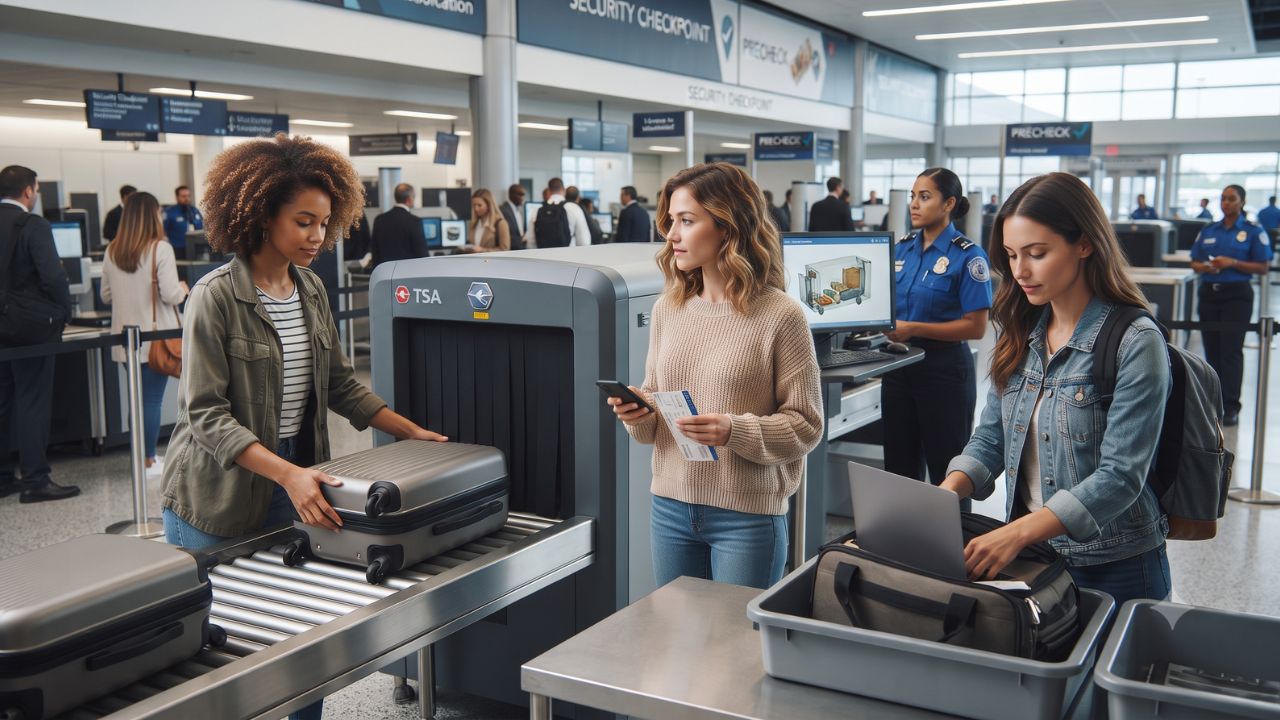
While passengers across 18 major United States aviation hubs can now leave laptops, tablets, and approved liquids sealed inside their carry-on bags thanks to cutting-edge 3D Computed Tomography (CT) scanners, overstuffed cabin suitcases are facing unexpected gate-check rejections because the new machines feature significantly narrower physical feed tunnels. The rollout spearheaded by the Transportation Security Administration brings hospital-grade volumetric imaging to standard checkpoint lanes, allowing transportation security officers to rotate 3D digital renderings of baggage contents 360 degrees without manual unzipping.
However, this contactless scanning revolution strictly penalizes travelers attempting to exceed standard 22-inch by 14-inch by 9-inch airline cabin dimensions. As major airports from Boston to Dallas/Fort Worth modernize security checkpoints, mastering equipment parameters and packing geometry has become essential for friction-free domestic and international travel.
The 3D Screening Network: 18 Key US Aviation Hubs
The multi-million-dollar technology rollout replaces outdated 2D X-ray systems with advanced CT algorithms across 18 high-volume international airports:
- East Coast and Mid-Atlantic Gateways: Boston Logan (BOS), New York John F. Kennedy (JFK), Newark Liberty (EWR), Washington Dulles (IAD), Philadelphia (PHL), and Raleigh-Durham (RDU).
- Southern and Sunbelt Megahubs: Atlanta Hartsfield-Jackson (ATL), Charlotte Douglas (CLT), Dallas/Fort Worth (DFW), and Miami (MIA).
- Midwest and Mountain Transit Corridors: Chicago O'Hare (ORD), Detroit Metropolitan (DTW), Indianapolis (IND), and Phoenix Sky Harbor (PHX).
- West Coast and Pacific Gateways: Los Angeles (LAX), San Francisco (SFO), Seattle-Tacoma (SEA), and Las Vegas Harry Reid (LAS).
How Computed Tomography Transforms the Checkpoint Experience
Traditional airport security screening has historically relied on static, top-down and side-profile 2D projections. Whenever complex items overlapped—such as a laptop resting on top of a power bank and cosmetic bottles—officers were forced to halt the conveyor belt and manually search the bag, creating lengthy queue bottlenecks.
Computed Tomography changes this dynamic entirely. By spinning an X-ray camera around the bag while shooting hundreds of simultaneous photographic slices, the machine generates a hyper-detailed 3D volumetric model. Security personnel can digitally peel away clothing layers, isolate individual electronic components, and measure the mass and density of suspicious liquids automatically against threat databases.
For travelers, the primary day-to-day benefit is convenience: laptops, e-readers, iPads, and small toiletries can stay packed inside your backpack or roller suitcase. The reduction in manual bag checks not only accelerates passenger throughput during holiday peaks, but also ensures a cleaner, virtually contactless security environment.
The 22x14x9 Dimension Trap: Why Oversized Bags Get Rejected
The biggest operational surprise for frequent flyers using the new CT lanes is machine tunnel clearance.
Older 2D X-ray machines had flexible rubberized curtains and wide rectangular portals that could accommodate bulging, over-expanded softside suitcases. The precision CT scanning chambers, by contrast, require tighter, rigid circular portals to maintain calibrated sensor distances.
If your carry-on bag exceeds standard airline limits—measuring approximately 22 inches by 14 inches by 9 inches (56 x 36 x 23 cm) including wheels and handles—or if external zippered pockets are stuffed to bulging point, the bag will jam against the scanner housing. When a bag fails to feed into the scanner tunnel, TSA officers must reject the piece, forcing the passenger to return to airline check-in counters to pay checked-bag fees and clear security again from scratch.
Visitor Insider Tips for Navigating TSA 3D Checkpoints
- Measure Rigid Exterior Dimensions: Ensure your roller luggage conforms strictly to the 22x14x9-inch envelope. Compress external zippered pockets, stow expansion zippers, and verify that oversized spinner wheels do not exceed the measurement frame.
- Electronics Placement Strategy: While you no longer need to remove laptops, keep all lithium-ion power banks and tangled charging cords neatly bundled in a dedicated tech pouch near the top of your bag. Clean internal organization speeds up automated algorithm clearance.
- Liquids and 3-1-1 Rule Status: Although CT technology can assess liquid density, federal 3-1-1 rules still apply at standard US checkpoints unless explicitly directed otherwise. Carry liquids, aerosols, and gels in containers of 3.4 ounces (100 ml) or less within a single clear quart-sized pouch.
- Enrolling in TSA PreCheck and CLEAR: If you travel frequently through major hubs like DFW, BOS, or ORD, pairing TSA PreCheck with biometric CLEAR lanes ensures expedited access, allowing you to keep light jackets, belts, and slip-on shoes on while moving through advanced CT checkpoints.
- Ground Transit Connections at Major Hubs: At Boston Logan, avoid taxi tunnel traffic by taking the MBTA Silver Line bus directly to South Station for free; at Dallas/Fort Worth, board the DART Orange Line train directly from Terminal A into downtown Dallas in under 50 minutes, compliant with transit advisories from Massport.
Cultural and Environmental Context
Modernizing security infrastructure across the United States aviation system represents a critical step in accommodating rising global travel volumes without expanding physical airport footprints.
By doubling the processing speed of checkpoint lanes through automation and algorithm-assisted detection, airport authorities reduce the physical energy consumption and queue sprawl associated with congested terminal lobbies. Furthermore, eliminating thousands of plastic security bins and reducing manual touchpoints minimizes wear and tear on passenger belongings while improving operational hygiene.
Guided by safety mandates from the Federal Aviation Administration, this technological transition balances national transportation defense with a smoother passenger journey, ensuring that regional and international tourism economies continue to expand efficiently.
FAQ: Navigating US Airport TSA 3D Scanners 2026
Do I have to take my laptop out of my bag at the new 3D scanners?
No. At checkpoints equipped with advanced CT scanners, laptops, tablets, and electronic devices can remain safely packed inside your carry-on luggage.
What is the maximum carry-on bag size allowed through the new CT scanners?
Bags must conform strictly to standard airline cabin limits of 22 inches by 14 inches by 9 inches (56 x 36 x 23 cm), including handles and wheels.
Which major US airports currently operate TSA 3D CT scanning equipment?
The technology is deployed across 18 major hubs, including ATL, BOS, ORD, DFW, LAX, JFK, EWR, IAD, PHX, DTW, MIA, SEA, SFO, PHL, RDU, CLT, IND, and LAS.
Does the 3-1-1 liquids rule still apply with 3D scanners?
Yes. Unless you are traveling through designated pilot lanes with specific exemptions, the standard 3.4-ounce (100 ml) limit per container remains mandatory.
As precision 3D imaging streamlines airport checkpoints from Boston to Los Angeles, smart travelers know that packing within the lines is the ultimate secret to swift boarding.
Related Travel Guides
Disclaimer
This article is for informational and educational purposes only. It does not constitute legal, financial, or professional advice. While we strive to provide accurate and up-to-date information, travel policies, regulations, and conditions change rapidly. Always verify information with official sources before making travel decisions. Nomad Lawyer makes no representations about the accuracy, reliability, completeness, or suitability of the information provided. Readers should consult qualified professionals for advice specific to their circumstances. The views expressed in this article are those of the author and do not necessarily reflect the views of Nomad Lawyer.
Raushan Kumar
Founder & Lead Developer
Full-stack developer with 11+ years of experience and a passionate traveller. Raushan built Nomad Lawyer from the ground up with a vision to create the best travel and law experience on the web.
Learn more about our team →