
Gangi, Sicily: Exploring the Madonie Mountain Medieval Village and Revitalized Hilltop Heritage in 2026

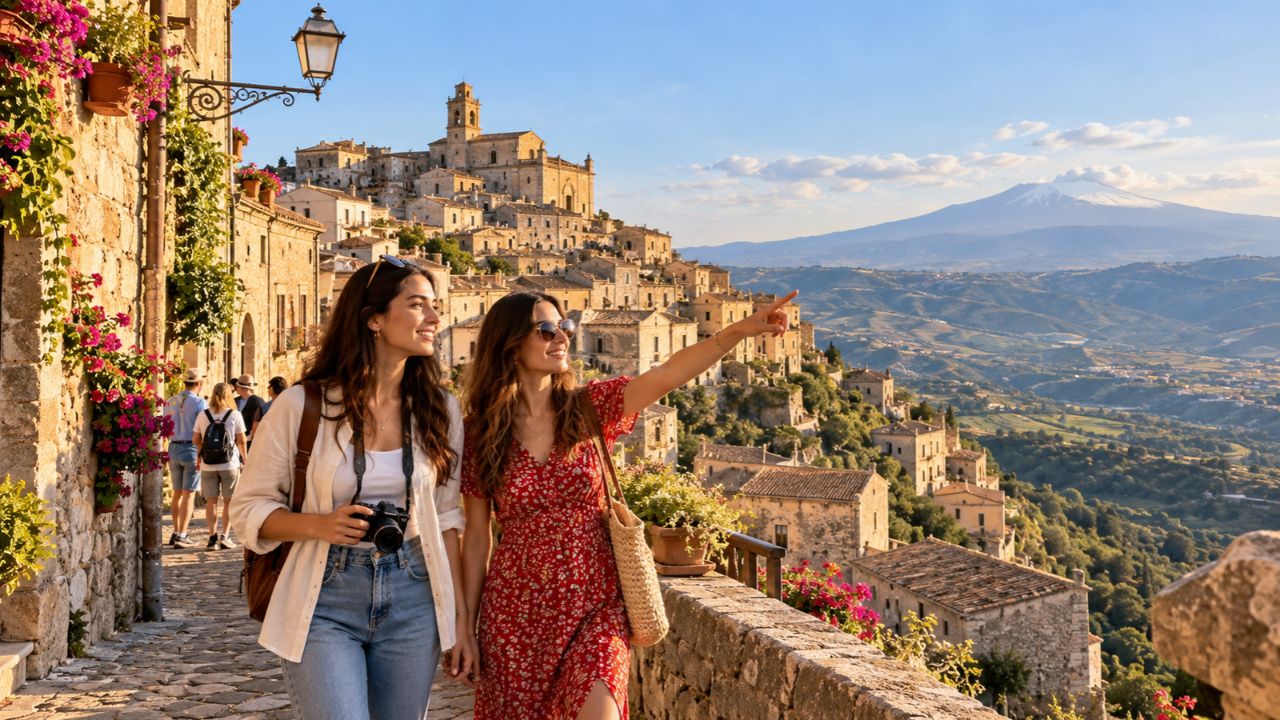
Perched 1,000 metres high on Mount Marone in the Madonie range, the medieval village of Gangi pioneered Italy's famous one-euro house revitalization initiative long before depopulation schemes became a global trend. Today, while coastal hotspots like Taormina and Cefalù grapple with overtourism, this ancient stone settlement offers visitors cool mountain breezes, unobstructed vistas stretching to the smoking cone of Mount Etna, and centuries of preserved aristocratic heritage.
Gangi represents the authentic interior soul of Sicily. Unlike seaside resort towns centered around summer beach clubs, Gangi’s identity is sculpted from golden limestone, steep staircases, and silent medieval piazzas. Founded atop pre-Hellenic settlements and shaped through Norman and feudal Aragonese eras, the town preserves a traditional rhythm where morning espresso conversations echo against Romanesque stone arches and mountain shepherds produce artisan cheeses using ancestral methods.
The Historic Village Renaissance in the High Madonie
The transformation of Gangi from a fading rural settlement into an internationally celebrated center for cultural tourism began when municipal leaders launched the symbolic one-euro property initiative. Faced with post-war emigration and aging populations, the municipality facilitated the transfer of dilapidated historic stone dwellings to international buyers committed to sustainable restoration.
This pioneering housing program revitalized the village core without compromising its architectural integrity. Restored stone palazzi now house independent artist studios, boutique guesthouses, and culinary workshops. According to the Italian National Tourist Board, rural revitalization programs like Gangi's provide a viable blueprint for balanced regional tourism across Southern Italy, drawing conscientious travelers into inland agricultural territories.
The village has achieved national recognition as one of Italy's most beautiful historic settlements (I Borghi più belli d'Italia). Travelers who make the journey inland encounter an intact feudal town plan dominated by the 14th-century Ventimiglia Castle, ancient watchtowers, and multi-tiered stone houses cascading dramatically down the mountain slope.
What Makes Gangi and its Underground Heritage Distinct
Gangi’s architectural and cultural layers extend both above and beneath its cobblestone alleys:
At the highest crest of the town sits the monumental Chiesa Madre San Nicolò, dating to the 14th century and renovated with elaborate Baroque ornamentation. The church houses masterpieces by prominent Sicilian painters, including Giuseppe Salerno (known as Lo Zoppo di Gangi), whose monumental canvas The Last Judgment dominates the sanctuary.
Beneath the church floor lies one of Sicily’s most extraordinary cultural oddities: the Cripta dei Preti Imbalsamati (Crypt of the Mummified Priests), locally referred to as a fossa di parrini. Between 1728 and 1872, deceased priests were naturally mummified using specialized drying chambers before being displayed standing in wall niches, dressed in full liturgical vestments with painted wax masks. This sacred ritual provides a fascinating historical window into regional Catholic funeral customs and feudal Sicilian spiritual traditions.
Outside the church walls, visitors can explore the lavishly frescoed salons of the 18th-century Palazzo Bongiorno, which served as the intellectual headquarters of the prestigious Accademia degli Industriosi. Nearby, the 14th-century Torre dei Ventimiglia stands as a reminder of the feudal dynasty that governed the Madonie highlands.
Surrounding the village, the high-altitude terrain is preserved within the Madonie Geopark, an ecological reserve recognized by the UNESCO World Heritage Centre for its rare alpine flora, endemic Nebrodi fir trees, and rich geological formations. Promoted by Visit Sicily, the surrounding valleys are dotted with organic vineyards, including high-altitude estates like Tenuta San Giaime, where cool mountain microclimates yield distinctive Sicilian Pinot Nero and Nerello Mascalese vintages.
Visitor Insider Tips
Experiencing the historic lanes and alpine air of Gangi requires practical local insights:
- Navigating the Slopes: Gangi is built on a steep gradient with narrow stone stairways (viuzze) that are impassable for vehicles. Park your rental car in the lower public parking lots near Piazza San Paolo and explore the upper historic quarters entirely on foot in sturdy, non-slip footwear.
- Timing Your Arrival: Visit in late afternoon when the golden hour illuminates the sandstone facades. From the panoramic belvedere at Piazza San Michele, watch the sunset light up the Madonie peaks with Mount Etna visible on clear horizons.
- Savor High-Mountain Flavors: Taste regional Madonie delicacies, including Provola delle Madonie (a traditional stretched-curd cow milk cheese), wild fennel sausages, and taralli di Gangi (crisp, anise-flavored biscuits glazed with sugar).
- Crypt Visiting Hours: The crypt beneath Chiesa Madre is accessible only during designated parish hours or through guided visits arranged via the local tourist information point in Piazza del Popolo.
- Transport Logistics: Public buses from Palermo or Catania to Gangi run infrequently. Renting a car from Palermo Airport (a two-hour scenic drive along the A19 highway and SS120 mountain route) is recommended for exploring surrounding Madonie towns like Geraci Siculo and Petralia Soprana.
Cultural and Environmental Context
The high-mountain communities of the Madonie face complex environmental challenges, including seasonal water scarcity, forest fire risks, and land abandonment. Sustainable agritourism and heritage preservation play an active role in maintaining traditional rural economies.
By supporting family-owned trattorias, certified local guides, and smallholder organic farms, visitors directly fund the preservation of stone terracing and agricultural heritage that prevents soil erosion across steep mountain slopes. Educational initiatives within the Madonie Geopark work to sensitize travelers to delicate alpine habitats, ensuring that tourism growth enriches the local community while protecting centuries of ancestral Sicilian way of life.
FAQ: Visiting Gangi and the Madonie Mountains 2026
What is the best time of year to visit Gangi?
Spring (April to June) and autumn (September to October) offer pleasant daytime temperatures between 18°C and 24°C, ideal for walking village stairways and exploring mountain trails.
How far is Gangi from major Sicilian cities?
Gangi is located approximately 115 kilometers southeast of Palermo (about a 2-hour drive) and 130 kilometers northwest of Catania (about 2 hours and 15 minutes by car).
Can tourists visit the interior of the restored historic homes?
Several restored stone residences operate as boutique guesthouses, while local cultural associations occasionally host open-house architectural tours during seasonal heritage festivals.
Is Gangi suitable for travelers with reduced mobility?
Due to steep gradients, cobblestones, and extensive pedestrian stairways, navigating the historic upper quarters can be challenging for visitors with limited mobility.
High in the silent crests of the Madonie, Gangi stands as a testament that Sicily's greatest treasures are carved in stone and preserved through community devotion.
Related Travel Guides
Disclaimer
This article is for informational and educational purposes only. It does not constitute legal, financial, or professional advice. While we strive to provide accurate and up-to-date information, travel policies, regulations, and conditions change rapidly. Always verify information with official sources before making travel decisions. Nomad Lawyer makes no representations about the accuracy, reliability, completeness, or suitability of the information provided. Readers should consult qualified professionals for advice specific to their circumstances. The views expressed in this article are those of the author and do not necessarily reflect the views of Nomad Lawyer.
Kunal K Choudhary
Co-Founder & Contributor
A passionate traveller and tech enthusiast. Kunal contributes to the vision and growth of Nomad Lawyer, bringing fresh perspectives and driving the community forward.
Learn more about our team →