
United Airlines Automated Rebooking Error Diverts NYC Passenger 400 Miles to Buffalo in 2026
A systemic failure in United Airlines' automated rebooking software left a traveler stranded after a flight diversion to Chicago resulted in a ticket to Buffalo, New York, instead of New York City.

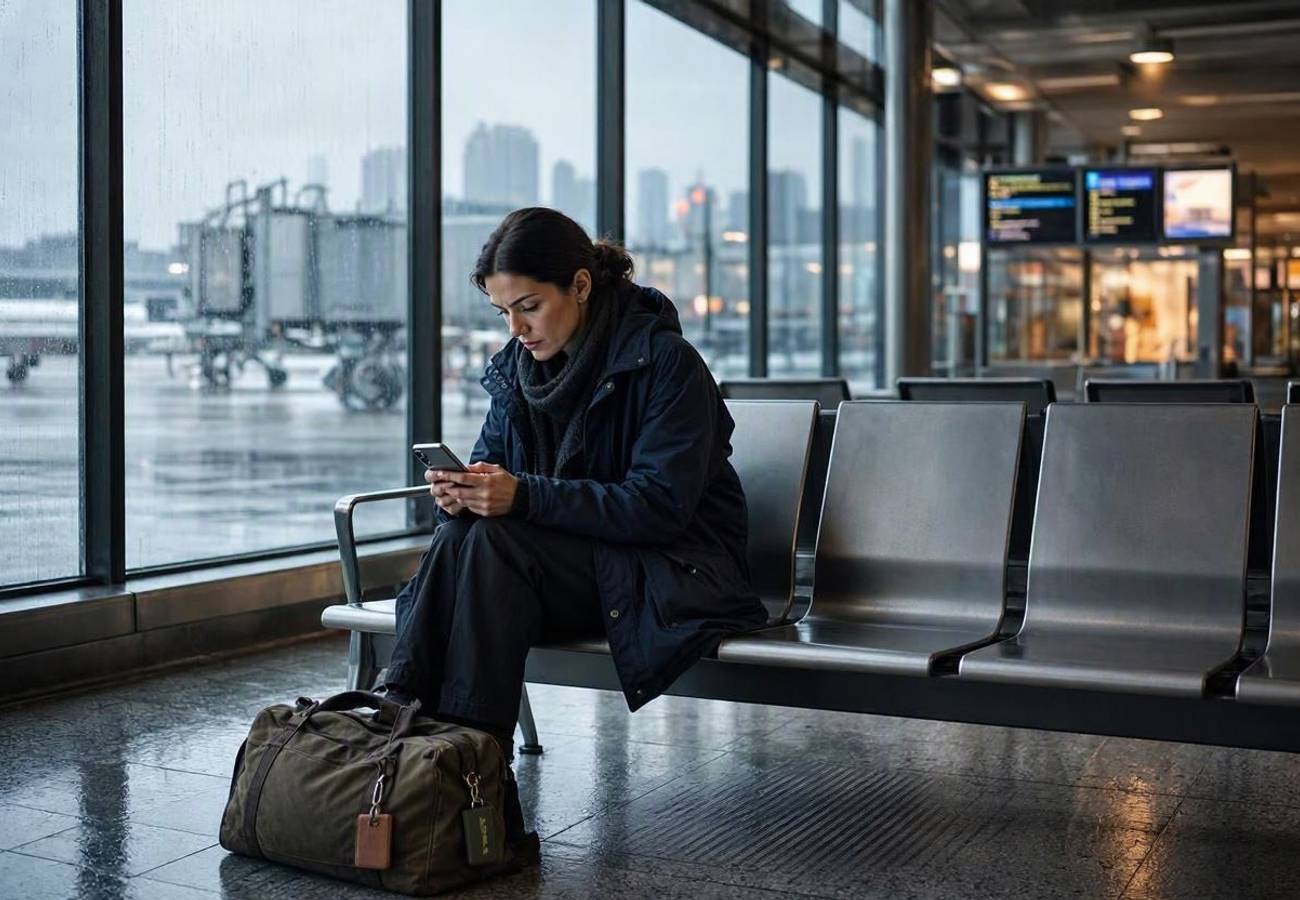
Image generated by AI
1,800 delays in a single day at Chicago O'Hare International Airport (ORD) on September 15, 2026, highlight the fragility of the U.S. aviation hub system during severe weather events. While the Federal Aviation Administration (FAA) frequently issues ground stops to manage airspace safety during thunderstorms, the operational failure becomes a legal and logistical nightmare when airline automation fails to provide viable alternatives. A recent incident involving a United Airlines passenger traveling from Los Angeles to New York City serves as a case study in the dangers of relying on algorithmic rebooking without human oversight.
The Chicago Diversion and Algorithmic Failure
On September 19, 2026, a passenger on a United Airlines flight from Los Angeles to New York City experienced a diversion to Chicago O'Hare. This diversion occurred amidst widespread weather disruptions that had already paralyzed East Coast gateways, including John F. Kennedy International Airport (JFK), LaGuardia Airport (LGA), and Newark Liberty International Airport (EWR).
As the passenger attempted to secure a new flight to New York City via the airline's digital interface, the automated system triggered a rebooking for the following afternoon. However, the destination was not New York City, but Buffalo Niagara International Airport. This destination is situated in western New York, approximately 400 miles away from the passenger's intended destination in southeastern New York.
The failure was compounded by a technical glitch in the user interface. The automated system notified the traveler that the Buffalo booking would be accepted by default unless they clicked a specific link to request a different option or a full refund. That link was broken, effectively trapping the passenger in a booking for a city they did not intend to visit.
Operational Breakdown at ORD
The incident occurred against a backdrop of extreme volatility at Chicago O'Hare, a primary hub for both United Airlines and American Airlines. The airport's struggle to maintain operations during the September 2026 weather window created a scarcity of available seats, which often forces automated systems to suggest "nearby" airports—even if those airports are hundreds of miles away.
| Metric | Data Point | Context |
|---|---|---|
| Total Delays (Sept 15) | 1,800 | Single-day FAA stoppages at ORD |
| Distance Error | 400 Miles | Distance between Buffalo and NYC |
| Compensation Offered | 7,500 Miles | United's final offer for the inconvenience |
| Rebooking Timeline | 24+ Hours | Flight offered for the following afternoon |
The passenger's attempt to resolve the issue through official channels resulted in a "customer service loop." After spending one hour on hold and 45 minutes speaking with a phone agent, the traveler was told to visit a physical desk at the airport. Upon arriving at the airport, the gate agent informed the passenger that only phone agents possessed the authority to modify the flight. Furthermore, the agent claimed the passenger was no longer visible in the system, as a travel agent had already intervened to cancel the Buffalo flight and book a separate ticket via American Airlines.
Expert Analysis: The "Nearby Airport" Logic Gap
For travelers booking high-traffic routes, the direct consequence of this incident is the realization that "automated rebooking" is often a blunt instrument. In aviation software, "New York" is often treated as a regional cluster rather than a specific city. Buffalo, while in the same state, is logically distant from the NYC metropolitan area. When the system sees "New York" as a state-level destination, it may suggest any available seat within that state boundary to clear the passenger from the hub's manifest.
The pricing pressure this creates is significant. Because the broken link prevented a refund or a proper re-route, the passenger was forced to purchase a full-fare ticket on a competing carrier, American Airlines, and pay for an unplanned hotel stay in Chicago.
The United Airlines automated rebooking error that diverted a NYC passenger 400 miles to Buffalo in 2026 has raised concerns about the reliability of airline systems. According to the United Airlines official website, the airline is investigating the incident and working to prevent similar errors in the future. Passengers can visit the website to check their flight status and learn more about the airline's rebooking policies.
From a regulatory standpoint, United Airlines' refusal to provide a cash refund—citing "weather-related disruption"—is a standard industry defense. Under most current contracts of carriage, weather is considered an "act of God" or a force majeure event, exempting airlines from providing hotel vouchers or cash reimbursements. However, this defense does not cover the failure of the airline's own digital infrastructure (the broken link), which is a service failure, not a weather failure.
Key Takeaways
- Algorithm Risks: Automated rebooking systems may suggest airports in the same state but hundreds of miles from the destination; always verify the airport code (e.g., BUF vs. JFK/LGA/EWR).
- The Service Loop: During major hub disruptions, there is often a disconnect between phone support and airport desk agents regarding who has the "power" to change tickets.
- Documentation is Vital: The broken link in the rebooking process serves as evidence of a service failure that transcends weather-related delays.
- Third-Party Intervention: Utilizing a professional travel agent proved to be the only effective way to extract the passenger from the failed United system and secure alternative transport.
- Compensation Limits: 7,500 miles is a nominal gesture that does not cover the actual out-of-pocket costs of new tickets and lodging.
FAQ: United Airlines Diversions 2026
What should I do if an automated system rebooks me to the wrong city? Immediately take a screenshot of the offer and any broken links. Do not accept the booking if possible. If the system forces an acceptance, contact the airline via social media or a travel agent immediately to create a paper trail of your objection.
Is the airline required to pay for a hotel during weather diversions? Generally, no. Most airlines categorize weather as an uncontrollable event. However, if the diversion is caused by a mechanical failure or crew timing out, the airline is typically responsible for lodging and meals.
Can I get a refund if my flight is diverted and the rebooking is impractical? Yes. If the alternative offered is not reasonable (e.g., 400 miles away), you are generally entitled to a refund of the unused portion of your ticket, regardless of the reason for the diversion.
How do I avoid the "customer service loop" at O'Hare? During mass disruptions, avoid the airport desks for complex re-bookings. Use the airline's mobile app or a dedicated travel agent who has access to Global Distribution Systems (GDS) to find seats that the consumer-facing app might hide.
When the algorithm decides your destination, the map becomes a suggestion rather than a guarantee.
Related Travel Guides
Disclaimer
This article is for informational and educational purposes only. It does not constitute legal, financial, or professional advice. While we strive to provide accurate and up-to-date information, travel policies, regulations, and conditions change rapidly. Always verify information with official sources before making travel decisions. Nomad Lawyer makes no representations about the accuracy, reliability, completeness, or suitability of the information provided. Readers should consult qualified professionals for advice specific to their circumstances. The views expressed in this article are those of the author and do not necessarily reflect the views of Nomad Lawyer.
Kunal K Choudhary
Co-Founder & Contributor
A passionate traveller and tech enthusiast. Kunal contributes to the vision and growth of Nomad Lawyer, bringing fresh perspectives and driving the community forward.
Learn more about our team →