
5 Major US Airlines Issue Weather Waivers as Nor'easter Disrupts Northeast Hubs in September 2026
Five major US carriers have activated travel waivers for the Northeast corridor as a powerful nor'easter threatens flights between Washington and Boston from September 25-27, 2026.

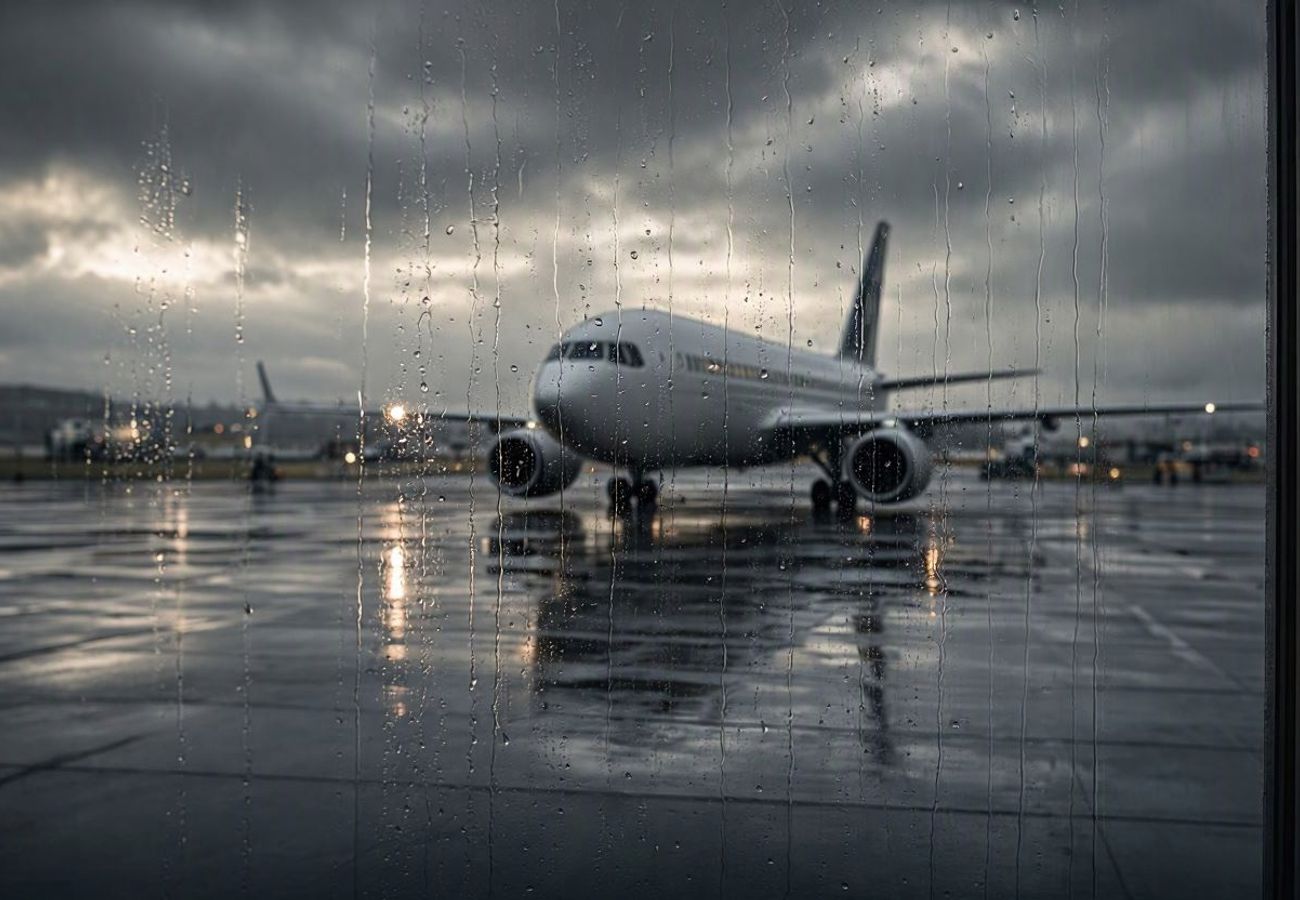
Image generated by AI
Flight delays across the Northeast corridor have surged by several hundred instances in a single 24-hour window, signaling a rapid operational decline as a powerful nor'easter moves up the Eastern Seaboard. This spike in instability is not an isolated event but part of a recurring pattern where compact, high-intensity Atlantic storms trigger cascading failures across the I-95 aviation corridor, specifically targeting the high-density hubs of New York and Boston.
The Storm in Numbers: Operational Risks (Sept 25-27)
The current weather system is tracking through the Mid Atlantic and New England between Friday, September 25, and Sunday, September 27, 2026. Data from aviation forecasters indicates that the primary risks are concentrated around the New York City metropolitan area and Boston Logan International Airport. The combination of low cloud ceilings, severe crosswinds, and heavy precipitation is creating a high probability of ground stops and flow restrictions.
Operational data from Saturday morning reveals that hundreds of flights are already experiencing delays. The "knock-on" effect is particularly evident at Newark Liberty International, New York LaGuardia, John F. Kennedy, Philadelphia, and Boston. This pattern typically accelerates as the day progresses; early inbound delays lead to crew members exceeding their legal duty time limits, which in turn forces the cancellation of later departures. For a detailed look at how these disruptions impact global aviation metrics, the International Air Transport Association (IATA) provides comprehensive data on operational resilience and weather-related volatility.
Comparative Context: The Northeast Corridor Vulnerability
The Northeast US aviation market is uniquely susceptible to these "compact" storms because of the extreme density of its hub-and-spoke system. When a single hub like Newark or Boston experiences a ground stop, the ripple effect is felt nationwide. Historically, these events create a "bottleneck" effect where the recovery time for the network is often 1.5x the duration of the actual weather event.
The following table breaks down the current waiver responses from the five major carriers affected by the September 2026 nor'easter:
| Airline | Primary Focus Area | Rebooking Window | Key Policy Detail |
|---|---|---|---|
| JetBlue | Northeast Systemwide | Through Sept 30, 2026 | Fare differences waived for same cabin/city pair |
| American | Northeast Gateways | Defined Window | One-time change; origin/destination must remain same |
| United | Mid Atlantic/New England | Sept 25 - Sept 27 | Change fees waived; subject to seat availability |
| Delta | Boston-Centric | Storm Period | Refunds authorized for unused nonrefundable tickets if canceled |
| Domestic Carrier X | Select City Pairs | Weekend Window | Limited patchwork of options for specific routes |
Compared to tropical systems, which often allow for longer-term planning, nor'easters are characterized by rapid onset and high volatility. This requires airlines to shift from "strategic" planning to "tactical" waivers, often issued within 48 to 72 hours of the event.
What This Means for Travelers
For those with itineraries touching the Northeast this weekend, the data suggests that waiting for a flight to be officially canceled before acting is a high-risk strategy. When waivers are activated, seat availability on alternative flights diminishes exponentially every hour.
Actionable Booking Advice:
- Use Digital Channels: Avoid airport service counters. Data shows that mobile app and website rebooking is significantly faster during peak disruption windows (Friday evenings and Sunday returns).
- Verify "Basic Economy" Status: While these waivers typically extend to restricted fares, ancillary services like pre-paid seat assignments or baggage fees may not transfer automatically. Check the specific terms of your carrier's Investor Relations or Customer Policy page to confirm.
- Buffer Connection Times: If you are connecting through Newark or Boston to a destination outside the storm zone, add a minimum of 4 hours to your layover. A missed connection at a disrupted hub during a nor'easter can lead to multi-day stranding.
- Know Your Refund Rights: Per the U.S. Department of Transportation (DOT), you are entitled to a refund if the airline cancels your flight or makes a significant schedule change and you choose not to travel.
Forward Projection: The 2026 Weather Volatility Trend
The frequency of these high-impact, short-duration coastal events is shifting the way airlines manage their "exception policies." We are seeing a transition toward "automated flexibility," where waivers are triggered by specific meteorological thresholds rather than manual corporate decisions.
As we move into the final quarter of 2026, travelers should expect more "patchwork" waivers—where different airlines apply different rules to the same storm. This increases the complexity for passengers booking multi-carrier itineraries. The industry is moving toward a model where "weather flexibility" is a standard part of the ticket contract rather than a discretionary gesture by the airline.
FAQ: Northeast Weather Waivers 2026
Will my flight be canceled if a waiver is issued? Not necessarily. A waiver is a proactive tool to allow passengers to change flights before a cancellation occurs. It signals a high risk of disruption, but many flights still operate, albeit with delays.
Can I get a full refund because of the storm? Generally, no. Waivers allow for rebooking without fees. Full refunds are typically only mandated if the airline cancels the flight or if the delay is deemed "significant" by DOT standards.
Does the waiver apply to Basic Economy tickets? Yes, in most cases, these weather-specific waivers override the standard restrictions of Basic Economy, allowing one-time changes that would otherwise be prohibited.
Which airports are most affected by this nor'easter? The highest risk is concentrated at Boston Logan (BOS), JFK, LaGuardia (LGA), Newark Liberty (EWR), Philadelphia (PHL), and Washington Reagan (DCA).
Operational agility is the only hedge against atmospheric volatility.
Related Travel Guides
Disclaimer
This article is for informational and educational purposes only. It does not constitute legal, financial, or professional advice. While we strive to provide accurate and up-to-date information, travel policies, regulations, and conditions change rapidly. Always verify information with official sources before making travel decisions. Nomad Lawyer makes no representations about the accuracy, reliability, completeness, or suitability of the information provided. Readers should consult qualified professionals for advice specific to their circumstances. The views expressed in this article are those of the author and do not necessarily reflect the views of Nomad Lawyer.
Raushan Kumar
Founder & Lead Developer
Full-stack developer with 11+ years of experience and a passionate traveller. Raushan built Nomad Lawyer from the ground up with a vision to create the best travel and law experience on the web.
Learn more about our team →