
Flights Cancelled Over Asia as Security and Airspace Restrictions Disrupt Hubs
A massive wave of flight delays and cancellations sweeps across Asia, with 207 cancellations and 3,540 delays affecting major hubs.

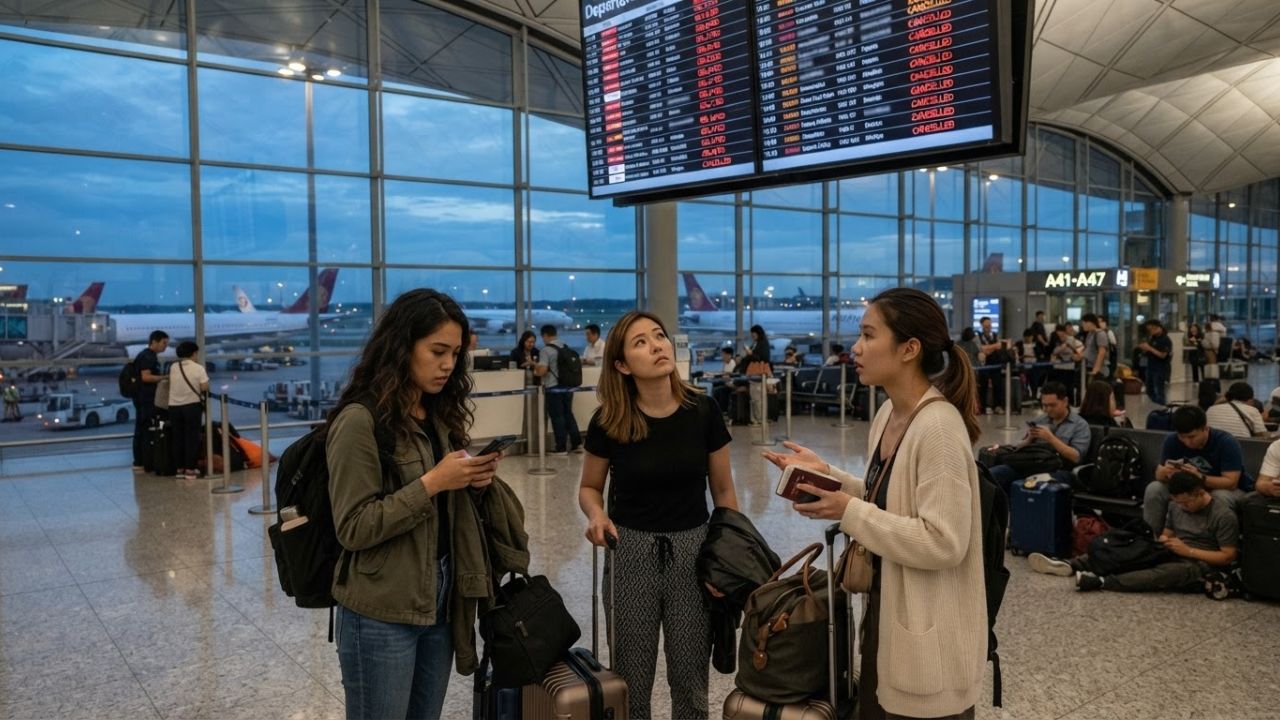
Image generated by AI
A massive wave of air travel disruptions has swept across Asia, resulting in 207 flight cancellations and 3,540 delays en route on August 4, 2026. Security concerns in the Middle East and military airspace restrictions in China are placing heavy operational pressure on major hubs from Shanghai to Riyadh.
Commercial air corridors across the continent are facing unprecedented coordination challenges. According to flight logs compiled by FlightAware, a combination of geopolitical tensions, structural airspace limitations, and severe turbulence events has created cascading delays for domestic and international travelers. Passenger hubs from the Gulf to East Asia are reporting congested check-in queues, forcing airline operations teams to adjust schedules rapidly.
Escalating Security Pressures and Flight Interruptions in the Gulf
Saudi Arabia remains one of the most affected regions, with widespread disruptions across regional terminals. King Khalid International Airport (Riyadh) recorded 114 delays and 22 cancellations, with flag carrier Saudia accounting for over 30 percent of all cancellations. This comes amid heightened regional tensions following a claimed Houthi strike targeting Najran Airport, situated near the Yemen border, in response to military drone activity over Saada and Hajjah governorates.
In the United Arab Emirates, Dubai International Airport reported 187 delays and 4 cancellations. Further east, Singapore Changi Airport recorded 190 delays and 1 cancellation, while Bangkok's Suvarnabhumi Airport saw 216 delays and 1 cancellation. In Indonesia, Soekarno-Hatta International Airport (Jakarta) registered 150 delays and 15 cancellations, highlighting the broad geographic reach of the disruption.
Space Restrictions and Civilian Congestion in China's Air Corridors
The most severe concentration of delays occurred in East Asia. Shanghai Pudong International Airport (PVG) reported the continent's highest disruption level, with 571 delays and 18 cancellations. This was driven primarily by China Eastern, Juneyao Airlines, Shanghai Airlines, Spring Airlines, and Air China. Air traffic management is under constant pressure because the military controls a significant proportion of China's airspace, forcing commercial airlines to operate in narrow civilian corridors.
When traffic surges, these restricted corridors become congested. If route changes are required due to bad weather or scheduling delays, civilian flights face lengthy ground holds. In India, Indira Gandhi International Airport (DEL) in Delhi reported 276 delays and 9 cancellations, primarily affecting IndiGo, Air India, SpiceJet, and Air India Express.
Navigation and Protective Measures for Disrupted Asian Commutes
For passengers traveling through these affected hubs, destination specialists recommend the following defensive planning strategies:
- Track Flight Status Remotely: Check the latest flight updates via your airline's app before leaving for terminals like Pudong, Delhi, Dubai, or Riyadh.
- Allow Buffer Connection Windows: Avoid booking tight layovers through major hubs like Singapore, Bangkok, or Beijing. Secure at least a three-hour buffer to accommodate cascading delays.
- Keep Essentials Close: Always pack medications, electronic chargers, vital travel documents, and a change of clothing in your carry-on luggage.
- Enable Notifications: Keep mobile notifications active for automated schedule updates to receive real-time rebooking options.
Flight Turbulence Incidents and Operational Safety Challenges
The travel disruption unfolds alongside significant operational safety concerns. On August 4, Air India Flight AI379 from Phuket to Delhi encountered severe turbulence during its cruise phase. The aircraft, carrying 137 passengers (including 3 infants) and 8 crew members, experienced a sudden drop in altitude. The safe landing in Delhi revealed that 17 people—including 4 crew members—sustained injuries. This incident highlights the additional weather and route hazards crews face while navigating congested corridors during peak travel seasons.
Related Travel Guides
Disclaimer
This article is for informational and educational purposes only. It does not constitute legal, financial, or professional advice. While we strive to provide accurate and up-to-date information, travel policies, regulations, and conditions change rapidly. Always verify information with official sources before making travel decisions. Nomad Lawyer makes no representations about the accuracy, reliability, completeness, or suitability of the information provided. Readers should consult qualified professionals for advice specific to their circumstances. The views expressed in this article are those of the author and do not necessarily reflect the views of Nomad Lawyer.
Kunal K Choudhary
Co-Founder & Contributor
A passionate traveller and tech enthusiast. Kunal contributes to the vision and growth of Nomad Lawyer, bringing fresh perspectives and driving the community forward.
Learn more about our team →