
Ukraine Flags Russian Airspace Safety Risks to ICAO Following Drone Disruptions at Moscow Airports
Ukraine submits a formal flight safety complaint to ICAO as drone disruptions trigger flight groundings and cancellations at Moscow Sheremetyevo and Vnukovo.

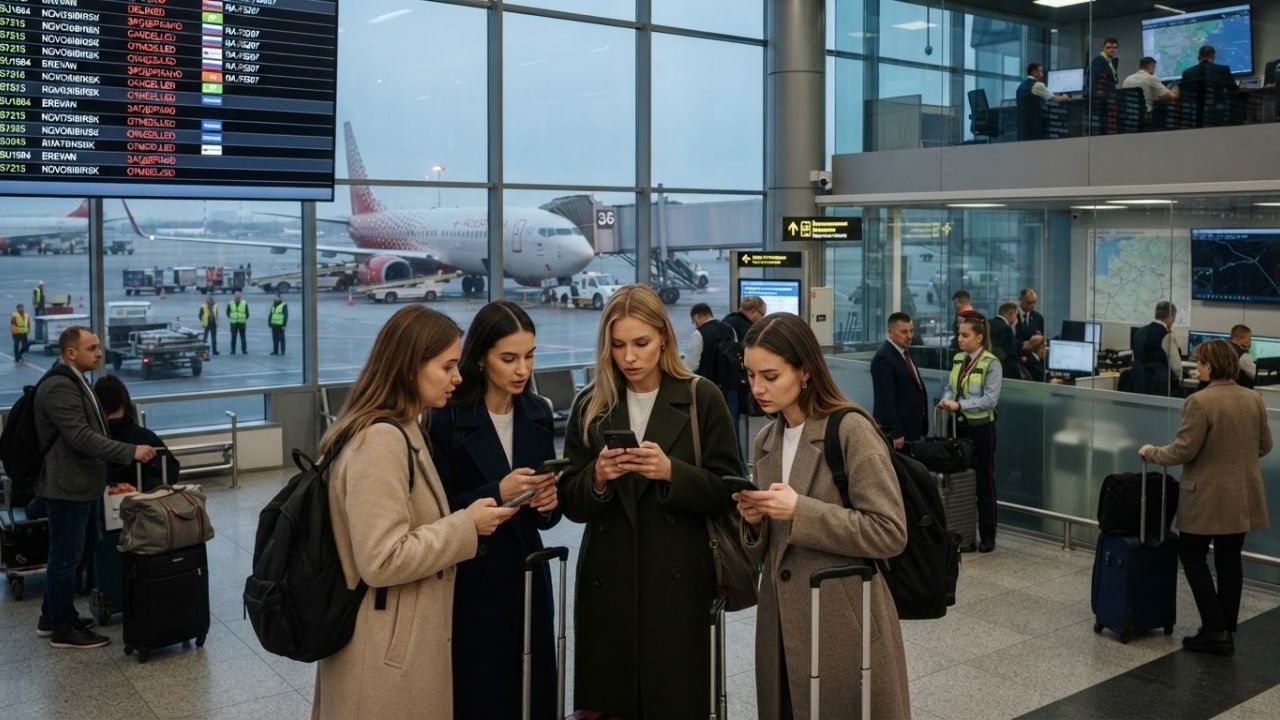
Image generated by AI
Ukraine has submitted a formal safety notification to the International Civil Aviation Organization (ICAO) warning of elevated hazards to commercial air navigation over Russian airspace, following drone disruptions that forced flight halts across Moscow's Sheremetyevo and Vnukovo airports on 2 September.
Formal ICAO Notification and Airspace Risk Recalculation
International aviation safety oversight faced a major diplomatic escalation on September 4, 2026, as Ukrainian civil aviation authorities submitted an official alert to the International Civil Aviation Organization (ICAO). The communication warns the United Nations civil aviation governing body that long-range unmanned aerial vehicle (UAV) activity inside the Russian Federation presents growing operational risks to commercial air corridors.
Ukrainian officials emphasized that the warning aims to safeguard international passenger flights and airport infrastructure against unintended escalations, maintaining that civilian airliners are not military targets. The alert follows a wave of aerial activity on 2 September that triggered temporary airspace closures, emergency ground stops, and flight holding patterns across the Moscow aviation hub.
Russian federal aviation authorities rejected Ukraine's warning, stating that coordinated protocols between civilian air traffic control, state security agencies, and defense forces maintain complete flight safety across domestic skies.
[ICAO Aviation Safety Alert & Moscow Disruption Summary]
• Filing Body:               State Aviation Administration of Ukraine
• Oversight Organization:   International Civil Aviation Organization (ICAO)
• Trigger Event:            Long-range drone activity on 2 September 2026
• Primary Airports Hit:     Sheremetyevo (SVO) & Vnukovo (VKO), Moscow
• Operational Impacts:      Dozens of cancellations, hundreds of delays
• Affected Foreign Carriers: Pegasus Airlines, flydubai, Turkish Airlines
• Airspace Status:          Western airlines rerouted since 2022; Asian/Gulf carriers active
| Operational Dimension | Incident Record | Aviation Safety Mechanism |
|---|---|---|
| Filing Authority | Ukrainian Aviation Authorities | Formal complaint to UN specialized agency (ICAO) |
| Incident Window | Night of 1–2 September 2026 | Temporary air navigation closures across Moscow FIR |
| Sheremetyevo (SVO) | Major international gateway | Dozens of flight cancellations, hundreds of delays |
| Vnukovo (VKO) | Southwest capital airport | Aircraft arrival suspensions and schedule disruptions |
| Carrier Reaction | Pegasus Airlines (Türkiye) | Multiple cancellations on 1–2 September; operations restored |
| Gulf Carriers | flydubai, Emirates, Qatar, Etihad | Real-time security reassessments and tactical reroutings |
| Russian Response | Federal Aviation Agencies | Defense-to-civilian coordination; formal safety reassurances |
Hub Impact: Sheremetyevo, Vnukovo, and Regional Gateways
The operational fallout of the 2 September disruptions was concentrated across Moscow’s multi-airport system, with secondary ripple effects reaching as far as St. Petersburg and southern border regions:
- Sheremetyevo International Airport (SVO): Moscow's primary international facility recorded dozens of flight cancellations and hundreds of ground delays. Air traffic controllers implemented staggered flow management, requiring incoming flights to enter extended holding stacks over adjacent flight information regions.
- Vnukovo International Airport (VKO): Positioned southwest of central Moscow, Vnukovo enforced complete departure halts and ground stops during active drone tracking windows, leading to severe schedule compression for regional and transborder flights.
- Domestic and Regional Diversions: Multiple inbound commercial flights were forced to divert to backup airports outside the central federal district, consuming contingency fuel reserves before returning once ground airspace reopened.
Aviation security analysts point out that while military air defense operations were historically confined to border sectors adjacent to Ukraine, frequent deep-penetration drone incursions near major metropolitan centers create an unpredictable operating theater for commercial airliners.
Global Airline Divide: Who Still Flies Through Russian Airspace?
The warning underscores a sharp divide in global commercial aviation routing that has expanded since 2022:
Western Carriers Avoiding Russian Skies
Most European Union, United Kingdom, and United States airlines have avoided Russian sovereign airspace since 2022 due to regulatory bans and reciprocal airspace sanctions. These carriers fly circuitous southern routes over Central Asia, Turkey, and the Caucasus to link Europe with East Asia, adding up to three hours of flight time, higher fuel burn, and increased ticket costs.
Non-Western and Transit Operators
Carriers based in China, Türkiye, the United Arab Emirates, and other Gulf markets continue operating regular flights through Russian sovereign airspace. These airlines provide direct connectivity between Russia and international global hubs:
- Pegasus Airlines: The Turkish low-cost carrier cancelled several scheduled flights between Türkiye and Russia during the night of 1–2 September. Operations resumed following security clearances, with affected travelers receiving rebooking support and refund options.
- flydubai: The Dubai-based airline reported continuous operational monitoring, cautioning passengers that tactical flight path diversions and departure delays remain possible during volatile security windows.
- Long-Haul Gulf & Asian Heavyweights: Turkish Airlines, Emirates, Qatar Airways, and Etihad Airways maintain scheduled passenger links, relying on internal threat assessment teams and real-time NOTAM (Notice to Airmen) bulletins to manage flight safety.
Conflict Zone Airspace Protocols and Passenger Rights
Under ICAO Annex 17 and global conflict zone advisory guidelines, national civil aviation regulators and individual airline safety boards maintain ultimate legal responsibility for route authorization:
- Dynamic NOTAM Adjustments: When drone activity is detected, air traffic controllers issue immediate NOTAM restrictions, temporarily closing flight corridors from the ground up to unlimited altitudes.
- Airline Risk Management: International airlines calculate operational risk independently. If an air carrier determines that ground air defenses or drone interception activity poses unmanageable risk, flight dispatchers must proactively divert or cancel services before entering affected flight information regions (FIRs).
- Passenger Duty of Care: Under international carriage conventions and Turkish civil aviation passenger regulations (SHY-PASS), airlines forced to cancel services due to emergency airspace closures must offer travelers the choice between full ticket refunds and free rebooking on subsequent available flights.
Local Insider Tips for Travelers Flying Eurasia and Gulf Routes in 2026
- Verify Your Carrier's Operating Corridor: If traveling between Western Europe and East or South Asia, check whether your chosen airline overflies Russian airspace. Western European carriers (such as Lufthansa, British Airways, and Air France) do not overfly Russia, whereas Chinese carriers (such as Air China and China Southern) frequently use northern Siberian corridors to achieve shorter flight times.
- Allow Extended Transit Windows in Connecting Hubs: If your flight itinerary routes through Istanbul (IST), Istanbul Sabiha Gökçen (SAW), Dubai (DXB), or Doha (DOH) with an onward connection to or near Eurasia, book layovers of at least three to four hours. Flight holding patterns and air traffic flow restrictions over the Black Sea and Caucasus corridors can cause missed connections on tight one-hour transfers.
- Review Travel Insurance War and Conflict Exclusions: Most standard travel insurance policies exclude trip cancellation or flight delay claims resulting from active military operations, airspace war-risk closures, or government-imposed security stops. Purchase specialized comprehensive travel policies that include explicit "travel disruption" or "cancel for any reason" (CFAR) riders.
- Keep Inbound Flight Tracking Active via Live Radar Apps: Use flight-tracking services (such as FlightAware or Flightradar24) to monitor the inbound sector of your aircraft. If your incoming aircraft is delayed leaving a regional gateway due to Moscow air traffic flow control, you can anticipate departure hold-ups well before reaching the boarding gate.
- Carry Essential Documents and Direct Contact Channels: For passengers flying between Türkiye and regional Eurasian airports, keep airline customer care app hotlines bookmarked. Low-cost carriers like Pegasus communicate schedule revisions via direct SMS and mobile application push alerts rather than airport public announcement systems during sudden ground stops.
Global Aviation Outlook: Balancing Air Connectivity with Conflict Realities
Ukraine's formal complaint to ICAO highlights how evolving defense technologies and long-range drone warfare continue to complicate international commercial aviation. As military technologies advance, civilian air navigation authorities face continuous pressure to ensure separation between active air defenses and passenger aircraft.
While Russian aviation authorities assert that defense cooperation maintains safe airspace, recurring temporary airport shutdowns at Sheremetyevo and Vnukovo indicate that international operators will continue navigating operational disruptions. For global travelers and flight dispatchers, flexibility, conservative fuel planning, and vigilant risk assessments remain indispensable when planning routes across Eastern Europe and Eurasia.
Frequently Asked Questions
Why did Ukraine lodge a formal complaint with ICAO regarding Russian airspace?
Ukraine alerted the International Civil Aviation Organization (ICAO) to highlight civil aviation safety hazards caused by drone activity and military air defenses over Russian airspace, seeking to prevent potential incidents involving civilian passenger aircraft.
What happened at Moscow airports on 2 September?
Long-range drone activity forced temporary flight restrictions and airport closures across Moscow, resulting in dozens of canceled flights and hundreds of delays at Sheremetyevo and Vnukovo airports.
Which international airlines experienced flight cancellations?
Turkish carrier Pegasus Airlines canceled several scheduled services connecting Türkiye and Russia during the night of 1–2 September due to operational security concerns, later resuming flights and offering refunds or rebookings to affected passengers.
How did Russian authorities respond to the ICAO notification?
Russian aviation authorities rejected concerns over the safety of the country's civil aviation network, stating that coordination between civilian aviation agencies, security forces, and defense personnel ensures complete flight safety.
Do Western airlines still fly over Russian airspace in 2026?
No. Most European and US airlines have avoided Russian airspace since 2022, flying longer southern routes between Europe and Asia. However, carriers from Türkiye, the UAE, Qatar, and China continue operating flights across Russian air corridors.
Related Travel Guides
Disclaimer
This article is for informational and educational purposes only. It does not constitute legal, financial, or professional advice. While we strive to provide accurate and up-to-date information, travel policies, regulations, and conditions change rapidly. Always verify information with official sources before making travel decisions. Nomad Lawyer makes no representations about the accuracy, reliability, completeness, or suitability of the information provided. Readers should consult qualified professionals for advice specific to their circumstances. The views expressed in this article are those of the author and do not necessarily reflect the views of Nomad Lawyer.
Kunal K Choudhary
Co-Founder & Contributor
A passionate traveller and tech enthusiast. Kunal contributes to the vision and growth of Nomad Lawyer, bringing fresh perspectives and driving the community forward.
Learn more about our team →