
Bristol Airport Suspends All Flight Operations on August 8 2026 Due to Critical Runway Defect
Bristol Airport halted all aircraft movements on August 8 2026 after a runway surface defect triggered emergency safety protocols, causing widespread cancellations and diversions across southwest England.

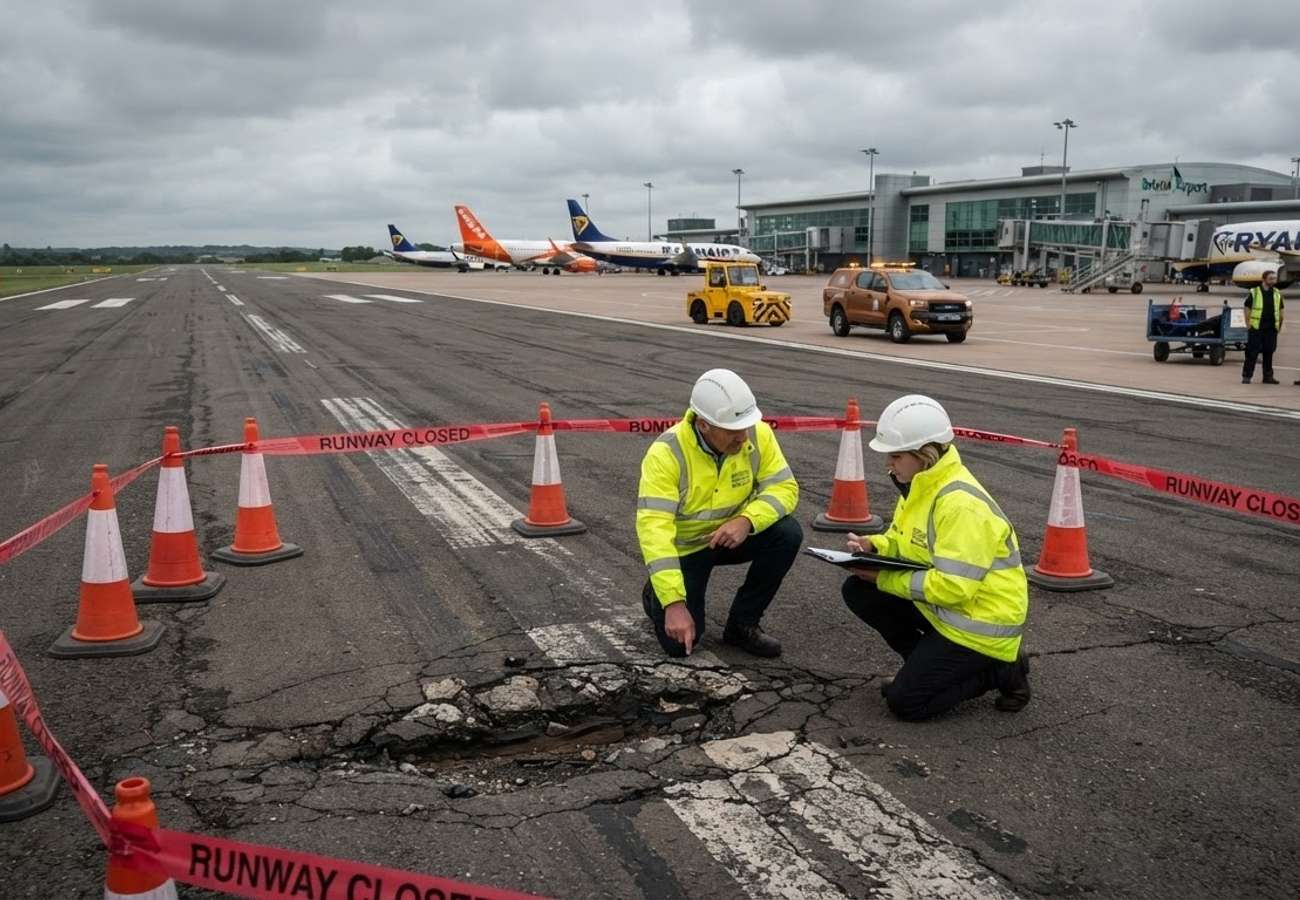
Image generated by AI
Bristol Airport suspended all flight operations on August 8, 2026, following the discovery of a runway surface defect. The emergency closure halted all arrivals and departures, triggering immediate diversions and schedule collapses across one of southwest England's primary aviation gateways.
The suspension was enacted as a safety precaution after airport officials identified irregularities on the runway surface. Engineering teams were deployed immediately to conduct inspections and assess the structural integrity of the tarmac. Because aircraft operate under extreme weight and speed pressures during takeoff and landing, any surface deterioration poses an unacceptable risk to flight safety.
The closure did not stem from weather conditions or airline scheduling conflicts, but was a direct result of infrastructure failure.
Immediate Operational Impact
The shutdown created an immediate bottleneck for thousands of passengers. The effects were split across two primary groups:
- Departing Passengers: Faced immediate delays or total cancellations. Many were advised not to travel to the airport to avoid congestion.
- Arriving Passengers: Incoming aircraft were unable to land, forcing pilots to divert to alternative UK airports. This resulted in increased travel times and the need for unplanned ground transportation to reach Bristol.
Airlines were forced to implement emergency recovery plans, reviewing aircraft rotations and crew schedules. Because the aviation network is interconnected, this localized closure created a ripple effect, causing delays for flights that were not even scheduled to land at Bristol.
Infrastructure and Safety Breakdown
Runways are the most critical single point of failure in airport operations. Unlike terminal issues or baggage system failures, a runway defect renders the entire airport unusable.
- Nature of the Defect: While specific technical details were not released, runway defects typically involve surface cracking, foreign object debris (FOD), or structural deterioration.
- Safety Protocol: Aviation authorities mandate that any surface irregularity be repaired and certified before operations resume.
- Economic Ripple Effect: Beyond the terminal, the disruption hit the regional visitor economy, affecting hotels, airport transfer services, and local tourism attractions in southwest England.
Passenger Recovery and Rights
For those caught in the disruption, the recovery process is often slower than the reopening of the runway. Even after engineering teams cleared the surface for use, airlines required several hours to reposition aircraft and crews.
Recommended Actions for Affected Travelers:
- Verify Status: Check flight status directly via airline apps rather than relying on airport screens.
- Document Expenses: Maintain a strict log of unplanned costs, including hotels and transport, for potential reimbursement claims under passenger rights regulations.
- Avoid Premature Arrival: Do not travel to the airport until the airline confirms the flight is operational.
Why This Matters: Industry Analysis
From a logistical perspective, this incident exposes the fragility of regional aviation hubs. Bristol Airport serves as a primary artery for southwest England; when it fails, there is limited redundant capacity in the immediate vicinity to absorb the displaced traffic.
Our analysis of the route map suggests that diversions from Bristol typically overload nearby regional airports, which are not equipped to handle sudden surges in passenger volume. For the traveler, this means a "simple" diversion often turns into a multi-hour ordeal involving buses and secondary airports.
Furthermore, this event underscores a growing industry concern: the aging of runway infrastructure under the pressure of heavier, modern aircraft models. The decision to prioritize a total shutdown over restricted use indicates that the defect was likely severe enough to risk aircraft tire bursts or structural damage upon landing.
Forward Outlook
The immediate priority remains the restoration of the flight schedule. However, the long-term focus will shift toward infrastructure resilience. Industry observers expect a review of the maintenance cycles at Bristol Airport to determine if this defect was a result of wear-and-tear or a systemic failure in surface management.
Travelers should expect residual delays for 24 to 48 hours as airlines work to reset their rotations. Future travel through this gateway may see increased maintenance windows as the airport seeks to prevent a recurrence of this total operational collapse.
Infrastructure reliability remains the invisible backbone of aviation safety.
Related Travel Guides
Disclaimer
This article is for informational and educational purposes only. It does not constitute legal, financial, or professional advice. While we strive to provide accurate and up-to-date information, travel policies, regulations, and conditions change rapidly. Always verify information with official sources before making travel decisions. Nomad Lawyer makes no representations about the accuracy, reliability, completeness, or suitability of the information provided. Readers should consult qualified professionals for advice specific to their circumstances. The views expressed in this article are those of the author and do not necessarily reflect the views of Nomad Lawyer.
Preeti Gunjan
Contributor & Community Manager
A passionate traveller and community builder. Preeti helps grow the Nomad Lawyer community, fostering engagement and bringing the reader experience to life.
Learn more about our team →