
UK Unites Germany as Spain Airport Investment Drive Opens New Travel Opportunities Across Europe
UK Unites Germany as Spain Airport Investment Drive Opens New Travel Opportunities Across Europe. Latest travel news, updates, and expert analysis.

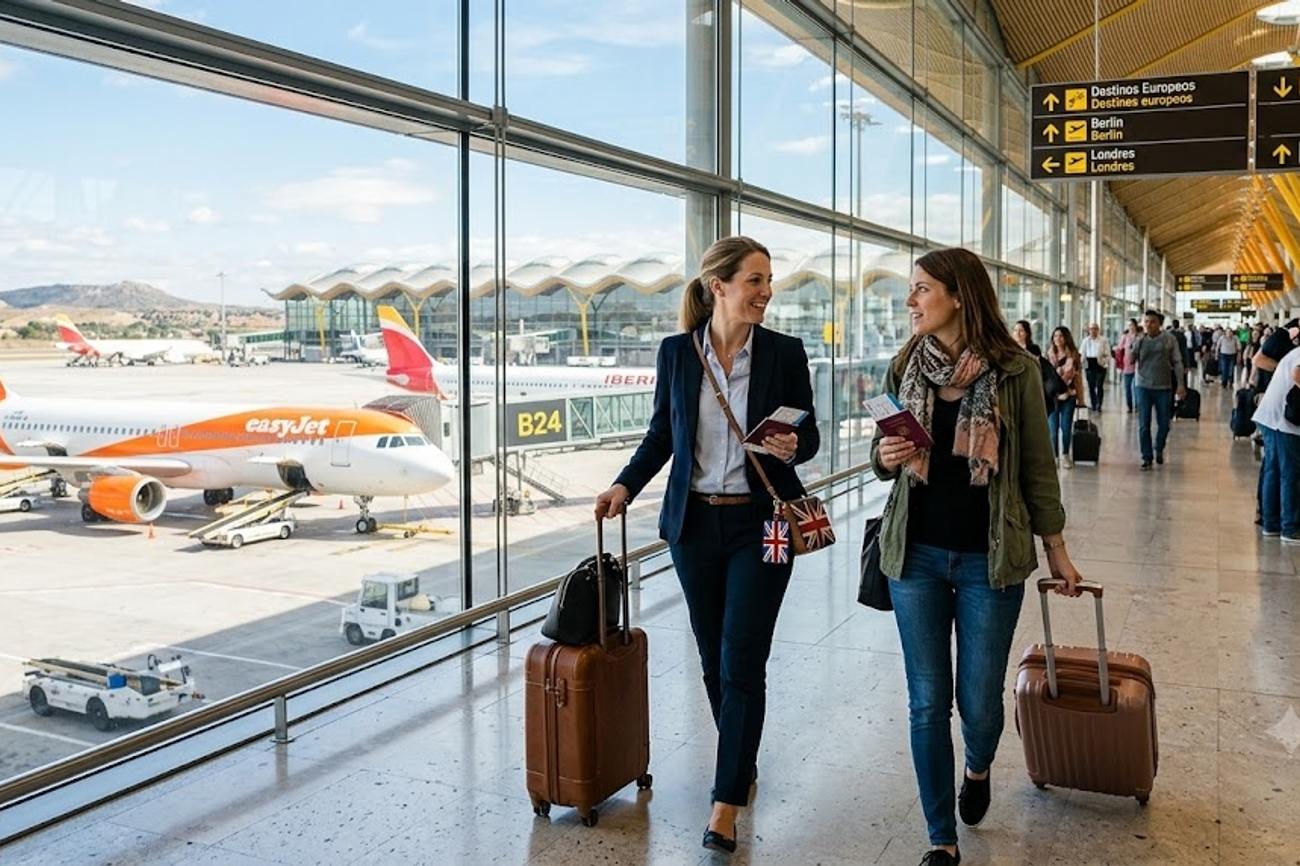
Image generated by AI
While holiday travelers have endured peak-season bottleneck queues across southern European arrival halls for decades, Spain's state-backed airport manager has unveiled an unprecedented €12.888 billion investment blitz to systematically rebuild the nation's air gateways. Formalized under the incoming DORA III regulatory framework spanning 2027 to 2031, airport authority Aena is directing approximately €9.991 billion into core regulated aeronautical infrastructure alongside nearly €2.9 billion in commercial upgrades. This multi-billion-euro transformation will directly reshape how millions of holidaymakers, cultural voyagers, and business executives arriving from the United Kingdom, Germany, and Italy experience entry into the Iberian Peninsula.
Aena's DORA III Masterplan: Rebuilding Spain's Aviation Gateways for 2027–2031
The financial scale of Aena's DORA III strategy marks one of the most ambitious aviation capital programs in modern European history. Nearly €12.9 billion in total planned capital expenditure will fund radical passenger flow overhauls, terminal expansions, digital security screening upgrades, and green operational initiatives across Spain's national airport grid. The primary capital allocations focus squarely on the two dominant intercontinental hubs: Adolfo Suárez Madrid-Barajas and Josep Tarradellas Barcelona-El Prat. Simultaneously, substantial funding is designated for sunbelt leisure gateways including Málaga-Costa del Sol, Alicante-Elche Miguel Hernández, the Balearic Islands of Mallorca, Ibiza, and Menorca, and the Canary Islands archipelago.
For international travelers, this infrastructure overhaul directly addresses longstanding pressure points. The UK remains Spain’s largest single outbound tourism source market, sending millions of travelers through London, Manchester, and regional British airfields toward Mediterranean coasts each year. Germany constitutes Spain’s second-largest inbound tourism powerhouse, generating massive year-round passenger traffic toward the Canary and Balearic islands, while Italy shares deep cultural and commercial flight corridors across the western Mediterranean.
Under the DORA III framework, airport security check areas will incorporate next-generation 3D computed tomography (CT) scanners and automated biometric e-gates, eliminating the cumbersome need to extract liquids and electronics from carry-on bags. Terminal layouts at Madrid-Barajas will be reconfigured to streamline transatlantic and European transfers, while Barcelona-El Prat will optimize terminal gate assignments to curb taxiway congestion. By expanding passenger processing capacity well ahead of projected 2030 demand, Spain aims to transform airport transit from an exhausting endurance test into a seamless, welcoming prelude to the Iberian experience.
What Makes Spain's Historic and Coastal Gateways Irreplaceable
Arriving in Spain is an encounter with deep regional distinctiveness, where every gateway reveals an entirely different architectural tradition and way of life.
Landing at Madrid-Barajas Terminal 4 places travelers inside an architectural masterpiece designed by Richard Rogers and Antonio Lamela, celebrated for its soaring bamboo wave ceiling and yellow-to-red gradient support pylons. From Barajas, the Spanish capital radiates imperial history, world-class art collections along the Paseo del Prado, and the lively tapas taverns of La Latina and Chamberí. Madrid functions not only as a vibrant destination in its own right, but as the geographic hub connecting travelers to neighboring historic cities recognized by the UNESCO World Heritage Centre, including Toledo, Segovia, and Ávila.
To the northeast, Barcelona-El Prat sits sandwiched between the Mediterranean coastline and the scenic hills of the Garraf massif. Stepping into the Catalan capital immerses visitors in the whimsical modernisme of Antoni Gaudí, from the towering spires of the Sagrada Família to the organic stone contours of Park Güell. In contrast, descending into Málaga or Alicante greets travelers with warm sea breezes, Moorish fortress walls (alcazabas), and olive-grove hillsides that define Andalusia and the Costa Blanca. Farther offshore, the volcanic peaks of Tenerife and Lanzarote and the turquoise coves of Mallorca present extraordinary island geographies that draw northern European travelers seeking winter warmth.
Visitor Insider Tips: Navigating Terminals, Rail Links, and Local Customs
- Airport Rail Connections Over Taxis: In Madrid, skip highway gridlock by taking the Cercanías commuter train line C-1 or C-10 directly from Barajas Terminal 4 to Chamartín or Atocha stations in 20 to 25 minutes for just €2.60 (free if holding an AVE high-speed train connection ticket). In Barcelona, the Rodalies R2 Nord train connects El Prat Terminal 2 to Passeig de Gràcia in the city center in under 30 minutes for the price of a standard public transit fare.
- Embrace the Spanish Daily Rhythm: Adapting to local hours transforms your stay. Lunch (la comida) is the primary meal of the day, enjoyed leisurely between 14:00 and 16:30. Dinner rarely begins before 21:00 or 21:30. In the late afternoon around 18:00, partake in the cherished ritual of the merienda (coffee paired with a slice of potato tortilla or churros) to carry you through until the late evening dining hour.
- Neighborhood Bases for Exploring: In Madrid, base yourself in leafy Chamberí or Retiro for elegant neighborhood bakeries and peaceful strolling, away from the tourist congestion of Sol. In Barcelona, choose the tranquil residential village atmosphere of Gràcia or the wide, tree-lined boulevards of l'Eixample over the overcrowded Gothic Quarter.
- Tapas Etiquette Realities: When visiting traditional tapas taverns, drinks always come with a small complimentary bite—such as marinated olives, cured Manchego cheese, or potato chips. If you wish to dine more substantially, order raciones (full shared plates) rather than smaller tapas. In casual taverns, it is entirely normal for locals to drop paper napkins directly onto the floor beneath the marble counter.
- High-Speed Rail Synergy: Spain possesses Europe's most extensive high-speed rail network. Before booking domestic flights between Madrid, Barcelona, Valencia, or Seville, explore high-speed train operators including Renfe AVE, Iryo, and Ouigo. Bullet trains whisk passengers city-center to city-center in two and a half hours, frequently beating air travel once airport security checks and gate waits are calculated.
Cultural and Environmental Context: Balancing Record Arrivals with Community Heritage
The rapid expansion of Spain's tourism economy, supported by organizations like Spain Tourism, brings substantial economic prosperity while requiring delicate environmental stewardship. In historic metropolitan cores like Barcelona and Palma de Mallorca, heavy tourist volumes have prompted local governments to introduce cruise ship caps, tourist taxes, and stricter short-term vacation rental regulations to protect residential neighborhoods from gentrification and maintain local heritage.
Aena's DORA III framework responds directly to these ecological imperatives. The €9.991 billion regulated investment includes dedicated capital for on-site photovoltaic solar farms across Barajas and El Prat, aiming to produce 100% of the airport network's electricity consumption from renewable sources. Furthermore, terminal modernization incorporates advanced water-recycling treatment plants, energy-efficient geothermal climate controls, and dedicated charging infrastructure for electric aircraft ground handling fleets. By combining state-of-the-art terminal facilities with green operational standards, Spain demonstrates how mass tourism hubs can actively protect fragile Mediterranean ecosystems.
FAQ: Traveling to Spain and European Gateways 2026-2031
How will Aena's €12.888 billion plan affect current travelers at Spanish airports? Renovations under the DORA III 2027–2031 cycle will occur in phased stages to minimize disruptions. Travelers can expect newly upgraded security lanes with 3D scanners, larger boarding lounges, and smoother customs processing rolled out progressively across major airports.
What is the fastest way to get from Madrid-Barajas Airport to the city center? The Cercanías C-1 or C-10 train from Terminal 4 reaches Chamartín and Atocha central stations in roughly 20–25 minutes. Free shuttles connect Terminals 1, 2, and 3 to Terminal 4. Alternatively, the Metro Line 8 connects all terminals to Nuevos Ministerios.
Do British citizens need a visa to holiday in Spain? British travelers do not need a visa for short tourist visits up to 90 days within any 180-day period. Passports must have been issued within the past 10 years and remain valid for at least three months beyond the planned departure date from the Schengen Area.
Should I fly or take the high-speed train between Madrid and Barcelona? Take the high-speed bullet train (AVE, Iryo, or Ouigo). The journey connects Atocha in central Madrid with Barcelona-Sants in just two and a half hours, delivering a comfortable, scenic city-center transit that is faster and more relaxing than flying.
As Spain commits nearly €13 billion to modernizing its aviation gateways, the journey into the heart of Spanish art, gastronomy, and sunshine becomes just as enchanting as the destination itself.
Related Travel Guides
- Malaysia and Türkiye Unlock New Asia to Europe Air Network as AirAsia and Pegasus Launch Codeshare
- AirBaltic Launches Chapter 11 Process in the US Court As Latvia’s Flag Carrier Moves to Build a Stronger Future
- Wizz Air Is Now Set To Unlock Better Winter Flights To The UAE As Affordable Middle East Flights Return
Disclaimer
This article is for informational and educational purposes only. It does not constitute legal, financial, or professional advice. While we strive to provide accurate and up-to-date information, travel policies, regulations, and conditions change rapidly. Always verify information with official sources before making travel decisions. Nomad Lawyer makes no representations about the accuracy, reliability, completeness, or suitability of the information provided. Readers should consult qualified professionals for advice specific to their circumstances. The views expressed in this article are those of the author and do not necessarily reflect the views of Nomad Lawyer.
Raushan Kumar
Founder & Lead Developer
Full-stack developer with 11+ years of experience and a passionate traveller. Raushan built Nomad Lawyer from the ground up with a vision to create the best travel and law experience on the web.
Learn more about our team →