
Turkey Stuns Global Aviation With Istanbul Airport’s New Runway Set to Reshape Flights, Cut Travel Times and Boost Its Global Hub Power
Turkey Stuns Global Aviation With Istanbul Airport’s New Runway Set to Reshape Flights, Cut Travel Times and Boost Its Global Hub Power. Latest travel news, updates, and expert analysis.

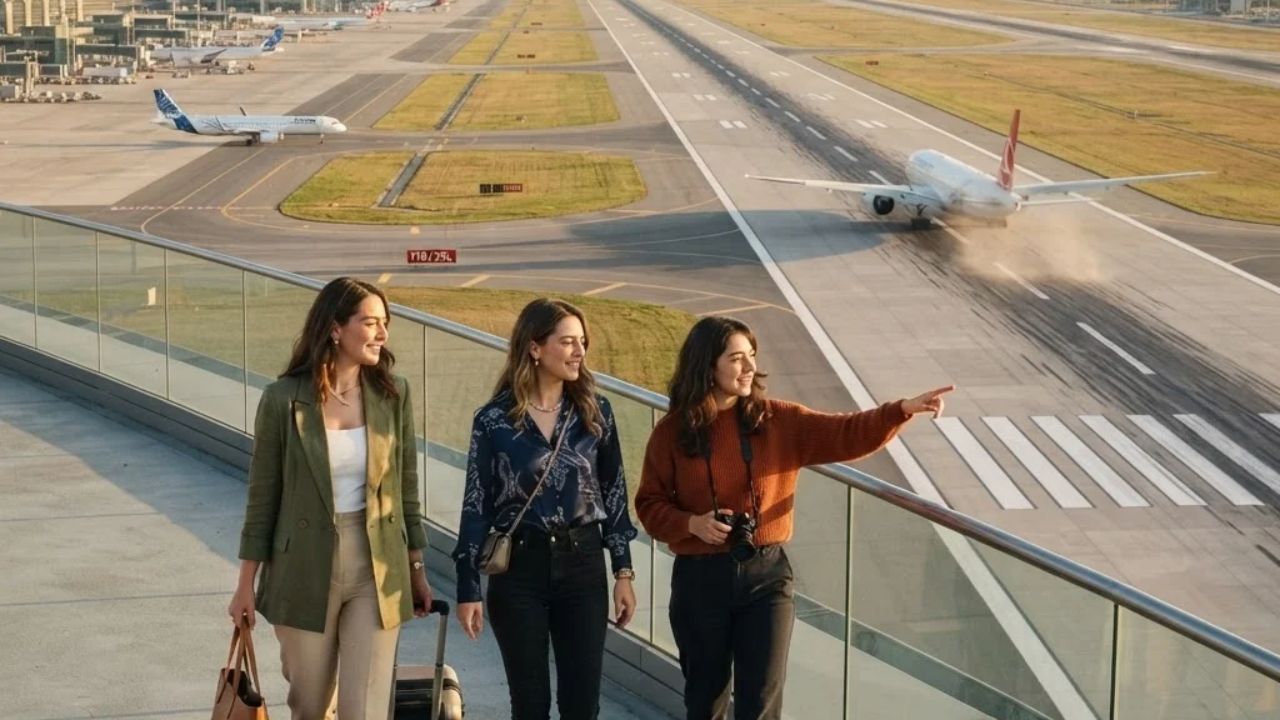
Image generated by AI
While millions of transcontinental passengers navigating Istanbul Airport's gargantuan terminal have marveled at its architectural ambition, many have endured notoriously prolonged 25-minute taxi times after touchdown—a bottleneck about to disappear. On 18 September 2026, President Recep Tayyip Erdoğan will preside over the official ribbon-cutting ceremony inaugurating the fourth main runway at Istanbul Airport. Bringing the mega-hub’s total runway count to six, this 2,820-meter-long, 45-meter-wide tarmac strip represents the airfield’s first east-west oriented alignment, specifically engineered to slash aircraft taxiing delays, enhance foul-weather resilience, and expedite connections toward domestic Anatolia and the Far East.
Engineering the East-West Axis: Inside Istanbul's Sixth Runway
The structural geometry of Istanbul Airport historically relied on parallel north-south runways aligned with prevailing maritime winds sweeping south from the Black Sea. While aerodynamically efficient under standard conditions, this parallel layout required domestic arrivals and eastbound long-haul departures to undertake extensive ground taxi circuits circling the terminal perimeter. By orienting the new 2,820-meter runway along a dedicated east-west axis, airport planners have engineered an operational shortcut.
Domestic and eastbound international services will benefit immediately from dramatically truncated ground roll times and streamlined takeoff clearances. Furthermore, prevailing crosswinds that occasionally sweep across the Thracian plateau during winter storm fronts will no longer ground aircraft operations. Having an alternate directional vector grants air traffic controllers flexibility to switch landing patterns instantly, preventing stack-up holding patterns over the Sea of Marmara and protecting tight flight connection banks.
The expansion also provides specialized operational advantages for general aviation. Positioned adjacent to private maintenance hangars, the runway allows private executive jets and government airframes to depart independently without crossing commercial airline taxi lanes. As global air traffic surges, this combination of directional agility and segregated aircraft flow solidifies Istanbul’s status as the primary transcontinental bridge linking Europe, Central Asia, Africa, and the Americas.
What Makes Istanbul an Incomparable World Crossroads
Stepping beyond the futuristic, tulip-inspired air traffic control tower of Istanbul Airport brings travelers into a metropolis where three millennia of Roman, Byzantine, and Ottoman history collide across the Bosphorus Strait.
The historic heart of the city, designated as an enduring UNESCO World Heritage Centre cultural sanctuary, sits concentrated on the historic peninsula. Standing in Sultanahmet Square places visitors between two architectural giants: the 6th-century dome of Hagia Sophia, with its soaring Byzantine gold mosaics, and the 17th-century Blue Mosque, famed for its cascading domes and thousands of handmade turquoise Iznik ceramic tiles. Beneath the cobblestone streets lies the Basilica Cistern (Yerebatan Sarnıcı), an ancient subterranean water reservoir where Medusa stone heads lurk in emerald-lit waters beneath marble columns salvaged from classical temples.
Yet Istanbul’s enduring vitality thrives in its everyday neighborhood life. Boarding a public commuter ferry from Eminönü to Kadıköy on the Asian shoreline offers one of the world's most romantic water commutes. Gliding past the silhouette of Topkapi Palace while feeding warm sesame-crusted simit bread to wheeling seagulls, travelers cross from one continent to another for the price of a standard subway fare. In Kadıköy's vibrant market alleys, independent bookshops, artisan coffee roasters, and traditional pickle shops flourish alongside vibrant fish markets.
Visitor Insider Tips: Navigating Transit, Layovers, and Street Dining
- Skip Highway Gridlock With the M11 Metro: Never take a highway taxi during afternoon rush hour from Istanbul Airport, as city bottlenecks can turn a 40-minute drive into a two-hour ordeal. Instead, walk to the airport's integrated underground transit hub and board the high-speed M11 Metro line. The train reaches Kağıthane and Gayrettepe stations in just 25 to 30 minutes for less than $1 USD, linking directly to the M2 subway line that stops in Taksim, Şişhane, and the historic peninsula.
- Take Advantage of Touristanbul: If transiting through Istanbul Airport on Turkish Airlines with a layover between 6 and 24 hours, take advantage of the complimentary "Touristanbul" program. The airline provides free guided tours of the city, including museum entrance fees, luxury coach transfers, and authentic Turkish lunch or dinner, returning you smoothly to the terminal before your connecting flight.
- Grand Bazaar Etiquette Realities: When exploring the labyrinthine vaulted corridors of the Grand Bazaar (Kapalıçarşı), remember that negotiation is an honored social custom. When inquiring about handmade kilim rugs, copperware, or leather, expect initial quotes to be open for discussion. Politely counter at roughly 50% to 60% of the initial price, accept the merchant's offer of hot apple tea, and negotiate with good-humored respect without feeling obligated to purchase.
- Neighborhood Bases for Immersion: Rather than staying in tourist-saturated Sultanahmet, base yourself in Cihangir or Galata in the Beyoğlu district. These hilly residential quarters feature 19th-century neoclassical apartment buildings, bohemian vinyl stores, vintage antique dealers, and neighborhood cafes where local artists and authors linger over afternoon espresso.
- Unmissable Street Specialties: Savor culinary classics promoted by Go Türkiye. Recharge beside the Galata Bridge with fresh balık ekmek (grilled mackerel fillets tucked into crusty bread with onions and sumac), order authentic iskender kebap (thinly sliced lamb roasted over wood coals, doused in hot browned sheep's butter and tomato sauce over pita bread with cool yogurt), and finish with crispy künefe cheese pastry soaked in sweet syrup.
Cultural and Environmental Context: Avian Flyways and Green Skyways
The ongoing infrastructure growth of Istanbul Airport coexists with pressing environmental considerations along the northern fringe of Thrace. The airport is situated beneath one of the world's most significant avian migration highways, where hundreds of thousands of storks, pelicans, and raptors journey twice annually between European breeding grounds and African wintering habitats over the Black Sea.
To mitigate ecological risks, airport management utilizes advanced 3D bird-detection radar systems, operating acoustic deterrence protocols to keep flocks clear of active runways while coordinating safe flight spacing with air traffic control. Furthermore, Istanbul Airport has implemented extensive solar power initiatives, rainwater harvesting lagoons, and zero-waste terminal recycling operations designed to divert over 80% of passenger waste from regional landfills. By investing in efficient runway geometries that minimize ground idling fuel burn, the airport demonstrates how mass intercontinental aviation can modernize with heightened environmental sensitivity.
FAQ: Visiting Istanbul and Navigating IST 2026
What are the main advantages of Istanbul Airport's new fourth main runway? The 2,820-meter east-west runway cuts taxiing times for domestic and eastbound flights, mitigates crosswind weather disruptions, and provides dedicated maneuvering space for general aviation hangars.
What is the fastest public transit from Istanbul Airport into central Istanbul? The high-speed M11 Metro line connects the airport to Gayrettepe in approximately 30 minutes. From Gayrettepe, you can transfer to the M2 metro line for direct access to Taksim Square and the Old City.
Do I need a visa to visit Istanbul during a flight layover? Many nationalities qualify for visa-free entry or can easily obtain an official Turkish e-Visa online prior to departure. Verify your eligibility through official government portals before planning city layovers.
How long should I allow for transit connections at Istanbul Airport? Given the immense size of the terminal complex, book itineraries with a minimum connection window of 75 to 90 minutes for international-to-international transfers, or two hours if changing to domestic flights.
As six runways now channel the world's great journeys through Anatolian skies, the historic bridges of the Bosphorus remain the ultimate threshold between east and west.
Related Travel Guides
- Emirates Brings Premium Economy to France With Retrofitted A380 From October 25, 2026
- Italy’s Milan Bergamo Airport Expands Cargo Power With New BGY Logistic Park To Boost Global Freight Growth
- Jordan Transforms Travel Access as Royal Jordanian Airlines Launches Abu Dhabi Aqaba Flights for Petra Adventures
Disclaimer
This article is for informational and educational purposes only. It does not constitute legal, financial, or professional advice. While we strive to provide accurate and up-to-date information, travel policies, regulations, and conditions change rapidly. Always verify information with official sources before making travel decisions. Nomad Lawyer makes no representations about the accuracy, reliability, completeness, or suitability of the information provided. Readers should consult qualified professionals for advice specific to their circumstances. The views expressed in this article are those of the author and do not necessarily reflect the views of Nomad Lawyer.
Raushan Kumar
Founder & Lead Developer
Full-stack developer with 11+ years of experience and a passionate traveller. Raushan built Nomad Lawyer from the ground up with a vision to create the best travel and law experience on the web.
Learn more about our team →