
UK Air Traffic Control Glitch Triggers Mass Flight Disruption and 1,750 Cancellations in 2026
A critical technical failure in the NATS flight processing system caused over 1,750 flight cancellations across the UK, stranding tens of thousands of passengers and sparking a regulatory review of airspace resilience.

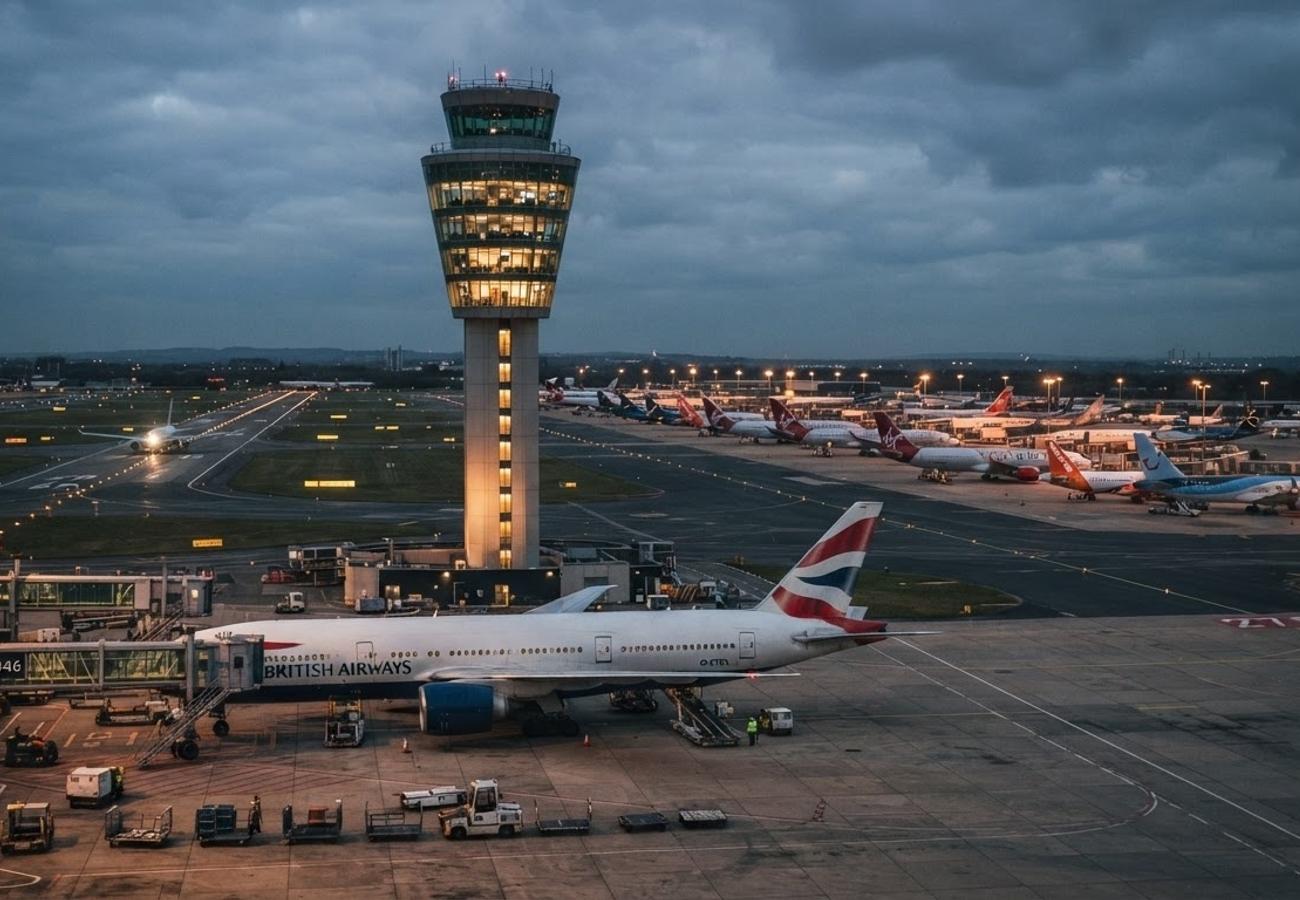
Image generated by AI
A systemic technical failure within the UK’s air traffic control infrastructure has paralyzed aviation hubs, resulting in thousands of cancellations and a multi-day recovery period for airlines.
The disruption originated on Tuesday, 8 September 2026, when National Air Traffic Services (NATS) experienced a critical fault in its flight processing system. The glitch compromised the handling of flight plans, forcing controllers to implement immediate movement restrictions to maintain safety.
While NATS restored the system later that Tuesday, the initial outage triggered a massive backlog. The density of UK airspace means that even a brief window of constrained capacity creates a ripple effect, displacing aircraft and crews across the European network.
Operational Impact and Flight Data
The failure led to immediate ground stops and heavily reduced departures at the UK's primary gateways. Data from Flightradar24 and other tracking platforms confirm that the most severe impacts were concentrated at London Heathrow, Gatwick, Manchester, and Glasgow.
Key Disruption Statistics:
- Initial Cancellations (Sept 8): Over 1,000 flights.
- Total Estimated Impact: Up to 1,750 services (including diversions and severe delays).
- Secondary Day Impact (Sept 9): Approximately 250 additional cancellations.
- Primary Hubs Affected: Heathrow, Gatwick, Manchester, and Edinburgh.
A cyber attack has been officially ruled out; the root cause is identified as an internal systems failure.
Passenger Rights and Compensation Realities
The UK Civil Aviation Authority (CAA) has issued a directive that significantly impacts passenger claims. On 9 September, the CAA indicated that this event will likely be classified as "extraordinary circumstances."
From a legal and regulatory standpoint, this means:
- Duty of Care: Airlines remain obligated to provide refreshments, hotel accommodation, and rebooking options.
- Cash Compensation: Standard fixed-sum financial compensation for delays is unlikely to be granted, as the failure was an external ATC issue rather than an airline-specific fault.
- Reimbursement: Passengers are still entitled to ticket refunds or rerouting at the earliest opportunity.
Airspace Management Performance
| Metric | Status/Detail |
|---|---|
| Root Cause | Internal NATS Flight Processing System Failure |
| Cyber Attack Status | Ruled Out |
| Regulatory Action | Independent Review mandated by the CAA |
| Recovery Timeline | Multiple days due to crew duty-time limits |
| Primary Constraint | Aircraft and crew displacement |
Why This Matters: Industry Analysis
For travelers and aviation stakeholders, this event exposes a dangerous fragility in the UK's aviation backbone. Our analysis of the route map suggests that the UK acts as a critical "choke point" for transatlantic and Asia-Europe traffic. When NATS fails, it is not merely a local issue; it is a global logistical failure.
The real impact for the passenger is the "compensation gap." Because the CAA classifies ATC failures as extraordinary, the financial burden of missed business deals or ruined vacations falls on the traveler or their insurance provider, not the carrier. This highlights a systemic risk for digital nomads and business travelers who rely on tight connection windows in London hubs.
Furthermore, the reliance on manual contingency procedures during the outage proves that the "fail-safe" mechanisms are insufficient for 2026 traffic volumes. The industry is currently operating with legacy systems struggling to support modern flight densities.
Forward Outlook
The CAA has requested a comprehensive technical report from NATS. Expect the upcoming independent review to focus on three specific areas:
- Redundancy Failure: Why the backup systems did not prevent a sharp curb in movements.
- Investment Gaps: Whether current funding for IT infrastructure is keeping pace with traffic growth.
- Recovery Protocols: How to reduce the "knock-on" effect that turns a few hours of downtime into days of disruption.
Passengers are advised to retain all receipts for meals and accommodation, as these remain reimbursable regardless of the "extraordinary circumstances" clause.
The UK's airspace resilience is now under a regulatory microscope.
Related Travel Guides
Disclaimer
This article is for informational and educational purposes only. It does not constitute legal, financial, or professional advice. While we strive to provide accurate and up-to-date information, travel policies, regulations, and conditions change rapidly. Always verify information with official sources before making travel decisions. Nomad Lawyer makes no representations about the accuracy, reliability, completeness, or suitability of the information provided. Readers should consult qualified professionals for advice specific to their circumstances. The views expressed in this article are those of the author and do not necessarily reflect the views of Nomad Lawyer.
Naina Thakur
Contributor & Travel Specialist
Travel enthusiast and legal writer covering visa regulations, responsible tourism, and cultural journeys across global destinations.
Learn more about our team →