
Manchester Airport Flight Cancellations and Delays on September 10 2026 Following ATC Failure
Manchester Airport faces ongoing flight cancellations and knock-on delays on September 10, 2026, as airlines struggle to recover from a widespread UK air traffic control system failure.

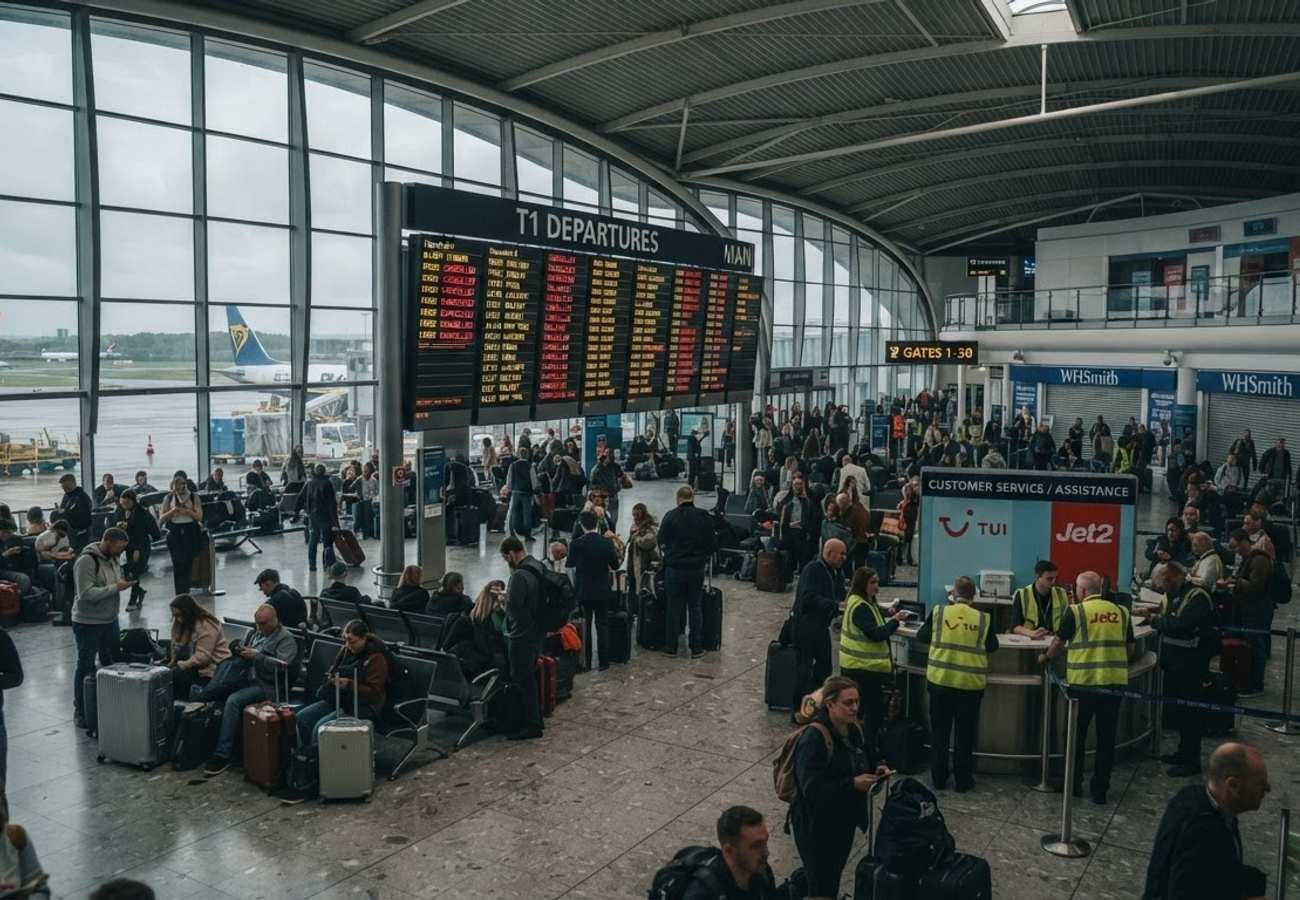
Image generated by AI
Flight operations at Manchester Airport remain unstable on Thursday, September 10, 2026, with significant cancellations and knock-on delays persisting after a major UK-wide air traffic control (ATC) system failure.
Air Traffic Control Recovery and Operational Impact
Manchester Airport is currently experiencing the residual effects of a technical failure within the UK’s air traffic management system. While the primary technical fault has been resolved, the disruption has left aircraft and crew out of position across the national network, creating a logistical backlog.
Our analysis of flight tracking data indicates that the ripple effects have manifested as a series of early-morning cancellations and altered departure times on September 10. Carriers are currently engaged in the complex process of repositioning aircraft that were stranded at incorrect airports during the initial system collapse.
The current disruption is characterized by a mix of outright cancellations and systemic delays. Data from live tracking boards show the following patterns:
- Early Morning Departures: A high concentration of cancellations occurred during the first wave of flights, primarily due to aircraft failing to reach Manchester as scheduled earlier in the week.
- Knock-on Delays: A significant portion of departures are operating behind schedule. While some delays are under 60 minutes, others are substantial, reflecting the struggle to align crew rosters and airport slots.
- Punctuality Trends: Departure punctuality is currently below seasonal norms, with peak pressure observed during the morning and early afternoon windows.
- Recovery Status: Flight tracking systems show a gradual improvement in operating rhythms as the day progresses, though stability is not yet fully restored.
Passenger Rights and Advisory
For the affected passenger, this disruption triggers specific legal protections under UK and EU aviation frameworks (such as UK261). Because the root cause was a technical failure in the air traffic control system—which is generally classified as an "extraordinary circumstance"—airlines may not be required to pay financial compensation. However, the "Duty of Care" remains absolute.
Our analysis of the policy suggests passengers are entitled to the following:
- Right to Care: If delayed for a significant period, airlines must provide vouchers for food and refreshments, and two phone calls or emails.
- Accommodation: If the delay necessitates an overnight stay, the airline must provide hotel accommodation and transport between the airport and the hotel.
- Rebooking or Refund: Passengers whose flights are cancelled have the choice between a full refund of the ticket or re-routing to their final destination at the earliest opportunity.
- Practical Step: We advise passengers to document all expenses (keep every receipt) and take screenshots of the departure boards showing the delay or cancellation as evidence for future claims.
Passengers are urged to check the official Manchester Airport departure pages and airline-specific apps repeatedly before leaving for the terminal. Due to the volume of displaced passengers from earlier in the week, check-in and security queues are expected to be heavier than usual.
This event underscores the fragility of the UK's centralized air traffic management infrastructure. When a systemic failure occurs, the "recovery phase" often takes three to five times longer than the initial outage due to the rigid nature of crew duty hours and aircraft rotation schedules.
The fact that Manchester continues to see disruptions days after the technical fix suggests that the "network effect" is the primary driver of current delays, rather than a lingering software issue. Airlines are now in a triage phase, prioritizing high-capacity routes to clear passenger backlogs.
Operational stability is expected to return once all misplaced aircraft are repositioned to their home hubs.
Related Travel Guides
Disclaimer
This article is for informational and educational purposes only. It does not constitute legal, financial, or professional advice. While we strive to provide accurate and up-to-date information, travel policies, regulations, and conditions change rapidly. Always verify information with official sources before making travel decisions. Nomad Lawyer makes no representations about the accuracy, reliability, completeness, or suitability of the information provided. Readers should consult qualified professionals for advice specific to their circumstances. The views expressed in this article are those of the author and do not necessarily reflect the views of Nomad Lawyer.
Naina Thakur
Contributor & Travel Specialist
Travel enthusiast and legal writer covering visa regulations, responsible tourism, and cultural journeys across global destinations.
Learn more about our team →