
UK Air Traffic Control IT Failure Causes 2,000 Flight Cancellations and Baggage Chaos in 2026
A National Air Traffic Services (NATS) system glitch led to 2,000 cancelled flights and widespread baggage reclaim failures across major UK airports including Heathrow and Gatwick.

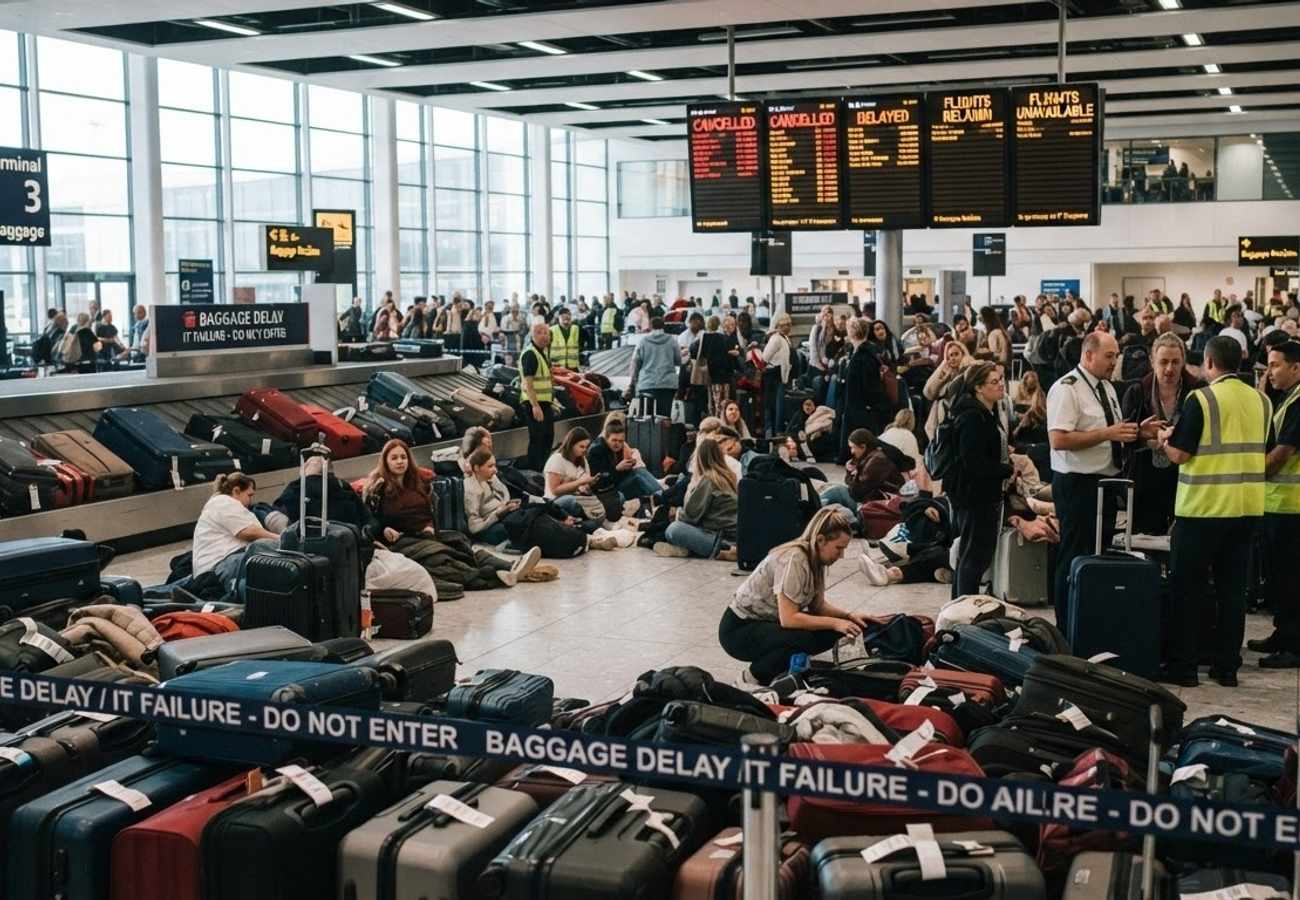
Image generated by AI
A nationwide air traffic control glitch has resulted in more than 2,000 cancelled flights and a total collapse of baggage reclamation systems across the UK's primary aviation hubs.
The disruption began on 8 September 2026, when a critical fault in the National Air Traffic Services (NATS) flight processing system triggered a cascade of operational failures. While initial reports focused on grounded aircraft, the failure rapidly migrated from control screens to baggage belts, leaving thousands of passengers stranded with misrouted luggage at Heathrow, Gatwick, Manchester, Edinburgh, and Birmingham airports.
Systemic Failure from Control Tower to Carousel
The NATS processing error created a misalignment between aircraft positioning and ground handling schedules. As flights were cancelled or rerouted, baggage systems—which rely on precise timing and synchronization—failed to keep pace. This resulted in luggage being offloaded at incorrect airports or left in holding areas while passengers were rebooked via regional or European hubs.
At Heathrow, Gatwick, and Manchester, baggage reclaim halls reached capacity as delayed flights arrived in clusters. This "bunched" arrival pattern overwhelmed carousels designed for steady passenger flows, leading to stationary belts and overcrowded exits. In some instances, airport staff were forced to group luggage from cancelled flights into cordoned-off piles, requiring passengers to manually search through hundreds of bags to locate their belongings.
Impact Summary and Route Disruptions
The following table outlines the primary areas of impact resulting from the 8 September IT failure:
| Impact Area | Specific Detail | Scale of Disruption |
|---|---|---|
| Flight Volume | Total Cancellations | 2,000+ Flights |
| Affected Hubs | Major UK Airports | Heathrow, Gatwick, Manchester, Edinburgh, Birmingham |
| System Source | NATS Processing Fault | National Air Traffic Services (NATS) |
| Primary Logistics Failure | Baggage Reclamation | Misrouted luggage, carousel overflows, manual sorting |
| Passenger Impact | Terminal Overcrowding | Overnight stays on terminal floors, 24hr+ baggage delays |
Traveler Logistics Guide: Navigating UK Transit Disruptions
From a ground-level perspective, the best way to navigate a systemic IT failure of this scale is to prioritize documentation over verbal assurances from ground staff. When automated systems fail, manual records become the only reliable currency for compensation.
Immediate Steps for Disrupted Passengers:
- Property Irregularity Reports (PIR): Do not leave the airport without a formal PIR. A verbal promise that "the bags will follow" is not legally binding for reimbursement claims.
- Documentation Retention: Keep physical or digital copies of all boarding passes and baggage receipts. These are required to prove the chain of custody for your luggage.
- Digital Tracking: If using AirTags or similar electronic trackers, take screenshots of the luggage location. This provides evidence if the airline claims the bag is in a different city.
Optimal Connection Strategies for 2026: To avoid the "cascade effect" seen in this incident, travelers connecting through UK hubs should build a minimum of 4-6 hours into their itineraries during peak seasons. For those utilizing digital transit policies like the UK's e-gates, ensure all travel documents are mirrored in a cloud-based folder, as border control IT failures often accompany wider aviation glitches.
Infrastructure Impact Assessment
This incident highlights a dangerous interdependence between air traffic control (ATC), airline scheduling, and ground handling. The UK's aviation infrastructure is currently vulnerable to "single point of failure" events; when the NATS node fails, the effect is not limited to the sky but extends to the physical movement of goods and people on the ground.
The repeated nature of these glitches—including previous breakdowns at Heathrow Terminal 5—suggests that automated handling systems lack the necessary redundancy to handle large-scale manual interventions. The shift toward highly integrated, automated "just-in-time" logistics means that any deviation in flight timing creates an immediate bottleneck in baggage halls, which are not scaled for the surge capacity required during recovery phases.
The resilience of the UK's transit network remains under scrutiny as the gap between automated efficiency and manual contingency widens.
Related Travel Guides
Disclaimer
This article is for informational and educational purposes only. It does not constitute legal, financial, or professional advice. While we strive to provide accurate and up-to-date information, travel policies, regulations, and conditions change rapidly. Always verify information with official sources before making travel decisions. Nomad Lawyer makes no representations about the accuracy, reliability, completeness, or suitability of the information provided. Readers should consult qualified professionals for advice specific to their circumstances. The views expressed in this article are those of the author and do not necessarily reflect the views of Nomad Lawyer.
Preeti Gunjan
Contributor & Community Manager
A passionate traveller and community builder. Preeti helps grow the Nomad Lawyer community, fostering engagement and bringing the reader experience to life.
Learn more about our team →