
American Airlines Near-Miss in Phoenix: Two Jets Assigned Same Flight Number in 2026
A rare scheduling failure led to two American Airlines aircraft operating under the same flight number and call sign near Phoenix, narrowly avoiding a collision through controller intervention.

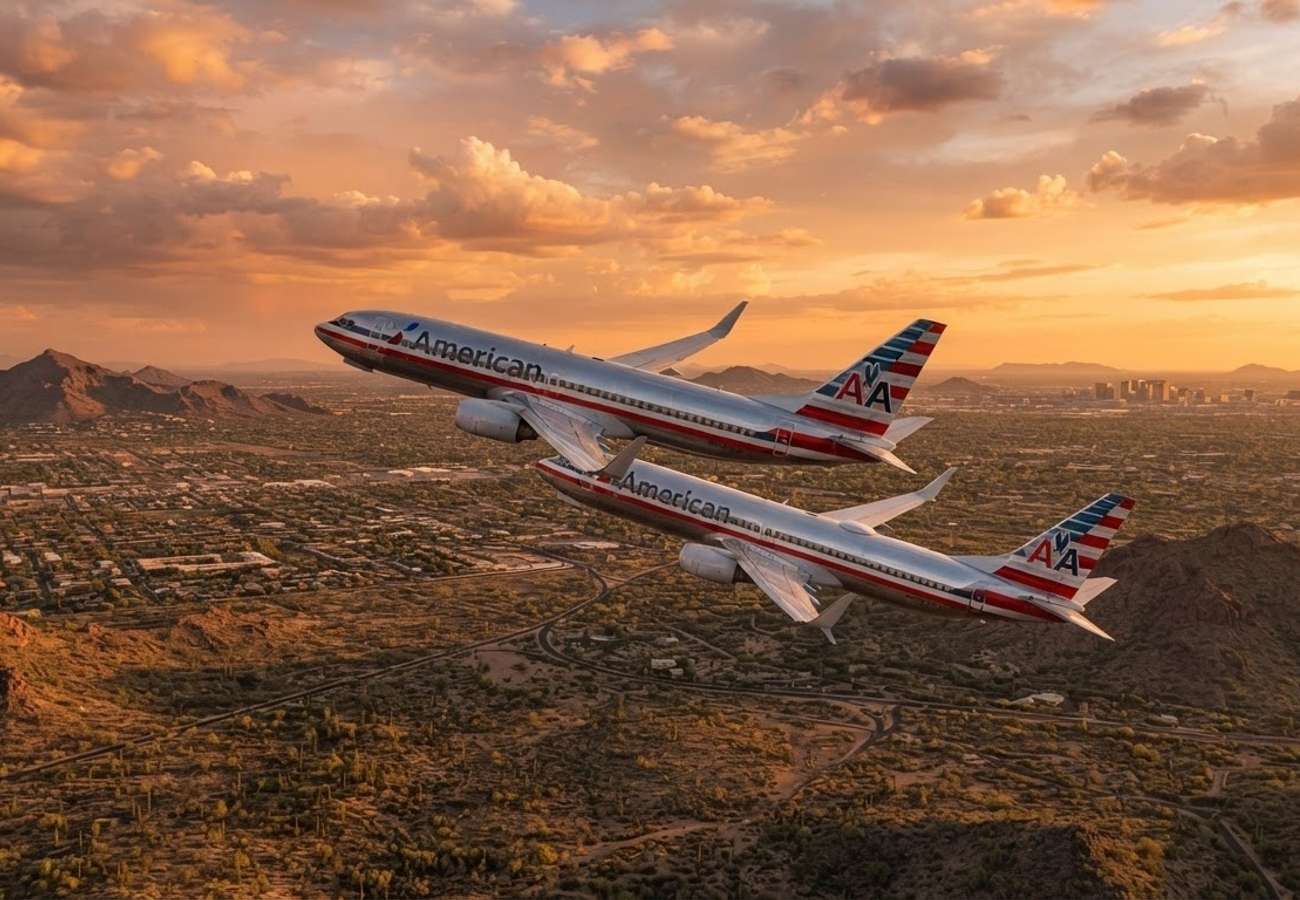
Image generated by AI
A critical failure in airline dispatch allowed two American Airlines aircraft to operate in the same airspace using identical flight numbers and call signs, creating a high-risk scenario for mid-air miscommunication.
The incident occurred in the congested airspace surrounding Phoenix, where one inbound and one outbound American Airlines jet were simultaneously identified by the same numerical designation. This redundancy failure stripped away a primary layer of safety, as both pilots and air traffic controllers (ATC) relied on a shared identifier for critical instructions.
The Mechanics of the Mix-Up
The duplication likely originated within the airline's internal planning and dispatch systems. Industry analysis suggests that a turnaround flight or a rapid schedule change may have inadvertently recycled a flight number while the previous aircraft assigned to that number remained airborne.
Because both flights were filed and accepted through standard dispatch and ATC processes, the error persisted until the aircraft entered the same regional airspace. In a high-density environment, this created a scenario where:
- Instructional clearances could be attributed to the wrong aircraft.
- Position reports could be misidentified by controllers.
- Pilots might respond to vectors intended for the other jet.
While pilots use altitude, heading, and transponder codes as secondary identifiers, the shared call sign removed the essential redundancy required to prevent catastrophic errors in busy corridors.
Intervention and Resolution
The potential disaster was averted by a Phoenix-area air traffic controller who noticed conflicting position data. The controller recognized that two separate aircraft were responding to the same call sign and immediately intervened.
Radar replays indicate that while the jets did not enter an immediate collision course, the risk of a "wrong-turn" or "wrong-climb" incident was escalating. The controller took the following actions:
- Issued corrective headings to increase lateral separation.
- Assigned distinct altitude instructions to ensure vertical clearance.
- Clarified the identity of each aircraft to remove all ambiguity.
Both flights continued to their destinations without further incident; no injuries or aircraft damage were reported.
The Danger of Call Sign Duplication
Modern carriers manage thousands of flights daily using a finite pool of numbers. These are typically recycled across different time zones and routes. However, when two flights share a number in the same geographic region, the safety margin erodes.
Our analysis of flight operations indicates that the primary risks include:
- Readback Errors: A pilot may acknowledge a command intended for the other aircraft, leading to unauthorized maneuvers.
- Increased Cognitive Load: Controllers must work harder to distinguish between identical tags on a radar scope, increasing the likelihood of human error.
- Ground Confusion: Duplicate numbers can disrupt tower communications and gate operations, leading to runway incursions.
Systemic Safeguards and Regulatory Review
While official investigative documents are pending, this event highlights a gap in automated dispatch safeguards. Current systems are designed to catch these overlaps, yet the Phoenix incident proves that software failures can still occur.
Market trends suggest a shift toward "hard stops" in dispatch software. This would prevent a flight plan from being released if the assigned call sign is already active within a specific radius or timeframe.
Why This Matters: Industry Implication
From a logistical perspective, this incident is not a random fluke but a symptom of extreme schedule density. For travelers on these routes, the real impact is a reliance on human vigilance over automated systems.
The fact that a controller—not a software alert—caught the error is concerning. In aviation, the "Swiss Cheese Model" of safety dictates that multiple layers of failure must align for an accident to happen. Here, the dispatch layer and the filing layer both failed. Only the final layer—the human controller—prevented a potential tragedy. This suggests that as airlines push for higher aircraft utilization and tighter turnaround times, the risk of "administrative" errors translating into "operational" dangers increases.
Forward Outlook
Expect the FAA and aviation regulators to push for standardized call sign validation across all US carriers. We anticipate a move toward more integrated, real-time synchronization between airline dispatch centers and ATC centers to ensure no two aircraft in the same FIR (Flight Information Region) share an identifier.
A sobering reminder that in the cockpit, a single number can be the difference between safety and catastrophe.
Related Travel Guides
Disclaimer
This article is for informational and educational purposes only. It does not constitute legal, financial, or professional advice. While we strive to provide accurate and up-to-date information, travel policies, regulations, and conditions change rapidly. Always verify information with official sources before making travel decisions. Nomad Lawyer makes no representations about the accuracy, reliability, completeness, or suitability of the information provided. Readers should consult qualified professionals for advice specific to their circumstances. The views expressed in this article are those of the author and do not necessarily reflect the views of Nomad Lawyer.
Raushan Kumar
Founder & Lead Developer
Full-stack developer with 11+ years of experience and a passionate traveller. Raushan built Nomad Lawyer from the ground up with a vision to create the best travel and law experience on the web.
Learn more about our team →